

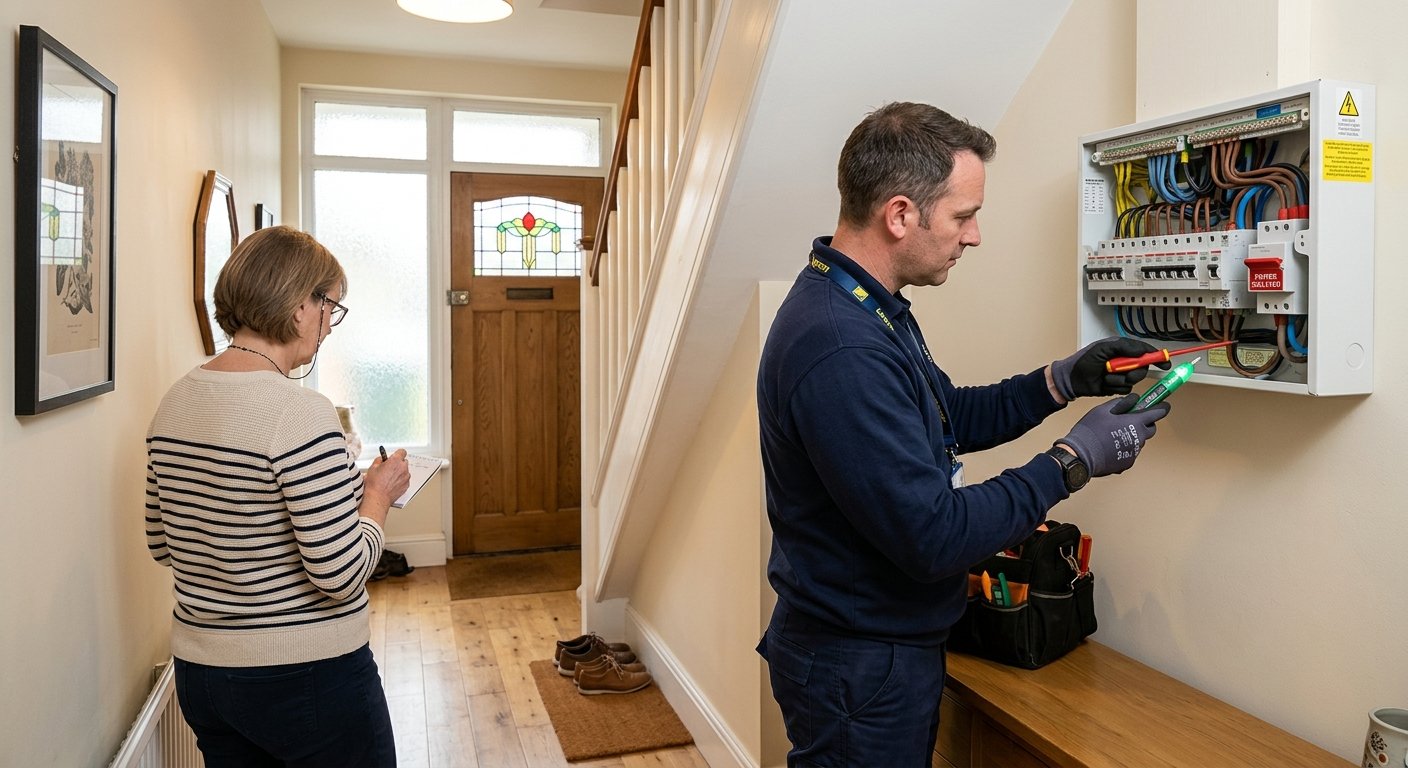
Electrical faults are not always obvious. A light that flickers occasionally or a socket that feels slightly warm can be easy to dismiss, especially in a busy home. However, damaged wiring, overloaded circuits and faulty electrical accessories can create a real risk of electric shock, burns or fire.
Knowing when to call a qualified electrician can help you deal with small issues before they become dangerous or more expensive to repair. While some basic checks, such as changing a light bulb or resetting a tripped consumer unit, may be straightforward, electrical work should never be treated as a DIY experiment.
Below are ten warning signs UK homeowners should take seriously, along with practical guidance on what to do next.
1. Your Consumer Unit Keeps Tripping
A consumer unit, sometimes called a fuse box, is designed to cut power when it detects a fault. Modern units use circuit breakers and RCDs, or residual current devices, to protect people and property from electrical hazards.
One occasional trip may happen because of a faulty appliance, such as a kettle, toaster or hair dryer. You can unplug appliances on the affected circuit, reset the switch once and reconnect items one at a time to help identify the cause. If the same circuit keeps tripping, though, do not keep resetting it.
Repeated tripping can indicate:
- A faulty appliance or damaged power lead
- Overloaded sockets or extension leads
- Damaged wiring
- Water getting into an electrical circuit
- A fault in the consumer unit or an RCD
An electrician can test the circuit safely, identify the source of the fault and make the appropriate repair.
2. Sockets, Switches or Plugs Feel Warm
Electrical sockets, switches and plugs should not become noticeably hot during normal use. A small amount of warmth from certain appliances may be expected, but a hot plug, warm faceplate or heat around a switch should be investigated.
Heat can be caused by loose connections, excessive load, damaged accessories or poor-quality fittings. Loose connections are particularly concerning because they can create resistance and overheating behind a wall or inside a socket.
Stop using the socket if it feels hot. Unplug equipment if it is safe to do so, avoid touching any damaged parts and arrange for an electrician to inspect it. If there is smoke, sparking or an immediate fire risk, switch off the power at the consumer unit only if it is safe, leave the area and call emergency services.
3. You Notice Burning Smells, Scorch Marks or Discolouration
A burning smell from a socket, switch, light fitting or consumer unit is never something to ignore. Brown marks, black staining, melted plastic or yellowing around electrical accessories can all suggest overheating or arcing.
Arcing occurs when electricity jumps across a gap between conductors. It may produce heat and sparks, even when a circuit does not trip straight away. This is a serious warning sign because the fault could be concealed within a socket, cable or connection.
Turn off the affected circuit where possible and do not use it again until a qualified electrician has inspected the installation. Do not paint over discolouration or replace a faceplate without finding out why it became marked in the first place.
4. Lights Flicker, Dim or Regularly Blow Bulbs
A flickering light is sometimes caused by a loose bulb or an incompatible LED lamp. Check that the bulb is correctly fitted and suitable for the fitting, with the power switched off before handling it. If the problem continues, affects several lights or happens when other appliances are used, it may point to a wiring or connection issue.
Call an electrician if you notice:
- Several lights dimming at the same time
- Lights flickering without an obvious bulb issue
- Bulbs failing unusually often
- A buzzing dimmer switch or light fitting
- Lights changing brightness when large appliances start
These symptoms can be linked to loose connections, overloaded circuits, faulty fittings or problems with the supply to the property. An electrician can carry out tests rather than simply replacing bulbs repeatedly.
5. You See Sparks or Hear Buzzing and Crackling
A very small spark when plugging in an appliance can occasionally occur, particularly with devices that draw more power. However, repeated sparking, large sparks, crackling sounds or buzzing from electrical fittings should be treated as a fault.
Buzzing may come from a loose connection, damaged component, overloaded circuit or failing electrical accessory. It should not be assumed to be harmless simply because the electricity still appears to work.
Stop using the affected socket, switch or appliance. If the noise is coming from the consumer unit, do not remove its cover or attempt repairs yourself. Contact an electrician promptly for advice and inspection.
6. You Get Electric Shocks or Tingling from Appliances
Any electric shock, however mild it seems, deserves attention. A tingling sensation from a washing machine, cooker, tap, light switch or another metal surface may indicate a fault with earthing, wiring or an appliance.
Do not continue using the item to see whether it happens again. Switch off and unplug the appliance where it is safe to do so, and avoid touching it with wet hands or while standing on a damp floor. If you suspect the issue relates to fixed wiring, turn off the relevant circuit and arrange an inspection.
Electrical shocks can be especially dangerous in kitchens, bathrooms, utility rooms and outdoor areas, where water increases the risk. A competent electrician can test the installation and confirm that protective measures, including earthing and RCD protection, are working correctly.
7. Your Home Has Old, Damaged or Insufficient Wiring
Older homes may have electrical installations that no longer meet current household needs. This does not automatically mean the wiring is unsafe, but age, condition and previous alterations all matter.
Warning signs include fabric-covered cables, an old-style fuse box, damaged insulation, exposed cables, loose sockets or a lack of enough outlets for modern appliances. Constant reliance on multi-way adaptors and extension leads can also indicate that your home needs additional sockets or circuit upgrades.
An electrician can assess whether the installation is in satisfactory condition and recommend sensible improvements. This may include a consumer unit upgrade, replacement wiring, new sockets, RCD protection or safer arrangements for kitchens, garages and outdoor power.
8. Sockets Are Loose, Cracked or Damaged
A socket or switch that moves when you plug something in is not just inconvenient. Loose fittings can strain cables and terminals behind the faceplate, increasing the risk of poor connections and overheating.
Cracked covers, broken switches, damaged USB sockets and missing blanks on a consumer unit should also be repaired. Children, pets and accidental contact make exposed electrical parts especially hazardous.
Avoid taping over damaged sockets or continuing to use them carefully. Electrical accessories are relatively simple for an electrician to replace, but the work should be carried out properly and the connections checked.
9. Water Has Reached Electrical Equipment
Water and electricity are a dangerous combination. Following a leak, flood, overflowing appliance, roof problem or plumbing failure, electrical circuits and fittings may need checking before they are used again.
Do not use outlets, appliances or switches that may have been exposed to water. If water is close to electrical equipment, do not touch it. Switch off power only if you can do so safely without entering a wet area or touching wet surfaces.
An electrician can inspect affected circuits, sockets, wiring and the consumer unit, and advise whether parts need to be dried, replaced or tested. This is particularly important where water has entered walls, ceilings, kitchens, bathrooms, lofts or external electrical fittings.
10. You Are Planning Work That Changes Your Electrical Needs
You should not wait for a fault before calling an electrician. Home improvements often create new electrical demands, and professional planning can prevent unsafe additions later.
Speak to an electrician before or during projects such as:
- Installing a new cooker, shower or electric heating
- Converting a loft, garage or outbuilding
- Renovating a kitchen or bathroom
- Adding garden lighting, outdoor sockets or a hot tub supply
- Installing an electric vehicle charge point
- Extending your home or undertaking major refurbishment
Some electrical work in England may be notifiable under Building Regulations, particularly in certain locations or where new circuits are installed. Requirements can vary across the UK, so a qualified electrician can explain what applies to your property and provide the appropriate certification where required.
What to Look for When Hiring an Electrician
For electrical repairs and installations, choose a suitably qualified and competent professional. Ask what work is included, whether testing is needed, what certification you will receive and whether the electrician is registered with a recognised competent person scheme where relevant.
For landlords, regular electrical safety responsibilities apply in England, and an Electrical Installation Condition Report may be required at prescribed intervals. Homeowners can also benefit from an EICR, particularly when buying an older property, after major work, or if there are concerns about the condition of the installation.
For urgent faults, explain exactly what you have seen, heard or smelled, whether power is still on, and whether anyone has received a shock. Clear information helps the electrician assess the urgency and arrive prepared.
Book an Electrician for Peace of Mind
Electrical warning signs should always be taken seriously. Whether you have a tripping circuit, damaged socket, flickering lights or plans for a home improvement project, getting professional advice early can protect your home and everyone in it.
Book an electrician through TaskPigeon to find trusted help for electrical repairs, inspections, upgrades and installation work.