
A blocked drain rarely happens without warning. In many cases, small changes in how water flows, smells or sounds can point to a developing problem long before the drain stops working completely. Recognising these early signs can help you avoid unpleasant overflows, damaged pipework and disruption to your home or business.
Some minor drainage issues can be dealt with through careful cleaning and sensible use of sinks, showers and toilets. However, recurring blockages or signs of a problem outside the property often need professional attention. A qualified drainage professional can identify the cause of the blockage, clear it safely and check whether there is an underlying fault in the drainage system.
Water Draining More Slowly Than Usual
Slow drainage is one of the most common early signs of a blockage. You may notice that water takes longer to disappear from the kitchen sink, bathroom basin, shower tray or bath. This usually means that grease, soap residue, hair, food waste or other debris is beginning to restrict the flow of water inside the waste pipe.
A single slow-fitting appliance may indicate a localised blockage close to that particular drain. For example, a slow shower drain is often caused by hair and soap build-up in the trap or pipework beneath the shower. A slow kitchen sink may be affected by cooking fats, coffee grounds or food particles.
If several fixtures are draining slowly at the same time, the issue may be further along the drainage system. This can suggest a blockage in a shared waste pipe, soil pipe or external drain, and is a good reason to arrange a professional inspection.
Gurgling Sounds From Drains or Toilets
Gurgling noises are another warning sign that should not be ignored. A drain normally allows water and air to move through the pipework smoothly. When a partial blockage is present, air can become trapped or forced back through the system, creating bubbling, gurgling or glugging sounds.
You may hear these noises when emptying a sink, running a bath, using a washing machine or flushing the toilet. In some homes, flushing the toilet may cause a nearby sink or shower drain to gurgle. This can indicate that the drainage system is struggling to ventilate properly because waste or debris is obstructing the pipe.
Occasional noise may not always mean an urgent emergency, but persistent or worsening gurgling deserves attention. It can be an early indication of a more substantial blockage before wastewater starts backing up.
Unpleasant Smells Around Sinks, Drains or Outdoors
Bad smells coming from drains are often caused by trapped food, grease, hair or other organic matter breaking down inside the pipework. Kitchen drains can develop sour or greasy odours, while bathroom drains may smell musty or stagnant when soap scum and hair have collected.
Sometimes the smell is caused by a dry trap, particularly in a rarely used sink, shower or utility room. Running water for a short time may refill the trap and restore the seal that prevents smells from rising from the drainage system.
However, persistent sewage-like smells, especially near external drains, manholes or toilets, should be taken seriously. They can indicate a blocked drain, a damaged pipe, a problem with the soil stack or an issue in the external drainage run. A drainage professional can investigate safely and determine whether the smell is linked to a blockage, a leak or a fault in the system.
Water Backing Up Into Sinks, Showers or Baths
Water backing up is a clear sign that a drain is not coping with the volume of wastewater passing through it. This may appear as dirty water rising in the sink when the washing machine drains, or water collecting in a shower tray after the toilet has been flushed.
This is more serious than a slow drain because it suggests that the blockage is restricting the pipe significantly. Continuing to use the affected appliances can lead to overflow, contamination and water damage, particularly in kitchens, bathrooms and utility rooms.
If wastewater is backing up repeatedly, avoid pouring drain-cleaning chemicals into the system. Strong chemical products can be hazardous, may damage certain pipe materials and do not always reach the main obstruction. It is generally safer to stop using the affected drainage points where possible and contact a professional.
Changes Around External Drains and Manholes
External drains often provide the clearest evidence of a blockage further down the system. Liftable drain covers and manholes should only be opened with care, using suitable equipment and avoiding direct contact with wastewater. If you can safely see standing water, slow-moving waste or a visible build-up beneath a cover, there may be a blockage in the external drain.
Other warning signs include water pooling around drain covers, foul odours in the garden or driveway, and overflowing gullies after normal household water use. Leaves, mud, silt and garden debris can obstruct surface water drains, while grease, wipes, sanitary products and other non-flushable items can block foul drains.
External drainage problems can also be caused by damaged pipes, displaced joints or tree roots entering older pipework. These issues cannot usually be resolved with basic home maintenance and may require specialist drain clearing or a camera survey to locate the fault accurately.
Toilets That Flush Poorly or Overflow Easily
A toilet that flushes weakly, rises higher than usual before emptying or needs more than one flush may have a developing blockage. The obstruction could be in the toilet trap, the soil pipe or the drain outside the property.
Only toilet paper and human waste should be flushed. Items such as wet wipes, cotton pads, dental floss, paper towels, sanitary products and excessive amounts of tissue can cause blockages, even where packaging suggests that an item is flushable. These materials do not break down as reliably as toilet paper and can catch on debris already inside the pipe.
If the water level rises close to the rim, do not flush again. Turn off the water supply to the toilet if necessary, avoid using nearby plumbing fixtures and seek professional help if a plunger does not resolve a simple local blockage.
When You Can Try Simple Drain Maintenance
For a minor, isolated issue, there are a few sensible steps you can take before arranging a visit. Remove visible hair and debris from sink or shower plugs, empty and clean accessible traps where appropriate, and rinse the area with warm water. A plunger can sometimes clear a shallow blockage in a sink, basin or toilet.
- Use a sink strainer to catch food scraps before they enter kitchen pipework.
- Allow cooking fats and oils to cool, then dispose of them in the bin rather than down the sink.
- Remove hair from shower and bath drains regularly.
- Keep leaves, soil and garden waste away from outdoor gullies.
- Flush only toilet paper and human waste down the toilet.
Avoid mixing chemical drain cleaners or using aggressive tools that could crack fittings, damage seals or push a blockage deeper into the system. If you are unsure about the cause, professional advice is the safer option.
When to Call a Drainage Professional
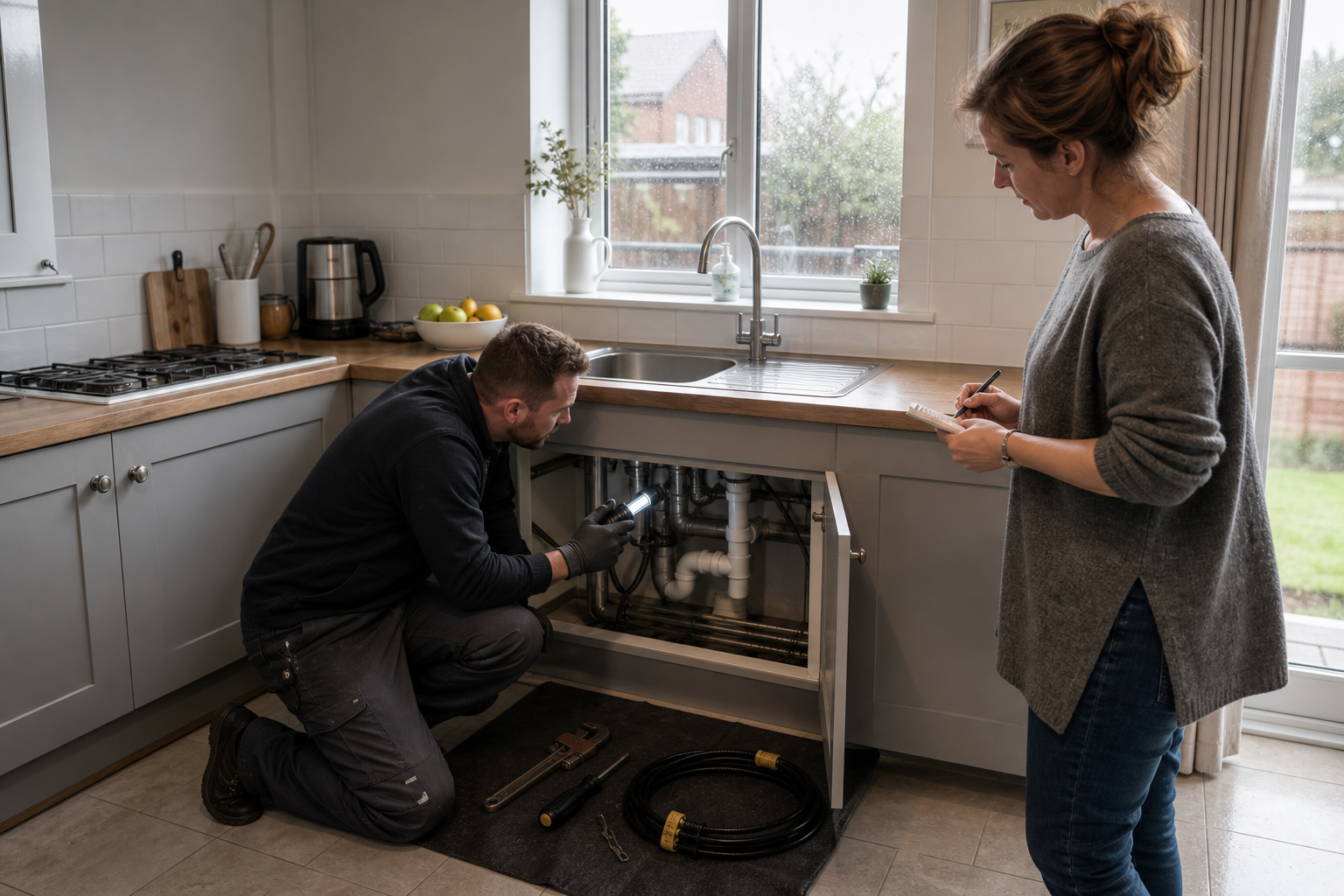
Call a drainage professional when the blockage is recurring, affects more than one fixture or causes wastewater to back up inside or outside the property. You should also arrange help if there are persistent foul smells, overflowing external drains, repeated toilet problems or signs that a pipe may be damaged.
Professional drainage services can use suitable equipment to clear blockages without unnecessary damage to the pipework. Where the cause is unclear, a drainage specialist may recommend a CCTV drain survey to inspect the inside of pipes and identify issues such as root ingress, collapsed sections, scale build-up or displaced joints.
Acting early is usually easier and less disruptive than waiting for a complete blockage. Prompt attention can help protect your property, reduce the risk of water damage and restore normal use of your plumbing.
Book a Drainage Professional
If you have noticed slow drainage, bad smells, gurgling pipes or backed-up water, do not wait for the problem to worsen. Use TaskPigeon to book a drainage professional and get help identifying and resolving your drainage issue.