

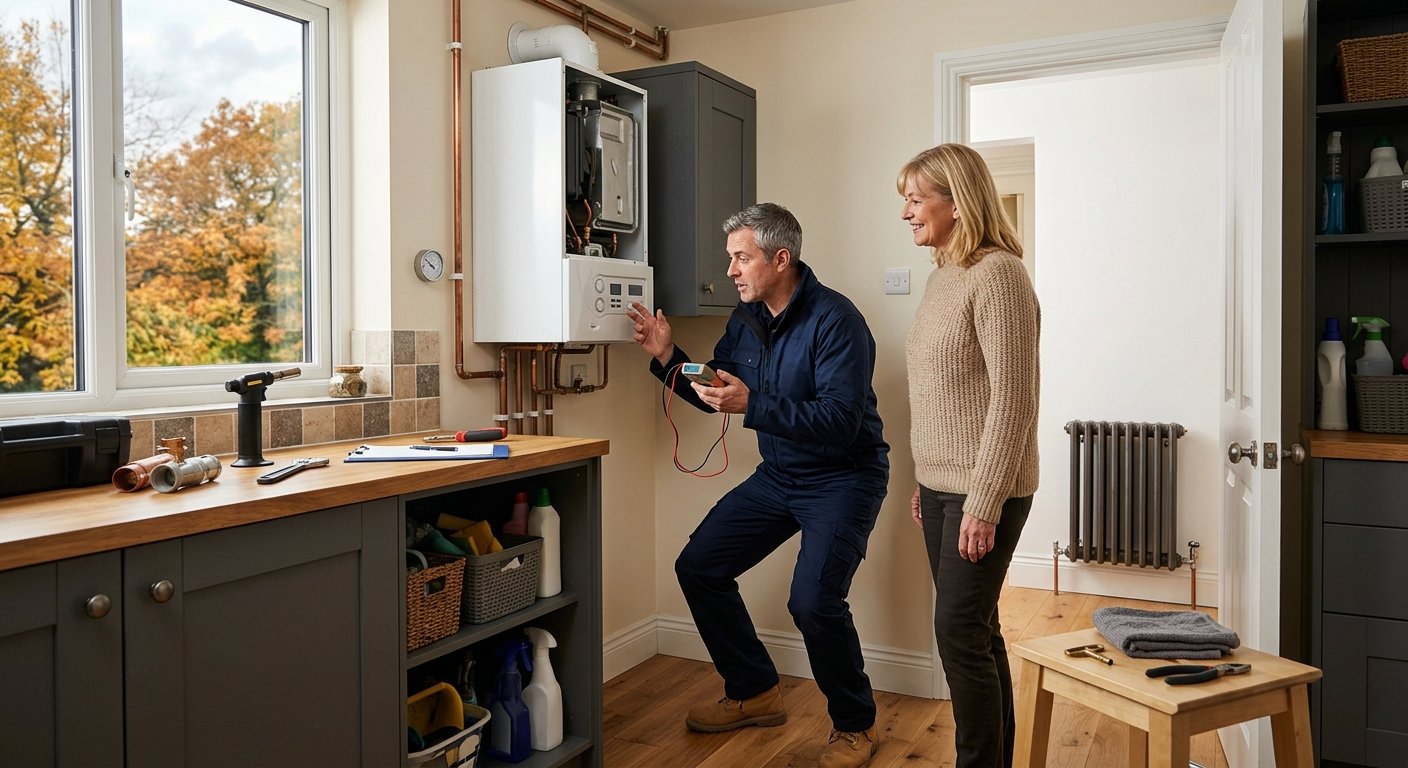
As the evenings become cooler and the first signs of autumn appear, it is a good time to make sure your heating system is ready for the months ahead. A little preparation before you need to rely on your boiler and radiators every day can help you spot problems early, improve comfort and reduce the chance of an inconvenient breakdown during a cold spell.
Whether you have a gas boiler, electric heating, a heat pump or another central heating arrangement, the key is to check the parts of the system you can safely inspect and arrange professional help for anything more technical. Use this practical autumn checklist to get your home ready for a warmer, more comfortable season.
1. Turn the Heating On Before the Weather Changes
Do not wait until the first genuinely cold day to find out whether your heating is working properly. Turn the system on for a short period in late summer or early autumn and allow the radiators or heating units to warm up fully.
As the heating runs, check for obvious signs that something needs attention. Listen for unusual banging, whistling, gurgling or vibrating noises from the boiler, pipework or radiators. Notice whether every room warms up as expected and whether the boiler switches on and off normally. If the heating does not come on at all, a simple thermostat setting or timer issue may be responsible, but it is best not to assume.
- Check that the heating controls are set to the correct date, time and programme.
- Make sure the thermostat is turned up high enough for a test run.
- Walk around the home and feel whether each radiator is warming.
- Look for drips, damp patches or signs of corrosion around visible pipes and valves.
- Take note of any fault code shown on the boiler display.
Addressing these issues early gives you more time to arrange a heating engineer before demand rises in colder weather.
2. Arrange an Annual Boiler Service
An annual boiler service is one of the most important parts of autumn home maintenance. A qualified engineer can inspect the appliance, check that it is operating safely and identify worn or faulty components before they lead to a more serious issue.
For gas boilers, the work should be completed by a Gas Safe registered engineer. They can assess the boiler’s condition, inspect relevant connections and flue components, and carry out the appropriate safety and performance checks. If you are a landlord, there are separate legal responsibilities around gas safety checks, so make sure you understand what applies to your property.
A service is not the same as a repair. Even if your boiler appears to be working well, regular professional maintenance is worthwhile. Keep any service paperwork in a safe place, particularly if your boiler is under warranty or covered by a maintenance plan.
3. Check Your Boiler Pressure
Many sealed central heating systems have a pressure gauge or digital pressure reading on the boiler. The recommended range varies by system and manufacturer, so consult your boiler manual if you are unsure. In many homes, pressure is expected to sit within a marked normal range when the system is cold.
If pressure is too low, the boiler may stop working or display a warning. Some boilers allow homeowners to repressurise the system using a filling loop or built-in filling arrangement, but only do this if you are confident, have checked the manufacturer’s instructions and know the correct pressure level. Adding too much pressure can also create problems.
If the pressure repeatedly drops, avoid simply topping it up again and again. It could indicate a leak, a faulty valve or another issue that needs professional investigation. Likewise, unusually high pressure, water discharge from an external pipe or frequent pressure changes should be checked by a heating professional.
4. Bleed Radiators and Check for Cold Spots
Radiators can gradually collect air, which may prevent them from heating evenly. A radiator that is cold at the top but warm at the bottom often needs bleeding. Removing trapped air can help the radiator heat more effectively and reduce gurgling noises in the system.
Before bleeding radiators, turn the heating off and allow everything to cool. Use a suitable radiator key or bleed key, keep a cloth or small container nearby, and open the valve slowly. Once the air has escaped and water begins to appear, close the valve carefully. After bleeding several radiators, check the boiler pressure, as it may need adjusting.
Cold areas at the bottom of a radiator can point to sludge or debris within the system rather than trapped air. This is not usually solved by bleeding alone. A heating engineer can advise whether cleaning, flushing or balancing the system would be appropriate.
5. Make Sure Radiators Can Circulate Heat Properly
Even a well-maintained boiler will struggle to heat a room efficiently if radiators are blocked or covered. Take a few minutes to look at the space around each one. Large furniture placed directly in front of a radiator can restrict heat flow, while heavy curtains hanging over it may trap warmth against the window rather than allowing it into the room.
- Move sofas, cabinets and other bulky items slightly away from radiators where possible.
- Vacuum dust from around radiator fins, grilles and nearby skirting boards.
- Avoid drying large amounts of washing directly over radiators.
- Check that thermostatic radiator valves are not stuck in one position.
- Consider whether rarely used rooms need a lower temperature setting rather than being completely ignored.
If some rooms become very hot while others remain cool, your system may benefit from balancing. This involves adjusting radiator valves so heat is distributed more evenly throughout the property. It is often best carried out by an experienced heating engineer.
6. Review Your Thermostat and Heating Schedule
Autumn is an ideal time to revisit how and when you heat your home. Your household routine may have changed since last winter, especially if people now work from home, children have changed school schedules or rooms are used differently.
Set your heating programme around the times you are normally at home and awake, rather than relying on last year’s settings. A programmable thermostat or smart control can make this easier, but even a standard timer can be adjusted to avoid heating an empty home unnecessarily.
Check the location of your thermostat too. It should not be affected by direct sunlight, draughts, cooking heat or a nearby radiator, as these can cause inaccurate readings. If the thermostat is old, unreliable or difficult to programme, ask a heating professional about suitable replacement options for your system.
7. Inspect Carbon Monoxide Alarms
Carbon monoxide is a serious safety risk associated with faulty fuel-burning appliances, including gas boilers. It cannot be seen or smelled, so a working carbon monoxide alarm is an important part of home safety.
Check that alarms are installed in appropriate locations according to their instructions and current requirements for your property. Test each alarm using its test button, replace batteries where required and check the expiry date on the unit. An alarm does not replace professional servicing, but it provides an important additional warning.
If you suspect a gas leak or carbon monoxide issue, act immediately. Turn off the appliance if it is safe to do so, open windows and doors, leave the property and contact the relevant emergency service or gas emergency line. Do not attempt to diagnose or repair a suspected gas fault yourself.
8. Check External Components and Protect Pipes
Take a look at any visible outdoor pipework, boiler flue outlets and external heating equipment. Remove leaves, garden debris or stored items that could obstruct ventilation or access. Do not cover a boiler flue terminal, as it needs to discharge safely and remain clear.
If your home has exposed pipes in a garage, loft, outbuilding or other unheated area, inspect the insulation around them. Damaged or missing pipe insulation can increase the risk of frozen pipes when temperatures fall. Replace worn insulation and consider asking a professional for advice if you have experienced freezing problems in previous winters.
Heat pump owners should also keep the area around the outdoor unit clear of leaves, overgrown plants and other obstructions. Good airflow is essential for effective operation.
9. Know When to Call a Heating Professional
Some basic checks are suitable for homeowners, but heating systems involve water, electricity, gas and combustion components that should only be handled by appropriately qualified professionals. Arrange expert help if you notice recurring pressure loss, leaks, boiler fault codes, uneven heating, persistent noises, a pilot or ignition issue, or signs that your system is not heating reliably.
Booking maintenance before winter gives you the best chance of resolving issues without the pressure of an urgent cold-weather breakdown. A professional can assess your boiler, radiators, controls and overall system, then recommend repairs or improvements that suit your home.
Get Your Heating System Ready for Autumn
A few careful checks now can make a real difference when the temperature drops. If your boiler is due a service, your radiators are not heating evenly or you would simply like reassurance that your system is ready for the season, book a heating system service with TaskPigeon today.