

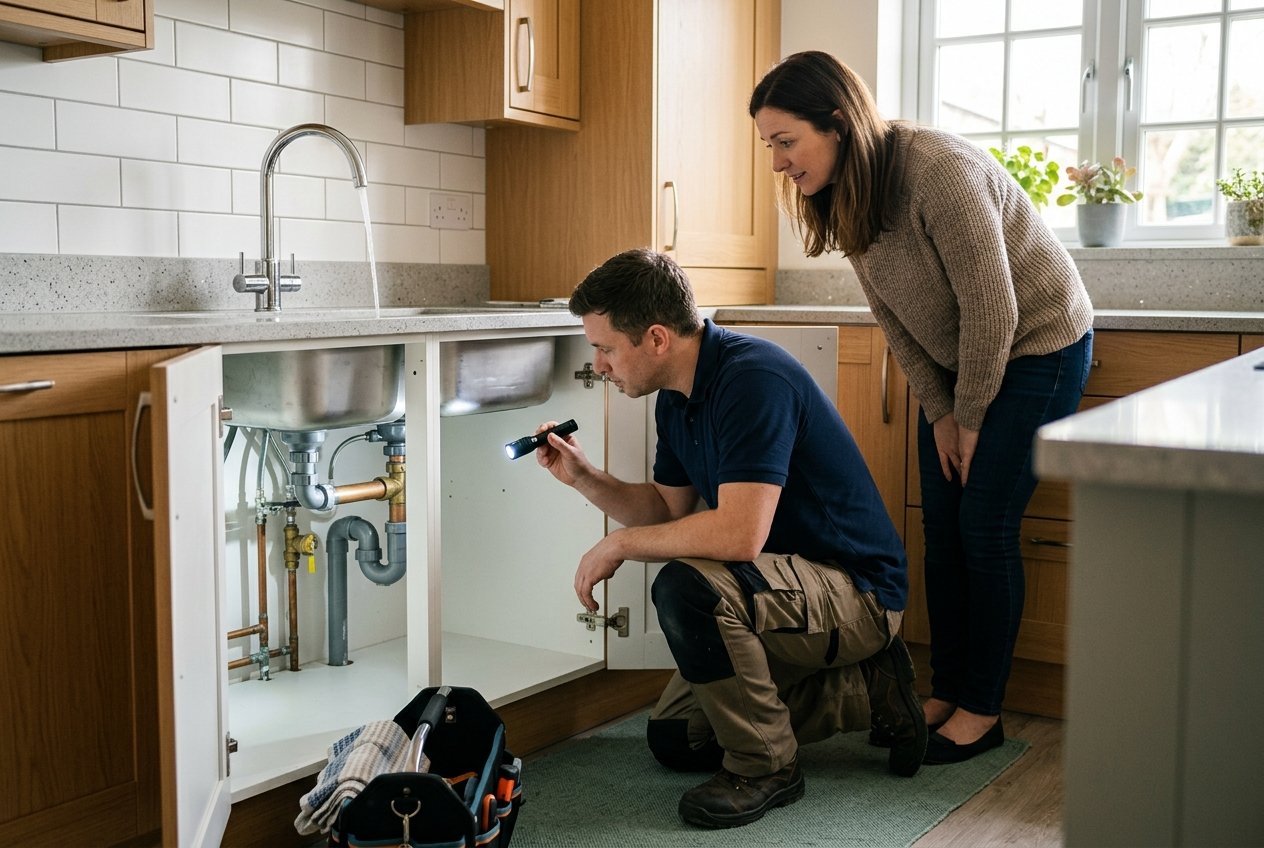
Low water pressure can turn simple jobs into daily frustrations. Showers may feel weak, taps can take longer to fill a basin, and appliances such as washing machines or combi boilers may not perform as expected. The cause is not always a serious plumbing fault, but it is important to work out whether the issue affects one outlet, one part of the property or the whole home.
In UK homes, “low pressure” is often used to describe two different problems. Water pressure is the force pushing water through the pipework. Water flow is the amount of water delivered from a tap or shower over time. A tap may have reasonable pressure but poor flow because its filter, aerator or pipework is restricted. Identifying the difference helps you avoid unnecessary work and makes it easier for a plumber to diagnose the problem.
Start by Checking Where the Problem Occurs
Before arranging repairs, test a few cold and hot taps around the property. Try the kitchen tap, bathroom basin, shower and any outside tap if you have one. Do this at different times of day if possible.
- If only one tap or shower is weak, the cause is likely to be local to that fitting or its supply pipe.
- If all cold taps are weak, the issue could involve the incoming mains supply, stop tap, water meter, pressure-reducing valve or an external supply problem.
- If cold water is normal but hot water is weak, focus on the boiler, cylinder, hot-water pipework or associated valves.
- If pressure drops only when another tap, toilet, washing machine or shower is running, your supply may have limited flow capacity or there may be a restriction in the system.
- If neighbouring properties have the same problem, contact your water supplier to ask whether there are local works, a burst main or a supply issue.
Make a note of when you first noticed the problem and whether it came on suddenly or gradually. A sudden change can point to a closed valve, leak, supply interruption or fault with a particular appliance. A gradual decline is more commonly linked to limescale, ageing pipework or debris collecting in filters.
Simple Checks You Can Carry Out Safely
Check the internal stop tap is fully open
The internal stop tap controls the mains water entering your home. It is often found under the kitchen sink, in a downstairs cupboard, near the water meter or where the supply pipe enters the building. If it has been partially closed after previous work, it can reduce flow throughout the property.
Turn it anti-clockwise carefully to ensure it is open. Do not force a stiff or corroded valve, as older stop taps can leak or fail when moved. If the handle is difficult to turn, or you see water around the valve, leave it alone and book a plumber.
Look at isolation valves under affected fittings
Many taps, toilets and appliances have small isolation valves on their supply pipes. These are commonly fitted with a slotted screw head and can be accidentally left partly closed after maintenance. If one appliance or tap has reduced flow, check whether its isolation valve is fully open. Again, do not force damaged or seized fittings.
Clean a tap aerator or shower head
Aerators are the small mesh fittings at the end of many taps. They can trap limescale, grit and debris, particularly in hard-water areas. Unscrew the aerator by hand where possible, rinse it and remove visible build-up. A shower head may also benefit from cleaning according to the manufacturer’s instructions.
If removing an aerator improves flow significantly, the wider plumbing is likely to be working normally. If debris returns repeatedly, however, a plumber may need to investigate pipework, valves or recent work that has disturbed sediment.
Check for obvious signs of a leak
A hidden leak can reduce available water flow and cause damage if left unresolved. Look for damp patches, mould, staining, warped flooring, dripping pipe joints, unusual sounds of running water and unexpectedly high water bills. You may also be able to check your water meter: with all taps and appliances turned off, a moving meter can indicate water is being used somewhere.
Do not remove panels, lift floors or open sealed boiler components to search for a leak. If there is visible flooding, turn off the water at the stop tap if it is safe to do so and seek urgent professional help.
Common Causes of Low Water Pressure
Blocked fittings and limescale
This is one of the simplest and most common causes, especially where the issue affects a single tap or shower. Limescale narrows small openings and can make a previously effective shower feel weak. Sediment can also block tap cartridges, filters and shower controls.
Partly closed or faulty valves
Stop taps, isolation valves and pressure-reducing valves can all restrict water if they are not opening properly. In older properties, valves may become worn internally or seize after years without use. A plumber can test the supply and replace faulty valves without guesswork.
Problems with the incoming mains supply
Your water company is responsible for the public water main up to its point of responsibility, while the pipework serving your property may be your responsibility. Planned maintenance, burst mains, high demand or supply faults can temporarily affect pressure. If the issue is widespread in your street, check your water supplier’s service updates before arranging internal work.
Some homes, particularly flats, converted properties and older buildings, share supply arrangements. Demand from other occupants can then affect flow at busy times. A plumber can assess the pipework arrangement and explain practical options where an internal restriction is identified.
Restricted or ageing pipework
Older steel or galvanised pipes can corrode internally over time, reducing their effective diameter and restricting flow. Limescale and debris can also build up in pipework. This tends to cause a gradual reduction rather than a sudden failure, and it may be most noticeable at upstairs outlets or in extensions served by long pipe runs.
Resolving this may involve targeted pipe replacement rather than replacing an entire plumbing system. A qualified plumber can assess the condition of accessible pipes and recommend proportionate work.
Hot-water system faults
If hot water is weak but cold water is fine, the cause may be within the hot-water system. For a combi boiler, a blocked inlet filter, faulty valve, heat exchanger issue or installation fault may be involved. For a cylinder-based system, the height of a cold-water storage tank, a blocked feed, restrictive pipework or a failing pump may affect performance.
It is important not to confuse tap pressure with the pressure shown on a combi boiler gauge. The gauge measures pressure in the sealed central-heating circuit, not the pressure of water coming from your taps. If a boiler displays an error, leaks, loses pressure repeatedly or produces unreliable hot water, contact a suitably qualified heating engineer or plumber.
When a Low-Pressure Shower Needs More Than a New Shower Head
A low-pressure shower is not always faulty. Some showers are designed for high-pressure mains supplies, while gravity-fed systems in older homes may provide lower pressure naturally, particularly upstairs. Fitting the wrong type of shower can produce disappointing results even when the plumbing is functioning as intended.
A plumber can identify whether you have a mains-fed, gravity-fed, pumped or combination boiler system. They can then advise whether cleaning, a compatible shower fitting, pipework improvements or a properly specified pump is appropriate. Pumps must be selected and installed correctly; an unsuitable pump can create noise, leaks, poor performance or issues with the water supply arrangement.
When to Book a Plumber
Arrange a professional inspection if low pressure affects several outlets, persists after basic checks or is getting worse. You should also book help if you have a suspected leak, recurring debris in taps, a stiff stop tap, discoloured water, noisy pipes, unreliable hot water or a sudden loss of supply within the property.
A plumber can check flow at different points, inspect valves and filters, trace likely restrictions, assess pipework and distinguish an internal fault from an external water-supply issue. This gives you a clear diagnosis and helps prevent spending money on fittings that will not solve the underlying problem.
Book Plumbing Help for Low Water Pressure
Whether you have a weak shower, poor flow from one tap or low water pressure throughout your home, a trusted plumber can identify the cause and recommend the right repair. Use TaskPigeon to book a plumbing appointment and get your water flowing properly again.