

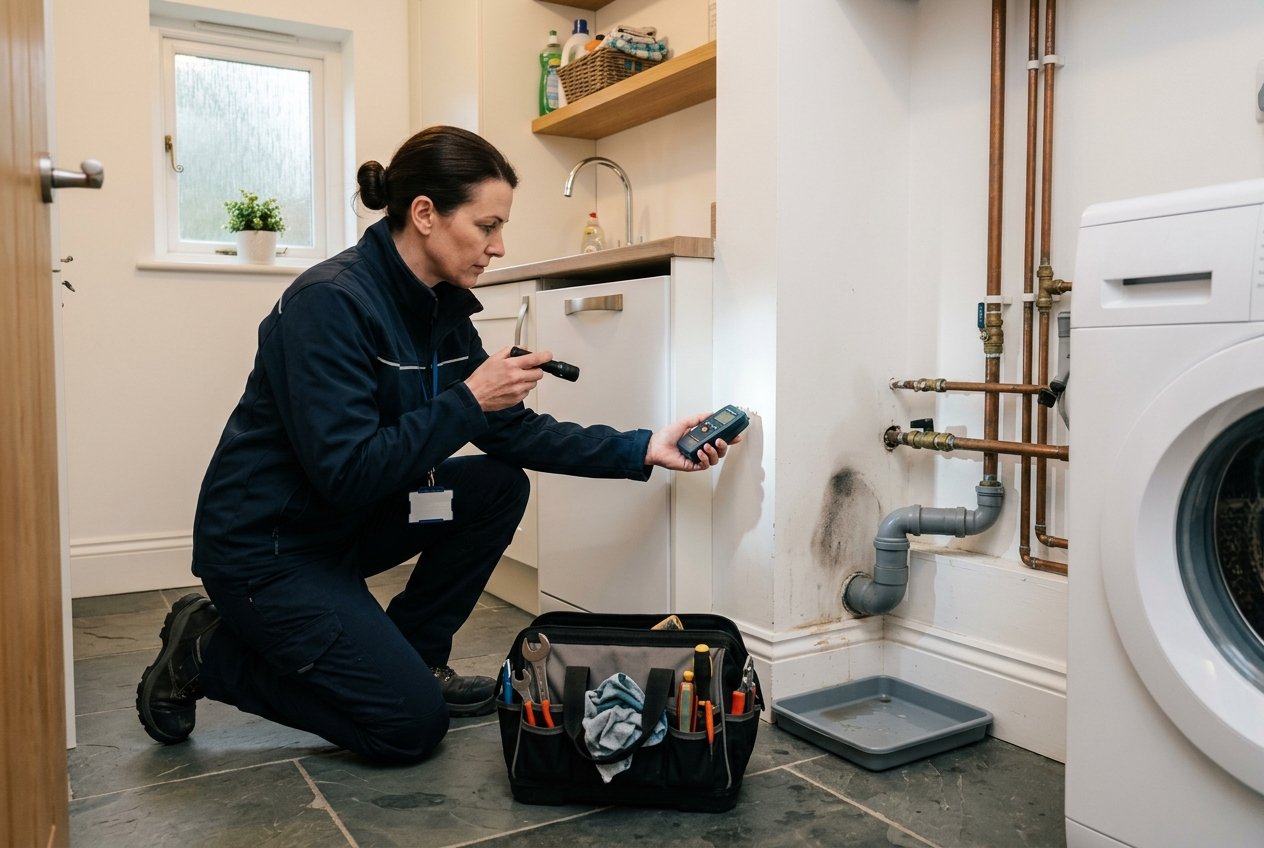
A hidden water leak can continue for weeks or months before it becomes obvious. By the time a stain appears on a ceiling or a musty smell develops in a cupboard, water may already have affected plaster, timber, insulation, flooring or fittings. Acting quickly can limit the damage and may help you avoid a much larger repair.
Leaks are not always easy to locate. Water can travel along pipes, joists and ceilings before it emerges some distance from the original problem. The source might be a concealed pipe, a faulty valve, a leaking toilet, a damaged seal around a bath or shower, or a central-heating component. The following checks can help you identify warning signs and take sensible first steps.
Recognise the warning signs of a hidden leak
Visible dripping is only one indication of a plumbing problem. Look out for changes that do not have an obvious explanation, particularly if they appear close to bathrooms, kitchens, utility rooms, boilers or storage tanks.
Unexplained damp patches: Discolouration, bubbling paint, peeling wallpaper or soft plaster on walls and ceilings can indicate water ingress. Brown or yellow marks may become larger over time.
Musty or mouldy smells: A persistent damp odour behind furniture, beneath flooring or inside a cupboard can suggest trapped moisture, even where the surface looks dry.
Unusual sounds: Hissing, trickling or rushing water when taps and appliances are off may point to a pressurised pipe or a toilet that is continuously refilling.
Changes in water pressure: A sudden or unexplained reduction in pressure can sometimes be linked to a leak, although faulty fittings, supply issues and other plumbing faults can cause similar symptoms.
Higher water usage: An unexpected increase in your water bill or meter readings may be a useful clue, especially if your household usage has not changed.
Damaged floors or joinery: Creaking, lifting, staining, warped laminate, swollen skirting boards and soft timber can all indicate moisture below or behind the surface.
Boiler pressure problems: If you have a sealed central-heating system and its pressure repeatedly falls, there may be a fault or leak. This should be assessed by a qualified heating professional.
Check whether the leak is on your supply
If you suspect a leak from a water-fed pipe, turn off every tap and make sure washing machines, dishwashers and other water-using appliances are not running. Find your water meter, usually outside the property or in an accessible internal location, and note the reading. Avoid using water for a short period, then check again. If the reading has changed, water may be escaping somewhere between the meter and your fittings.
This test is not definitive. A faulty toilet or a small intermittent leak may not be immediately obvious, and not every property has an accessible meter. If you are unsure what the reading means, contact your water supplier or ask a plumber to investigate.
Some properties have shared supplies, internal storage tanks or older plumbing arrangements, so responsibility for a problem is not always straightforward. If the suspected leak is outside your property boundary or appears to involve the public water main, contact your water supplier.
Inspect the most common problem areas
Start with places where water connections are concentrated. Use a torch and look without removing fixed panels or disturbing electrical equipment.
Check under sinks for damp pipework, loose compression fittings, staining and water collecting in the base of the cupboard.
Inspect around toilet cisterns and the base of the toilet. A silent flush valve fault can allow water to run continuously into the pan.
Look behind washing machines and dishwashers for wet hoses, damaged connections or water marks.
Examine bath panels, shower trays, silicone joints and the floor around sanitaryware for swelling or staining.
Check ceilings below bathrooms, loft tanks, boilers and pipe routes for marks or dampness.
Look around radiators, valves and visible heating pipes, but do not dismantle boiler components.
Dry the area carefully, place a sheet of kitchen roll beneath a suspect fitting and check it again later. This can help identify a slow drip. Do not rely on this method near electrical sockets, appliances or damaged ceilings.
Take immediate action to limit the damage
If water is actively escaping, turn off the internal stopcock if it is safe to do so. It is often located beneath the kitchen sink, near the point where the mains water pipe enters the property, or in a utility area. Turn on a cold tap at the lowest level of the property to relieve pressure, but be prepared for water to discharge briefly from the pipework.
For a leak from a toilet, washing machine or dishwasher, use the appliance’s isolation valve if it is accessible. For a central-heating leak, switch off the heating system and allow it to cool. Do not open the boiler casing or attempt to repair gas or boiler components yourself.
Move furniture and belongings away from the affected area where possible. Catch dripping water in a container and use towels to protect flooring, but do not conceal a damp area with paint or sealant before the source has been repaired. Ventilation can help surfaces dry, although forcing air into a wall or ceiling will not solve a concealed leak.
If water is near sockets, light fittings, consumer units or electrical appliances, keep away from the area. Do not touch electrical equipment while standing on a wet surface. If it can be done without entering the affected area, turn off the electricity at the consumer unit and arrange urgent help. Call the emergency services if there is immediate danger.
Know when to call a professional
A plumber should investigate a leak that is hidden behind a wall, beneath a floor or above a ceiling. Finding the source may require specialist listening equipment, pressure testing, moisture measurements or careful access to pipework. Opening a wall or floor without knowing where the pipe runs can cause unnecessary damage.
Arrange urgent assistance if water is spreading quickly, a ceiling is bulging, a pipe has burst, the stopcock will not close, or you cannot identify where the water is coming from. Keep clear of a visibly sagging ceiling, as saturated plasterboard can become heavy and unstable.
Ask the professional to identify the source, stop the leak and check for related damage. Depending on the cause, repairs might involve replacing a fitting, renewing a section of pipe, repairing a toilet valve, resealing a shower or addressing a heating-system fault. Once the leak is fixed, affected materials may need time to dry before decorating or replacing flooring.
Reduce the risk of future leaks
Locate and label your stopcock before an emergency occurs. Check accessible pipework and flexible appliance hoses periodically, and replace hoses that are cracked, bulging or past their recommended service life. Do not overload cupboards beneath sinks, as stored items can knock fittings or hide early signs of a leak.
Keep shower seals and grout in good condition, and deal with dripping taps, running toilets and small stains promptly. In colder weather, protect exposed pipes from freezing and know where to isolate external taps. Regular maintenance will not prevent every hidden leak, but it can make problems easier to spot before they cause structural damage.
Book a plumbing inspection
If you have noticed damp patches, unexplained water use or a leak you cannot trace, book a plumbing service through Task Pigeon. A trusted professional can locate the problem, make the repair and help protect your home from further damage.