

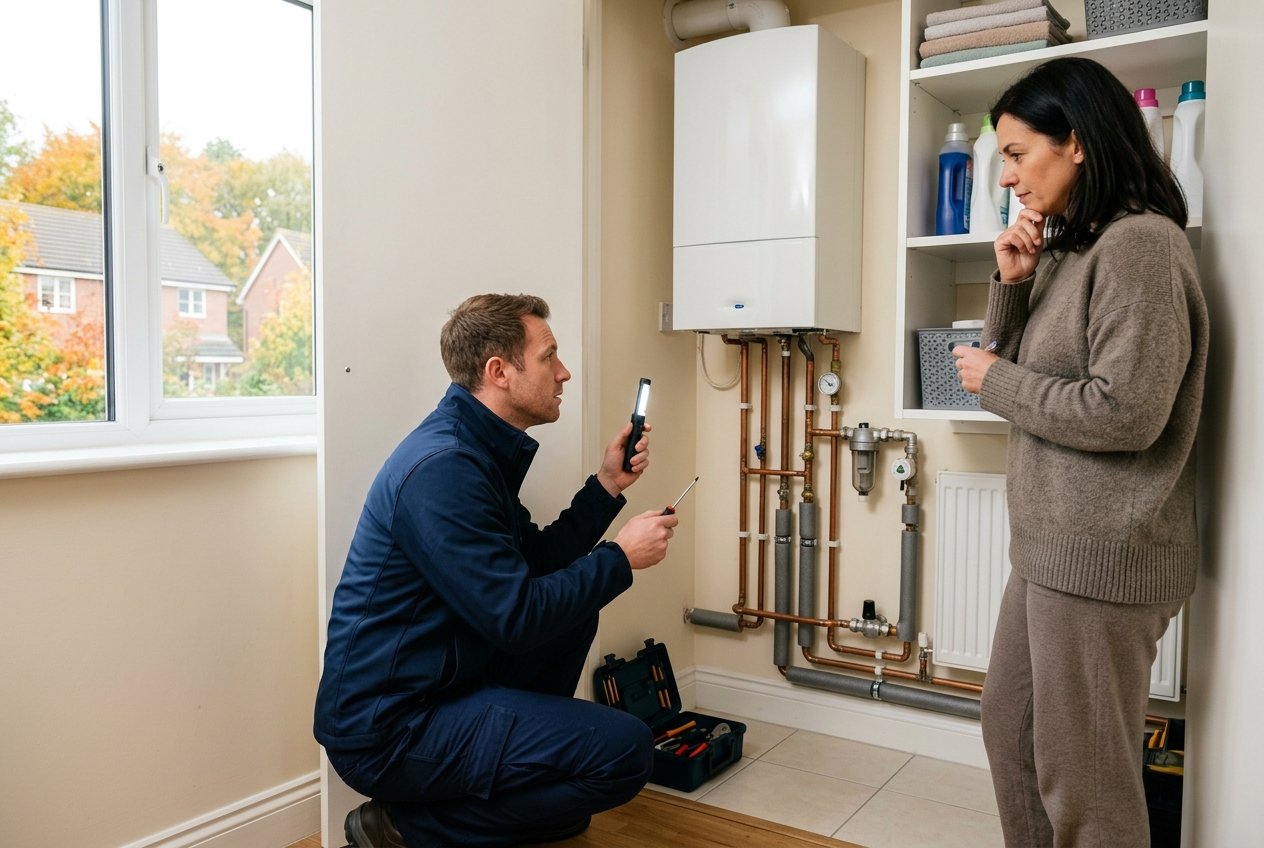
As summer draws to a close, your heating system may soon be called upon after several months of limited use. Preparing it before the first cold spell can help you identify problems early, improve comfort around the home and reduce the risk of an inconvenient breakdown when heating engineers are busiest.
Whether you have a gas boiler and radiators, an electric heating system, an oil boiler or a heat pump, a few sensible checks can make a noticeable difference. Some tasks are suitable for homeowners, while servicing, repairs and work involving gas or electrical components should always be carried out by a suitably qualified professional.
Start with a visual check
Walk around your home and inspect the parts of the heating system that are easy to see. Look for signs of leaks, corrosion, damage or unusual staining around the boiler, radiators, valves, pipes and any hot water cylinder. Even a small drip should not be ignored, as it may develop into a larger fault once the system is operating regularly.
Check that radiators and other heat emitters are not blocked by furniture, curtains or large decorative items. Clearing the space around them allows warm air to circulate more effectively. Avoid using radiator covers that restrict airflow unless they have been designed to do so safely and do not interfere with thermostatic radiator valves.
If your boiler is installed in a cupboard, make sure the area is not being used to store flammable materials, aerosols or household items that could obstruct ventilation. Never cover air vents or alter the boiler casing.
Test the heating before you need it
Turn the heating on for a short period while the weather is still relatively mild. Listen for unusual banging, whistling, vibrating or gurgling sounds, and check whether each radiator warms up. Notice how long the system takes to respond and whether any rooms remain noticeably colder than others.
A brief test can reveal issues such as trapped air, a faulty thermostat, uneven circulation or a boiler that is struggling to ignite. Finding these problems in early autumn gives you more time to arrange a repair rather than waiting until the system fails during a freezing night.
Check your room thermostat and heating controls as well. Replace batteries if the display is faint or the controls are not responding. Review your heating schedule and make sure the clock is showing the correct time. If you have smart heating controls, check that the app, wireless connection and programmed settings are working as expected.
Check radiator performance
If the top of a radiator is cold while the lower section is warmer, air may be trapped inside it and the radiator may need bleeding. Switch the heating off and allow the radiator to cool before carrying out this task. Use the correct radiator key, protect the surrounding area from water and open the bleed valve slowly. Close it as soon as water begins to escape.
After bleeding one or more radiators, check the boiler pressure if your system has a pressure gauge. Bleeding can cause the pressure to fall. The correct reading varies between systems, so consult the manufacturer’s instructions or ask a heating professional if you are unsure. Do not repeatedly refill a sealed heating system without investigating why pressure is being lost.
Radiators that remain cold, only heat at one end or need frequent bleeding may have a deeper issue, such as sludge, a circulation fault or a problem with a valve. A qualified heating engineer can assess the system and recommend the appropriate solution.
Inspect the boiler and system pressure
Look at the boiler display for warning messages or fault codes and check the pressure gauge when the system is cool. Many sealed systems operate within a particular pressure range, but the correct level depends on the appliance and installation. Use the instructions for your model rather than relying on a general figure.
If the pressure is consistently too high or too low, or it drops again after topping up, arrange professional advice. Ongoing pressure loss can be linked to a leak, an expansion vessel problem or another component fault. Avoid removing the boiler casing or attempting repairs yourself.
If your boiler is due for its annual service, autumn is a sensible time to arrange it. A service allows a qualified engineer to inspect the appliance, test its operation and identify wear or safety concerns. Gas boiler work should be completed by a Gas Safe registered engineer. Oil, electric and heat pump systems also require technicians with the appropriate qualifications and experience.
Check ventilation and carbon monoxide safety
Appliances that burn fuel need adequate ventilation and a safe route for combustion gases. Never block boiler air vents, flues or grilles, and do not make changes to the installation without professional guidance. If a boiler flue is accessible from outside, check that it is not visibly blocked by leaves, plants or other debris, but do not dismantle or interfere with it.
Install carbon monoxide alarms in suitable locations where fuel-burning appliances are present, following the manufacturer’s instructions. Test each alarm and replace batteries when required. An alarm is an important safeguard, but it does not replace proper appliance servicing or professional checks.
Carbon monoxide has no smell or colour. If an alarm sounds, or anyone experiences symptoms such as headache, dizziness, nausea or unusual tiredness while an appliance is operating, turn off the appliance if it is safe to do so, leave the property and seek urgent advice. Do not use the appliance again until it has been checked by a qualified professional.
Improve efficiency around the home
Once the system is working correctly, consider simple measures that help retain heat. Close doors between rooms, draw curtains at night and check for obvious draughts around windows and external doors. Make sure loft insulation and pipe insulation are in good condition where appropriate.
Use heating controls thoughtfully rather than turning the thermostat higher than necessary. A higher setting does not make a home warm up instantly, and the most suitable temperature depends on the household and individual needs. If you are away for an extended period during cold weather, follow your system manufacturer’s advice about frost protection and minimum heating settings.
Do not dry clothes directly on radiators, as this can restrict heat output and increase condensation. If a radiator or heating appliance becomes unusually hot, develops a strong smell or behaves unpredictably, switch it off where safe and arrange an inspection.
Arrange professional help before winter demand increases
Home checks are useful, but they cannot replace proper servicing or repairs. Book a heating professional if your system is noisy, unreliable, losing pressure, producing fault codes, leaving radiators cold or using more energy than expected. It is also worth seeking advice before replacing an older boiler or changing to a different heating technology, as the right solution depends on your property, insulation, controls and hot water requirements.
Preparing early gives you time to compare suitable professionals, ask questions and arrange work at a convenient time. For dependable help with checks, servicing and heating system issues, book a heating systems service through TaskPigeon before the first cold weather arrives.