

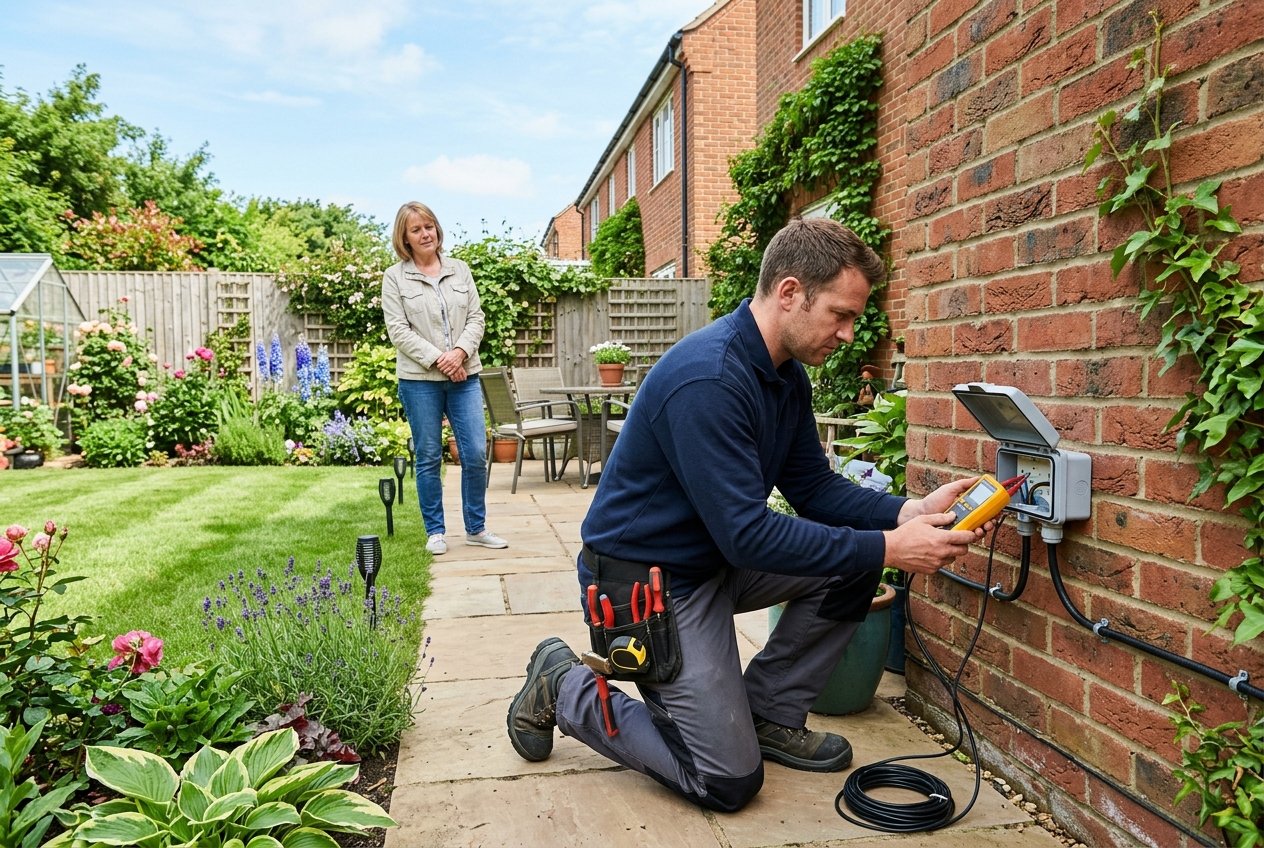
Summer brings longer evenings, barbecues and more time spent in the garden. Outdoor sockets and garden lighting can make entertaining easier, but they also need careful attention. Rain, damp soil, garden tools, children, pets and temporary equipment can all increase the risk of electric shock, fire or damage to your electrical system.
A few simple checks can help you use outdoor electrics more safely. However, faults, new installations and any work inside electrical equipment should be handled by a qualified electrician. If you are unsure whether a socket, light or cable is safe, stop using it and arrange a professional inspection.
Check outdoor sockets before using them
Outdoor sockets should be specifically designed and installed for external use. Look for a weatherproof enclosure with a securely closing cover. The cover should not be cracked, loose or missing, and the socket should be firmly attached to the wall rather than hanging from its cable.
Before plugging anything in, check the socket and surrounding area for:
- Cracks, scorch marks, discolouration or signs of melting
- Loose fittings, exposed wires or damaged cable coverings
- Water inside the enclosure or around the socket
- Corrosion, dirt or insects affecting the socket
- A cover that no longer closes properly
Do not use an outdoor socket if it is wet, damaged or showing signs of overheating. Switch it off at the socket, if safe to do so, and arrange for an electrician to investigate. Never try to dry a wet socket with a hairdryer or other mains-powered appliance.
Make sure RCD protection is working
Outdoor electrical supplies should have suitable residual current device, or RCD, protection. An RCD is designed to disconnect the electricity quickly if it detects current flowing through an unintended path, such as through a person or damaged cable.
Many consumer units and socket outlets include a test button. Follow the instructions marked on the device and test it at the recommended interval. When pressed, the test button should disconnect the protected circuit. If it does not trip, or if the power does not restore correctly afterwards, stop using the relevant outdoor equipment and contact an electrician.
An RCD is an important safety measure, but it does not make damaged equipment safe. It cannot replace proper installation, careful use and regular checks. If an RCD keeps tripping, do not repeatedly reset it. The cause could be a faulty appliance, water ingress, damaged cable or an installation problem that requires professional testing.
Use suitable equipment and extension leads
Only use electrical equipment that is rated for outdoor use. Indoor extension leads, multi-socket adaptors and ordinary household appliances may not have enough protection against moisture or physical damage. Check the manufacturer’s instructions and look for the appropriate outdoor rating before use.
Extension leads should be kept as short as practical and fully unwound when carrying a significant load. A coiled lead can overheat. Do not connect extension leads to one another or use adaptors that create more outlets than the circuit is designed to support.
Keep plugs, connectors and cable joints away from wet grass, puddles and areas where water may collect. Weatherproof connectors should be suitable for the conditions and used as instructed. Do not cover a connection with a plastic bag; this can trap moisture and may create additional risks.
Route cables where they cannot be cut by a lawnmower, strimmer or hedge trimmer, and where people will not trip over them. If a cable must cross a walkway temporarily, use a suitable cable protector rather than tape or makeshift coverings. Temporary equipment should be unplugged and stored indoors after use, particularly during rain or when the garden is unattended.
Keep garden lighting safe
Garden lights should be designed for outdoor installation and have an appropriate ingress protection, or IP, rating for their location. The IP rating indicates how well an enclosure protects against solid objects and moisture. A light exposed to heavy rain, splash from sprinklers or water near a pond may need a higher level of protection than a sheltered wall light.
Follow the manufacturer’s instructions for positioning, cleaning and maintenance. Check that:
- Light fittings are secure and show no cracks or corrosion
- Seals, glands and covers are intact and correctly fitted
- Cables are protected from digging, cutting and animal damage
- Transformers and control units are kept dry and ventilated
- Low-voltage connections remain above standing water and are suitable for outdoor use
Do not bury cables without knowing the correct installation method and depth. A cable placed too close to the surface can be damaged by planting, digging or routine garden work. Permanent outdoor lighting should be installed and tested as part of a suitable electrical system, not improvised from indoor equipment.
Take extra care around water
Swimming pools, hot tubs, ponds, fountains and irrigation systems require particular care. Water and electricity are a dangerous combination, even when equipment is marketed for garden use. Keep portable appliances, chargers and ordinary extension leads well away from water, and follow the manufacturer’s requirements for fixed lighting, pumps and other equipment.
Do not move or repair electrical equipment near a pool or pond while standing on wet ground. If you notice a tingling sensation, unusual tripping, damaged underwater lighting or a pump that behaves differently, switch off the supply if it is safe to do so and call an electrician. Never enter the water to retrieve electrical equipment until the supply has been safely isolated and checked.
Plan for summer events and extra demand
Barbecues, garden offices, outdoor speakers, refrigerators and party lighting can place additional demand on your electrical system. Avoid running several high-powered appliances from one socket or extension lead. Check the rating of each appliance and the extension equipment, and keep ventilation openings clear.
If you regularly need more outdoor power, ask an electrician about installing additional fixed sockets or a dedicated circuit. A professional can assess the existing installation, confirm that the consumer unit and protective devices are suitable, and install equipment that is appropriate for its location.
New outdoor electrical work should be designed, installed and tested in accordance with current UK requirements, including the applicable provisions of BS 7671. Depending on the work and location, building regulations requirements may also apply. A qualified electrician can explain what is needed and provide the relevant certification.
Know when to call an electrician
Professional help is recommended if an outdoor socket is loose, repeatedly trips, feels hot, smells of burning or shows water damage. You should also arrange an inspection if lights flicker, cables are exposed, a circuit has been altered by a previous owner or you are planning a new garden room, hot tub, shed supply or permanent lighting system.
Do not remove socket covers, replace wiring, extend circuits or investigate a fault while the power is live. Even after switching off a circuit, parts of an installation may remain energised if it has been altered incorrectly. An electrician can isolate the supply, test the installation and identify faults safely.
Book a qualified electrician for outdoor safety checks
Enjoy your garden with greater confidence this summer. Whether you need an outdoor socket inspected, garden lighting repaired or a new weatherproof installation planned, book an electrician through Task Pigeon to arrange the help you need.