

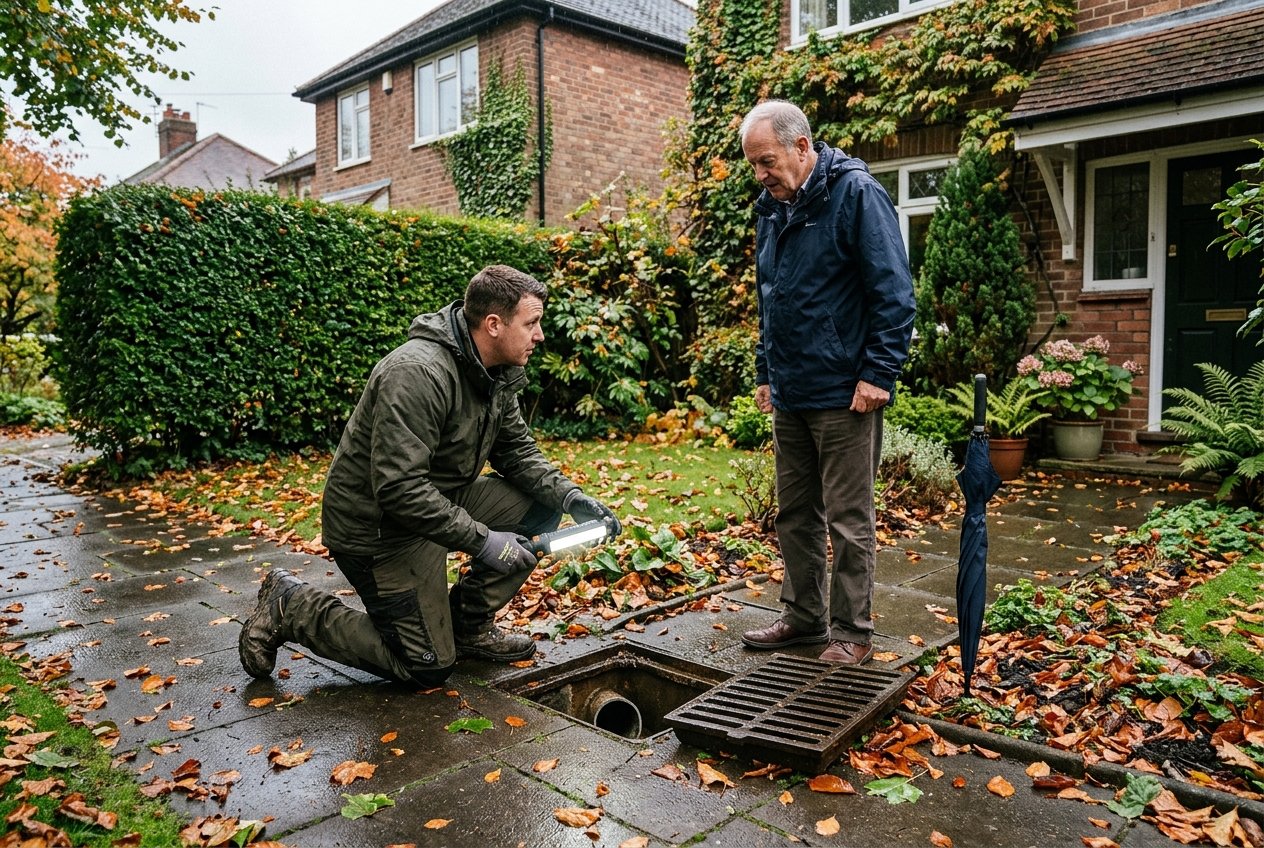
Autumn brings welcome cooler weather, but it also brings falling leaves, strong winds and heavier rain. Together, these can expose weaknesses in your drainage system. A blocked gully, overflowing gutter or slow-running drain may seem like a minor nuisance at first, yet the problem can quickly lead to standing water, unpleasant smells, damp or flooding.
Taking a little time to inspect your drains before the wettest weather arrives can help you identify warning signs early. Some simple checks are suitable for homeowners, while more serious blockages and drainage faults should be assessed by a qualified professional.
Start with a Safe Visual Inspection
Choose a dry day and walk around your home, checking the visible parts of the drainage system. Look at areas where rainwater is collected or carried away, including gutters, downpipes, drain covers, gullies and channels around patios or driveways.
- Check whether drain covers are cracked, loose, sunken or damaged.
- Look for leaves, mud, moss and other debris gathered around grates and gullies.
- Make sure downpipes are still connected and discharging into the correct drain or soakaway.
- Look for puddles that remain after previous rainfall.
- Watch for damp patches, staining or erosion around external walls and paving.
- Check that garden waste, stored items and soil are not covering drainage points.
Do not lift heavy or sealed manhole covers yourself. Never enter a drain, inspection chamber or confined space. These areas can contain hazardous gases, unstable surfaces and contaminated water. If a cover needs to be opened for inspection, arrange for a drainage professional to do it safely.
Clear Leaves and Debris Carefully
Fallen leaves are one of the most common autumn drainage problems. They can collect over drain grates, block gullies and wash into underground pipes. Remove loose debris by hand while wearing suitable gloves, or use a brush to clear the surrounding surface. Place the waste in a garden-waste bin rather than washing it into the drain.
Where a grate is easy to access and safe to clean, remove visible debris from the top. Avoid poking tools deep into the drain, as this can push a blockage further into the pipe or damage the fitting. If water is already standing around the grate, or the blockage cannot be cleared easily, a drainage specialist can investigate without causing further damage.
Inspect Gutters and Downpipes
Although gutters are part of the rainwater system rather than the underground drainage network, they have a direct effect on how much water reaches the ground around your property. Blocked gutters can overflow onto walls, windows, paths and foundations. A disconnected downpipe can also release large volumes of water beside the building.
From ground level, check for overflowing joints, sagging sections, vegetation growing from the gutter and staining beneath the roofline. If you need to use a ladder, follow the manufacturer’s safety guidance and avoid working in wet or windy conditions. For high, awkward or difficult-to-reach gutters, it is safer to book a professional.
Check that downpipe outlets are not obstructed and that water is directed into a suitable drain, soakaway or water butt. Do not alter the route of a downpipe without considering where the water will go. Discharging rainwater against a wall or onto a neighbour’s property can create damp and boundary problems.
Test for Slow or Blocked Drains
Inside the property, pay attention to how quickly sinks, showers, baths and toilets drain. A single slow fixture may have a local blockage, while several slow fixtures at once can indicate a problem further along the drainage system.
- Listen for gurgling sounds from plugholes or toilets.
- Notice whether water rises in a shower tray or basin before draining away.
- Check for unpleasant smells that return after cleaning.
- Look for water backing up in an external gully when an indoor tap is running.
- Be alert to toilets that flush poorly or need repeated flushing.
For a minor sink blockage, you may be able to remove and clean the trap if you understand how to refit it securely. Follow the instructions for any plunger or drain-cleaning tool you use. Avoid mixing chemical drain cleaners, and take care with corrosive products, particularly if you may later need professional assistance. Tell the drainage contractor what products have been used.
Check Driveways, Patios and Garden Drainage
Autumn rain can reveal problems with surface water drainage around outdoor areas. Inspect channels, linear drains and patio gullies for silt, leaves and weeds. Check whether paving has sunk towards the property rather than away from it. Water collecting beside external walls may eventually contribute to damp or damage to pointing.
In gardens, look for areas that become waterlogged quickly or remain saturated long after rain has stopped. This can indicate compacted soil, a blocked land drain, an overwhelmed soakaway or poor grading. Avoid covering a suspected soakaway with a shed, extension or impermeable surface without first seeking appropriate advice.
If your property has a septic tank or private sewage treatment system, follow the manufacturer’s maintenance schedule and check the area for unusual smells, pooling or unusually lush vegetation. Do not open or inspect tanks unless you are trained and equipped to do so.
Know the Warning Signs of a Bigger Problem
Some drainage issues require prompt professional attention. Arrange an inspection if you notice repeated blockages, sewage smells, wastewater backing up, subsidence around a drain, cracks in paving or a manhole that overflows during rain.
Call for urgent help if sewage is entering the property, an overflowing drain is creating an immediate health risk, or floodwater is close to electrical equipment. Keep children and pets away from contaminated water, and do not touch electrical fittings if the area is wet.
Recurring problems may be caused by tree-root intrusion, damaged or displaced pipes, collapsed sections, poor connections or inadequate capacity. A drainage professional may use high-pressure water jetting, drain rods, dye testing or a CCTV survey, depending on the symptoms. A proper diagnosis is preferable to repeatedly treating the visible blockage without addressing its cause.
Check Responsibilities Before Work Begins
Drainage responsibility can depend on the type and location of the pipe. Private drains serving only your property are often the homeowner’s responsibility, while shared drains and public sewers may fall under the local water and sewerage company. The exact arrangements can vary, so check your property documents, insurance policy and local water company guidance before authorising major work.
Even where another organisation may be responsible for a section of the system, you should still report problems promptly. Take photographs of visible damage and note when symptoms occur, particularly during or after heavy rain. This information can help establish where the issue is located and what action is needed.
Prepare Before the Forecast Turns Wet
Do not wait for a blocked drain to cause flooding. Clear accessible debris, check visible pipework and make a note of any slow drainage or standing water. If you are unsure whether a problem is minor or likely to worsen, an early inspection can be more convenient and less disruptive than emergency work during severe weather.
A qualified drainage professional can identify blockages, investigate recurring faults and recommend suitable repairs. They can also advise on preventative measures, such as improved grates, repairs to damaged pipework or changes to surface-water drainage.
Book a Drainage Professional
If your autumn checks reveal a blockage, damaged drain or persistent waterlogging, arrange help before heavy rain makes the issue worse. Book a drainage service through Task Pigeon to find a suitable professional and take the next step towards a safer, better-prepared property.