

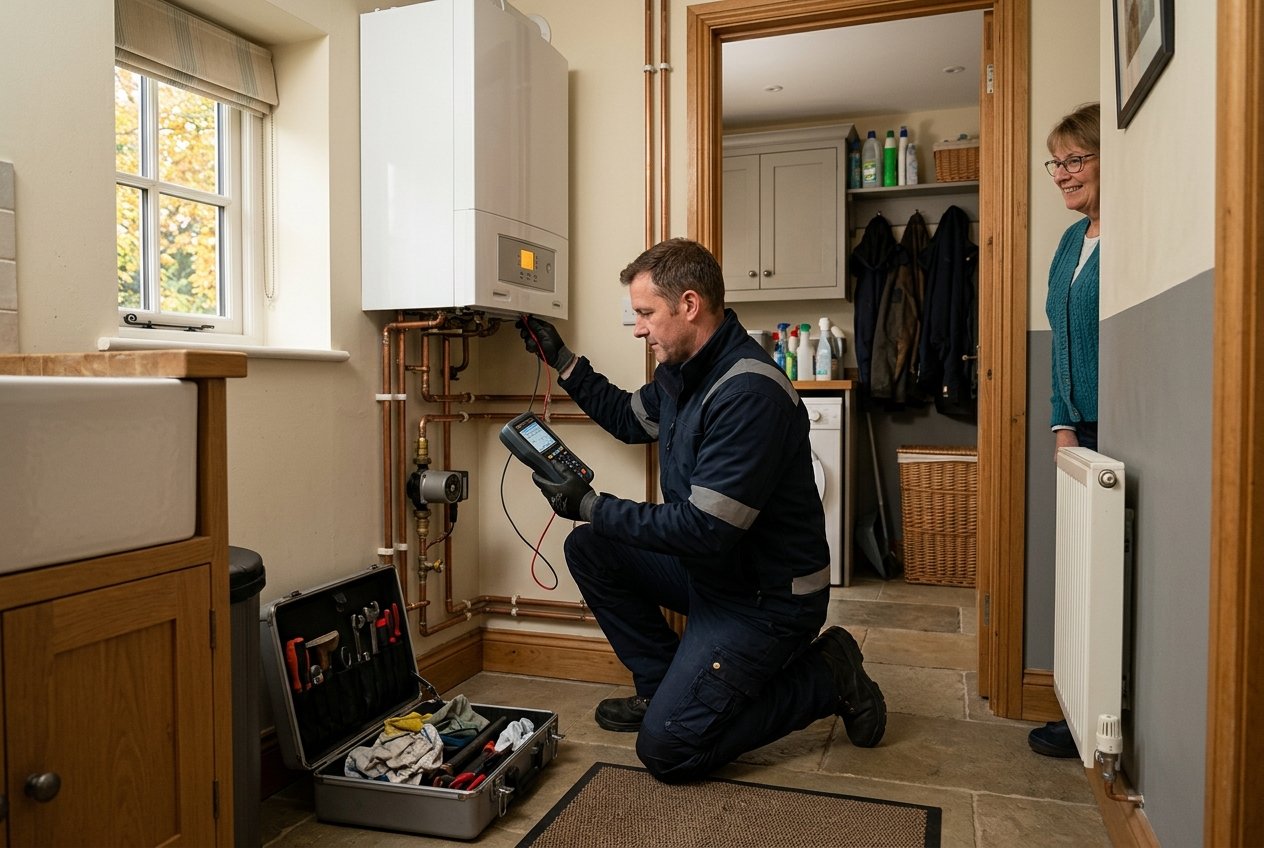
As autumn arrives and temperatures begin to fall, your heating system may soon be working regularly again after a quieter summer. A little preparation before the first cold spell can help you spot problems early, improve comfort and reduce the risk of an unexpected breakdown when you need your heating most.
Whether your home has a gas boiler and radiators, an electric heating system, underfloor heating or a heat pump, the same principle applies: check what you can safely inspect, arrange professional maintenance where needed and avoid leaving essential repairs until winter is fully under way.
Start with a simple visual check
Walk around your home and look for anything that appears unusual. Check radiators, exposed pipework, the boiler or heat pump unit, thermostats and any visible controls. You are looking for signs such as rust, damp patches, staining, cracks, loose fittings or damage to insulation.
If you notice water around a boiler, radiator valve or pipe joint, do not ignore it. Even a small leak can worsen when the system is operating more frequently. Turn off the heating if necessary and arrange an inspection by a suitably qualified heating professional.
For a gas boiler, check that the area around the appliance is clear and well ventilated. Do not use the boiler cupboard for storage, particularly if items could obstruct air vents or access to the appliance. Never remove the boiler casing yourself; internal checks and repairs should be carried out by a qualified engineer.
Test the heating before you need it
Switch the heating on for a short period while the weather is still mild. This gives you time to identify problems without being left in a cold home. Listen for unusual banging, clanking, whistling or gurgling noises, and check whether the radiators warm up evenly.
Make sure the thermostat responds correctly and that your heating comes on and switches off at the expected temperatures. If you use a programmer, smart thermostat or heating app, check the clock, schedule, batteries and Wi-Fi connection where relevant. Summer time changes, power cuts or software updates can sometimes affect settings.
It is also worth testing the hot water. Run a tap and check that the water reaches the expected temperature without taking an unusually long time. If the system struggles to provide hot water, fluctuates between hot and cold or makes unfamiliar noises, arrange professional advice rather than repeatedly resetting it.
Check the boiler pressure
Many sealed central heating systems have a pressure gauge. Your boiler manual will explain the appropriate range, but the gauge commonly sits within a marked normal area when the system is cold. If the pressure is significantly low or high, consult the manufacturer’s instructions or contact a qualified heating engineer.
A low reading may be linked to a leak, bleeding radiators or another fault. Although some systems can be repressurised by the homeowner using the filling loop, this should only be done when you understand the procedure for your specific boiler. If the pressure repeatedly drops or rises, topping it up is not a permanent solution and the underlying cause should be investigated.
Do not attempt to alter components or open the boiler casing. If you are unsure what the gauge means, a professional can check the system safely.
Bleed radiators carefully
Radiators that are cold at the top but warmer at the bottom may contain trapped air and could need bleeding. Turn the heating off first and allow the radiator to cool. Use a radiator key to open the bleed valve slowly, keeping a cloth nearby. You should hear air escaping; close the valve when water begins to appear.
After bleeding one or more radiators, recheck the boiler pressure if you have a sealed system. You may need to adjust it in line with the manufacturer’s instructions. If a radiator remains cold, only heats in certain areas or needs frequent bleeding, there may be a balancing issue, sludge or another fault requiring professional attention.
Take care around radiator surfaces and valves, as they can become hot quickly. If you are not confident carrying out this simple maintenance task, a heating professional can do it for you.
Keep heat moving efficiently
Move furniture, curtains and other items away from radiators so warm air can circulate around the room. Avoid covering radiators with drying clothes, as this can restrict heat output and increase condensation. Radiator reflector panels may be useful on external walls, but they should be fitted correctly and should not interfere with valves or pipework.
Check that radiator valves turn freely and that thermostatic radiator valves are not stuck after being left at the same setting for several months. Do not force a stiff valve. A professional can assess and replace faulty valves if required.
Dust can also build up around convector heaters, vents and heat pump filters. Follow the manufacturer’s cleaning instructions and isolate electrical equipment before cleaning it. Never block air grilles or ventilation openings.
Review insulation and draughts
Your heating system has less work to do when your home retains heat effectively. Before autumn becomes colder, check for draughts around external doors, windows and loft hatches. Appropriate draught-proofing, curtains and insulation can help rooms feel more comfortable, but ventilation must not be blocked.
Pay particular attention to exposed pipes in unheated areas such as garages, lofts and outbuildings. Pipe insulation can reduce heat loss and help protect vulnerable pipework from freezing. If you are unsure which materials are suitable, ask a professional for advice.
Do not cover required air vents or seal areas that are designed to provide ventilation for a gas appliance. A qualified engineer can explain what may safely be improved.
Arrange servicing and safety checks
An annual service can help identify wear, combustion issues, leaks and other faults before the heating system is under heavy winter demand. For gas appliances, use an engineer who is registered with the Gas Safe Register. Oil-fired systems should be serviced by an appropriately qualified oil heating technician, and electrical or renewable systems should be inspected by a competent professional familiar with that equipment.
If you rent your home, your landlord is generally responsible for arranging required gas safety checks and maintaining fixed heating appliances. Report faults promptly and do not attempt repairs yourself.
It is also sensible to test your carbon monoxide alarms according to the manufacturer’s instructions, particularly in rooms containing fuel-burning appliances. Carbon monoxide is odourless and cannot be detected by sight or smell. If an alarm sounds, or you suspect carbon monoxide, leave the property, avoid using the appliance and seek urgent professional advice.
Know when to call a professional
Arrange a heating inspection if your system repeatedly loses pressure, fails to heat rooms evenly, produces unusual smells or noises, leaks water, trips electrical protection or displays a fault code. A professional can diagnose the problem rather than relying on guesswork and can advise whether repair, cleaning, balancing or replacement is the most appropriate option.
Never attempt to repair a gas appliance, modify electrical wiring or work on refrigerant circuits in a heat pump unless you are suitably qualified. Prompt attention is usually safer and can help prevent a minor issue from becoming a larger winter emergency.
Book your autumn heating check
Preparing your heating system now can make the first cold weather more comfortable and give you greater confidence that everything is ready. If you need help testing, servicing or maintaining your heating system, book a heating service through Task Pigeon and find a trusted professional for the job.