

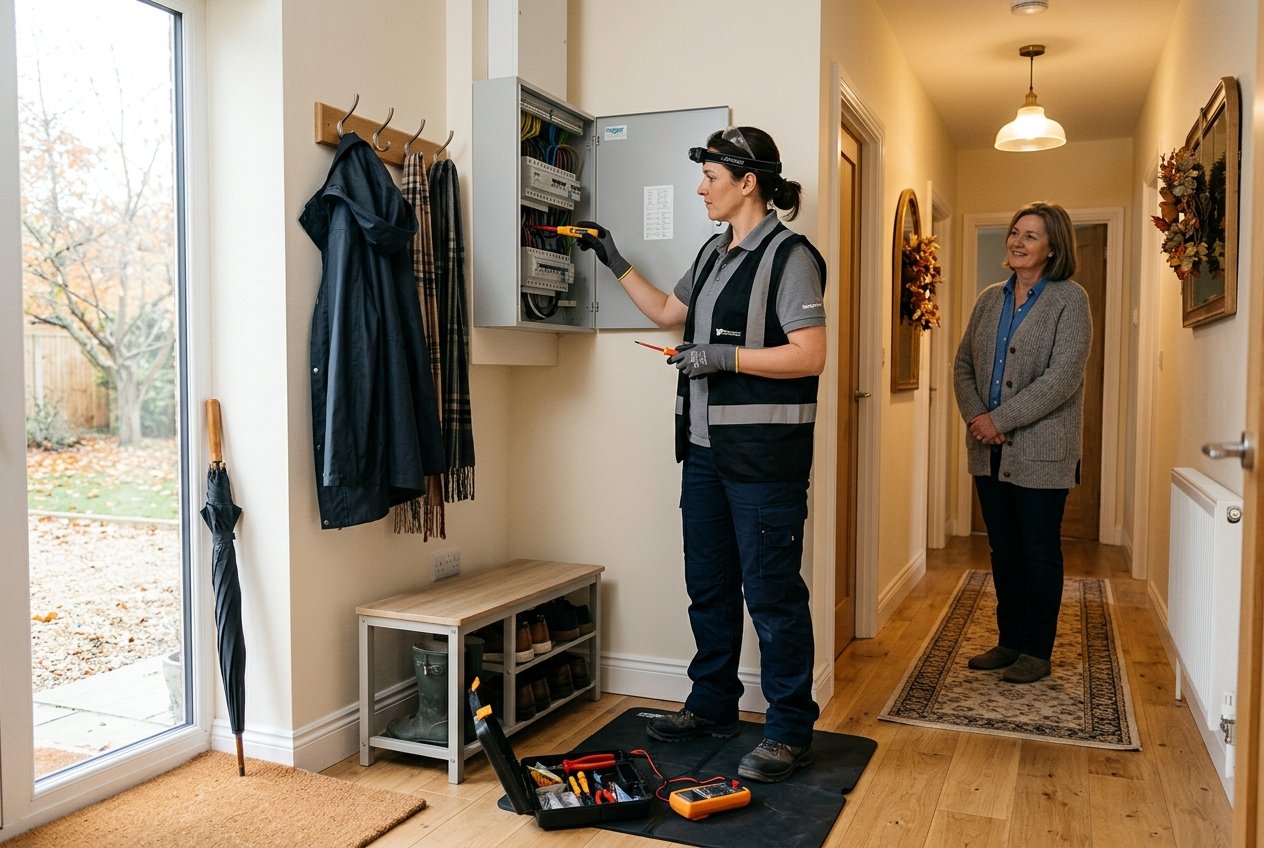
As autumn arrives, homes rely more heavily on lighting, heating and electrical appliances. Earlier sunsets can mean lights are switched on for longer, while cooler weather often brings extra use of portable heaters, electric blankets, dehumidifiers and tumble dryers. These changes can place greater demand on your electrical system.
A few sensible checks can help you spot potential problems before the season becomes colder and darker. However, electrical work can be hazardous, and faults should always be assessed by a qualified electrician. Preparing your home is not about carrying out complicated repairs yourself; it is about identifying concerns early, using equipment safely and arranging professional help where needed.
Check your lighting before the evenings draw in
Walk through your home at dusk and check that every room, hallway, stairwell and entrance is adequately lit. Pay particular attention to steps, changes in floor level and areas where family members may be carrying shopping, laundry or other items.
- Replace failed bulbs with the correct type and wattage for the fitting.
- Check that lamps and light fittings are stable and free from visible damage.
- Make sure switches operate normally without crackling, sparking or becoming unusually warm.
- Keep external lights working around paths, driveways, gates and entrances.
- Clean dusty light fittings, but switch off and allow them to cool before doing so.
If a bulb repeatedly fails, flickers or blows a fuse, the problem may be with the fitting, wiring or circuit rather than the bulb itself. Do not keep replacing bulbs without finding out why. An electrician can inspect the fitting and identify whether it is safe to continue using.
Look for signs of electrical faults
Before you increase your use of electrical appliances, inspect accessible sockets, switches, plugs and cables. Warning signs include scorch marks, buzzing, crackling, a burning smell, discolouration, loose faceplates and sockets that feel hot to the touch.
Damaged cables should not be taped up and put back into service. Unplug the appliance if it is safe to do so, keep it out of use and arrange a repair or replacement. If you notice smoke, arcing or a strong burning smell, switch off the power at the consumer unit only if you can do so safely, leave the property if necessary and contact the appropriate emergency service or a qualified electrician.
Never remove socket covers or attempt to investigate wiring behind a wall or fitting unless you are suitably qualified. Electrical faults can remain dangerous even when an appliance appears to be switched off.
Use heaters, electric blankets and heated appliances carefully
Portable heaters and electric blankets can be useful when the temperature drops, but they need careful handling. Place portable heaters on a stable, level surface away from curtains, bedding, furniture and clothing. Keep them clear of walkways, and never cover them or use them to dry clothes.
- Plug high-power heaters directly into a suitable wall socket where possible.
- Avoid connecting several heaters or other high-power appliances to one extension lead.
- Check portable appliances for damaged plugs, loose parts or frayed cables.
- Follow the manufacturer’s instructions for storage, cleaning and safe operation.
- Switch heaters off when leaving the room or going to bed unless the appliance is specifically designed and approved for safe unattended use.
Electric blankets should be checked for worn fabric, exposed wires, scorch marks and damaged controls. Do not use one that has been folded tightly, creased or stored incorrectly. If you are unsure about its condition, have it replaced rather than taking a risk.
Prevent overloaded sockets and extension leads
Autumn can bring extra demands from lamps, chargers, heaters, televisions, computers and kitchen appliances. Plugging too many devices into one socket or extension lead can cause overheating. Extension leads should be a temporary solution, not a substitute for having sufficient fixed sockets.
Use an extension lead with the correct rating and fully unwind cable reels before use. Do not run cables under carpets, through doorways or across areas where they could be tripped over or damaged. Avoid joining extension leads together, and never use a multiple adaptor to power several high-wattage appliances from one socket.
If your household regularly depends on extension leads, or if sockets are loose, limited or poorly positioned, ask an electrician about installing additional sockets. A properly planned installation is safer and more convenient than relying on a collection of temporary leads.
Test your consumer unit and RCD protection
Residual current devices, commonly known as RCDs, are designed to help reduce the risk of electric shock by disconnecting the supply when they detect an imbalance. Many homes have RCD protection at the consumer unit, and some individual sockets or extension leads may include it too.
If your RCD has a test button, follow the instructions printed on the consumer unit or device. It should disconnect the relevant power supply when tested. If it does not operate, or if it trips repeatedly during normal use, contact a qualified electrician. Do not repeatedly reset it without investigating the cause.
Keep the area around the consumer unit clear and make sure household members know where it is. If a circuit trips, unplug recently used appliances and reset it only if you can do so safely. Persistent tripping can indicate a faulty appliance, damaged cable, water ingress or another electrical problem that requires professional attention.
Prepare outdoor electrics for wet autumn weather
Rain, fallen leaves and standing water can create additional hazards around outdoor sockets, lighting and garden equipment. Check that external fittings are suitable for outdoor use, securely mounted and protected against the weather. Do not use indoor extension leads or ordinary indoor appliances outside, even for a short period.
Before using garden tools, pumps or outdoor lighting, inspect cables and plugs for damage. Keep connections away from puddles and use suitable weatherproof covers. Outdoor electrical installations should have appropriate protection and must be installed or altered by someone competent to do the work safely.
If outdoor lights flicker, trip the power or show signs of water getting inside, stop using them and arrange an inspection. An electrician can check the fittings, connections and protective devices before winter weather becomes more severe.
Check smoke and carbon monoxide alarms
Test smoke alarms and carbon monoxide alarms according to the manufacturer’s instructions. Replace batteries when required, keep alarms free from dust and make sure they have not reached the end of their recommended service life.
Carbon monoxide can be produced by faulty or poorly maintained fuel-burning appliances, including boilers, fires and stoves. Electrical checks do not replace an annual boiler or appliance service by a qualified heating professional, but an electrician may be able to install or advise on suitable mains-powered alarms where appropriate.
Do not ignore an alarm, unusual smell or symptoms such as dizziness or nausea. Leave the property if you suspect carbon monoxide and contact the emergency services and a qualified professional from a safe location.
Arrange an electrical inspection before problems worsen
Professional help is advisable if your home has old wiring, limited sockets, recurring trips, unexplained flickering, damaged accessories or a consumer unit that appears outdated. If you have moved into a new property or are planning renovation work, an electrical inspection can provide useful reassurance and identify improvements before extra seasonal demand begins.
Use a suitably qualified and insured electrician for installation, repair and inspection work. Ask what the work includes, whether certification will be provided where required and whether any follow-up testing is recommended. Never feel pressured to carry out electrical work yourself simply because the issue appears minor.
Book an electrician for your autumn safety checks
From lighting faults and additional sockets to RCD concerns and outdoor electrics, a qualified professional can help make your home safer and more comfortable through the darker months. Book an electrician through Task Pigeon to arrange the help you need before autumn electrical demands increase.