

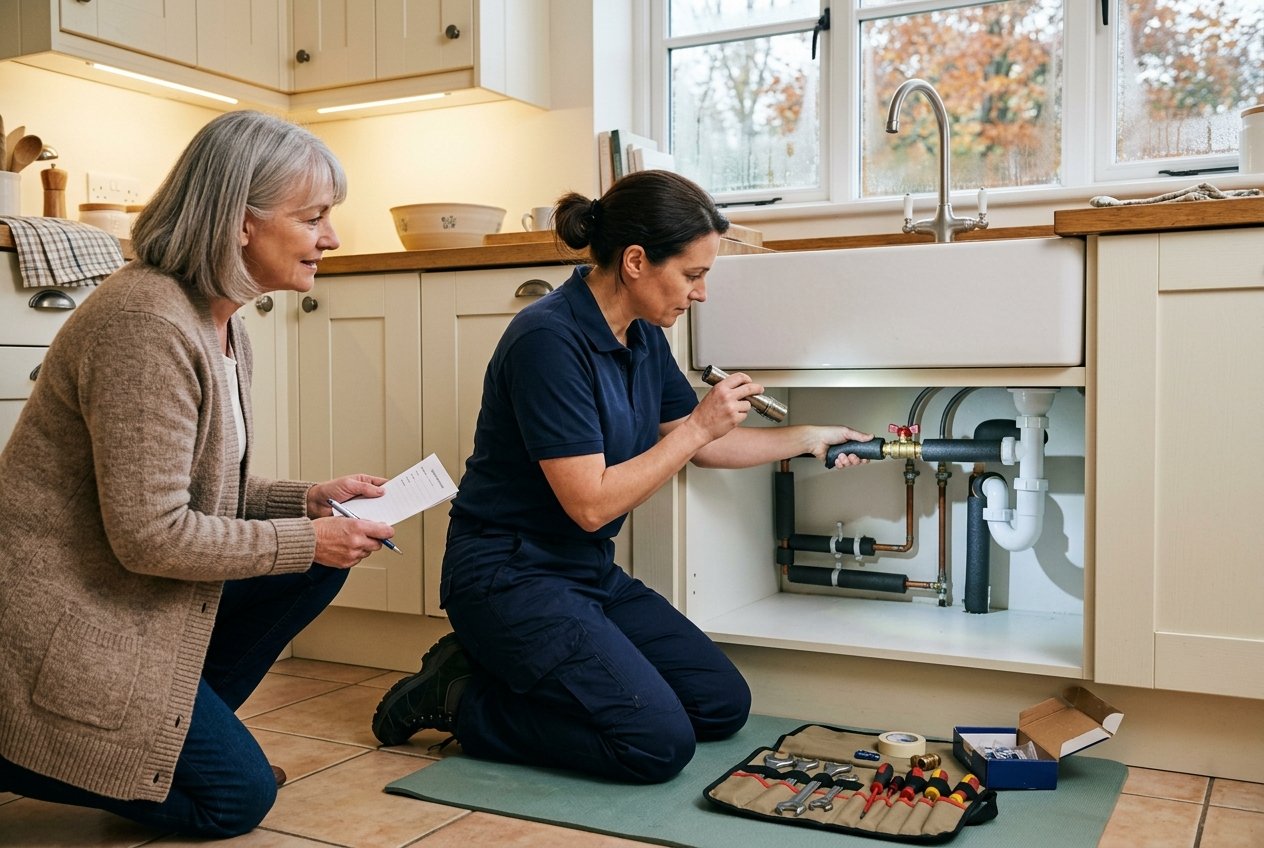
As summer fades and temperatures begin to fall, a little plumbing maintenance can help protect your home from burst pipes, leaks and costly water damage. Frozen water expands inside pipes, increasing pressure and potentially causing joints or pipework to split. When the ice thaws, water can escape quickly into walls, ceilings, floors and cupboards.
The risk is higher in unheated areas such as lofts, garages, cellars, outbuildings and under suspended floors. Pipes running along external walls, beside draughty doors or near poorly insulated areas can also be vulnerable. Carrying out a few checks before the first frost gives you time to arrange repairs and professional advice before cold weather arrives.
Find and check your stopcock
Your internal stopcock controls the mains water supply to your property. Knowing where it is and checking that it works could limit damage if a pipe bursts. It is commonly found beneath the kitchen sink, near the point where the mains water pipe enters the property, or in a utility room. In some homes, it may be located in a downstairs cupboard or under the stairs.
Turn the handle gently to make sure it moves. Avoid forcing it if it is stiff, as this could damage the valve. If you cannot find it, ask a plumber to identify it during a routine visit. It is also useful to check whether your property has an external stop tap, although this may require a specialist key and could be shared with neighbouring properties.
Make sure everyone in the household knows where the internal stopcock is. In an emergency, turning off the water promptly can reduce the amount of damage while you wait for a professional.
Inspect exposed and vulnerable pipework
Walk around your home and look for water pipes in places that may become cold. Pay particular attention to:
- Lofts and roof spaces
- Garages, sheds and other outbuildings
- Cellars and unheated basements
- Under kitchen sinks and inside cupboards on external walls
- Pipework beneath suspended timber floors
- Areas beside windows, external doors or air bricks
- Pipes leading to outside taps
Look for signs of wear, corrosion, damp patches, green or white deposits around joints, and small drips. A minor leak may become more serious in freezing conditions, particularly if water reaches insulation, plasterboard or timber.
If you notice a leak, do not simply cover it with insulation. Arrange a repair so that the underlying problem is dealt with properly. A qualified plumber can assess the condition of the pipework and recommend a suitable solution.
Insulate pipes correctly
Pipe insulation helps slow heat loss and can reduce the chance of water freezing. Use suitable, correctly sized insulation around exposed hot and cold-water pipes, paying close attention to joints and bends. The insulation should fit closely without being compressed, as gaps can leave sections of pipe unprotected.
Do not rely on pipe insulation as a substitute for fixing draughts or maintaining adequate heating. Insulation is most effective when combined with sensible frost-prevention measures throughout the property. It should also be kept away from hot surfaces such as boiler flues, and it must not obstruct ventilation or access to appliances and valves.
Loft insulation can improve energy efficiency, but take care around water tanks and pipes. If insulation is installed or topped up incorrectly, it can prevent warmth from reaching pipework or leave tanks and pipes in a colder environment. If you are unsure how your plumbing and insulation should be arranged, ask a professional to inspect the area.
Protect outdoor taps and garden plumbing
Outside taps and the pipes that supply them are common sources of winter problems. Before temperatures fall, disconnect hoses and store them in a dry place. If your outdoor tap has an internal isolation valve, turn it off and open the external tap briefly to drain remaining water from the exposed section.
Where possible, have an outside tap fitted with appropriate internal isolation and drainage. If you have a garden irrigation system, pond equipment or other water-fed appliances, follow the manufacturer’s instructions for shutting down and draining them before frost.
Do not leave a hose connected to an outside tap over winter. Trapped water can freeze and place pressure on the tap, fittings and internal pipework. If you are unsure whether your outside tap can be isolated or drained, a plumber can check it and make any necessary improvements.
Keep your home warm enough
During cold weather, maintain a low level of background heat, particularly if your home is empty overnight or while you are away. Keeping internal doors open can help warm air circulate between rooms, but never block fire doors or ventilation grilles.
Pay attention to rooms that are rarely used, including spare bedrooms, utility areas and hallways. Pipes in these spaces may be close to external walls and can become cold even when the rest of the property is warm. If you are going away during winter, ask someone to check the property regularly and leave clear instructions for turning off the water and heating in an emergency.
Do not use unsafe heaters or improvised methods to warm frozen pipes. Naked flames, boiling water and high-powered heat sources can damage pipework or create a fire risk. If you suspect a pipe has frozen, turn off the water supply and contact a qualified plumber for advice.
Check your boiler and heating system
Autumn is a sensible time to check that your heating system is ready for colder weather. Make sure your boiler is working properly and arrange servicing in line with the manufacturer’s guidance. If radiators are cold at the top, the system pressure is repeatedly falling, or you notice unusual noises, arrange an inspection rather than waiting for a breakdown.
Some modern boilers have a condensate pipe that runs outside. This pipe can freeze during very cold weather, causing the boiler to stop working. If you have concerns about its location or insulation, ask a heating professional to assess it. Never attempt work on gas appliances yourself; gas-related work must be carried out by an appropriately registered engineer.
Know what to do if a pipe bursts
If a pipe bursts, turn off the internal stopcock immediately if it is safe to do so. Switch off the electricity supply at the consumer unit if water is near electrical sockets, appliances or wiring, but do not touch electrical equipment while standing in water. Open taps briefly to help drain the system, move valuables away from the affected area and place containers beneath leaks where possible.
Contact a plumber promptly to locate and repair the burst pipe. If water has reached ceilings, electrics, flooring or structural materials, you may also need to contact your insurer and arrange appropriate drying and remedial work. Avoid removing damaged materials until the situation has been assessed and documented.
Book a pre-winter plumbing check
A professional inspection before the first frost can identify exposed pipework, unreliable valves, leaking joints and vulnerable outside taps before they cause an emergency. Whether you need pipe insulation, a stopcock replacement, an outdoor tap upgrade or help preparing an empty property, a qualified plumber can provide practical advice for your home.
Protect your property before cold weather arrives by booking a plumbing service through TaskPigeon today.