

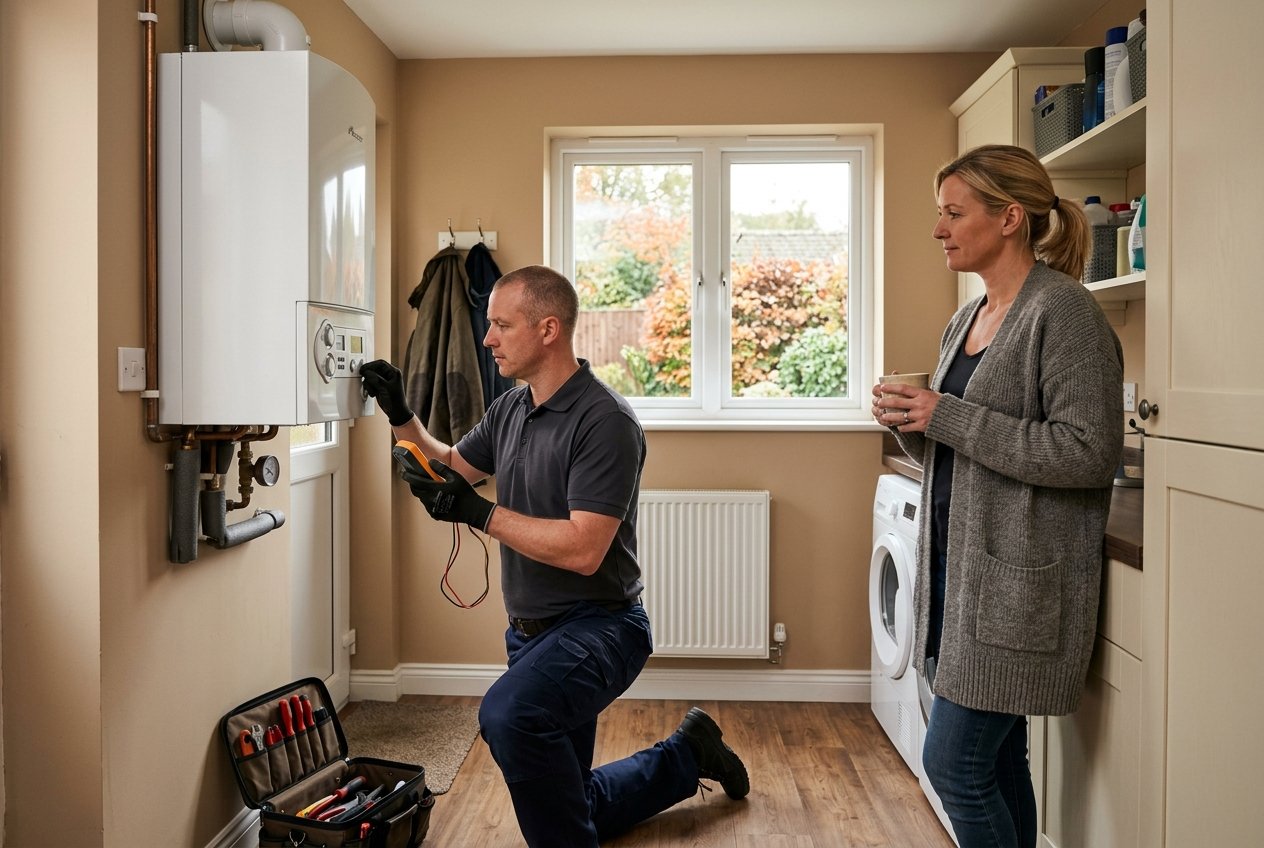
As the days become shorter and temperatures start to fall, your heating system may soon be working much harder than it has during the summer. Preparing it before the first cold spell can help you identify faults early, improve comfort around your home and reduce the risk of an inconvenient breakdown when you need your heating most.
Whether you have a gas boiler, electric heating, a heat pump or another type of system, a few sensible checks can make a useful difference. Some tasks are suitable for homeowners, while others should always be carried out by a qualified heating professional.
Start with a visual check
Walk around your home and inspect the heating system before switching it on for the season. Look at the boiler, radiators, visible pipework, thermostats and any hot water cylinder or storage tank.
- Check for signs of water around the boiler, radiators, valves and exposed pipework.
- Look for rust, staining, damaged insulation or unusual marks on walls and ceilings.
- Make sure air vents, flues and grilles are not blocked by furniture, boxes, curtains or household items.
- Check that radiators are not covered by large items of furniture or thick curtains, as this can restrict the movement of warm air.
- Listen for unusual noises when the system runs, such as banging, kettling, persistent gurgling or whistling.
If you notice a leak, a damaged flue or signs of a serious fault, turn the system off if it is safe to do so and arrange professional help. Do not remove the boiler casing or attempt to repair gas components yourself.
Test your heating controls
Heating controls can be overlooked during the warmer months. Before you need the system regularly, check that your thermostat, programmer, timer and radiator valves are working as expected.
Set the thermostat temporarily above the current room temperature and listen for the heating to start. Check that the radiators warm up and that the system switches off again when the thermostat setting is reduced. If you use a smart thermostat, confirm that it is connected, has sufficient battery power and is responding correctly through the app.
Review the programmer settings as well. You may want to set the heating to come on shortly before you normally get up and again before you return home, rather than leaving it on continuously. Your ideal schedule will depend on your household routine, insulation and the type of heating system installed.
Do not place thermostats behind curtains, near radiators or in direct sunlight. These locations can affect the temperature reading and make the system run for longer or switch off too soon.
Bleed radiators where necessary
If a radiator is cold at the top but warmer towards the bottom, it may contain trapped air. Bleeding the radiator can release this air and help it heat more evenly. You will need a radiator key, a cloth and a small container to catch any water.
- Switch the heating off and allow the radiators to cool.
- Place the key on the bleed valve at the top of the radiator and turn it slowly anti-clockwise.
- You should hear air escaping. Close the valve when water begins to flow steadily.
- Wipe away any drips and check the valve is secure without overtightening it.
After bleeding radiators, check the boiler pressure if you have a sealed central heating system. Releasing air can sometimes cause the pressure to drop. If you are unsure how to check or top up the pressure, consult the manufacturer’s instructions or arrange a visit from a qualified heating engineer. Frequent pressure loss may indicate a fault that needs investigation.
Check the boiler and heating system
Many modern boilers have a pressure gauge or display. The correct pressure varies by system and manufacturer, so use the boiler manual as your guide rather than relying on a general figure. If the pressure is repeatedly too high or too low, do not keep resetting or topping it up without finding out why.
Check the boiler display for warning lights or fault codes. If a code appears, refer to the manufacturer’s guidance and contact a suitable professional if the issue does not clear. Repeated resets can conceal an underlying problem and may not be safe.
If your boiler has an external condensate pipe, make sure it is visible, secure and free from obvious damage. During freezing weather, this pipe can become blocked by ice, causing the boiler to shut down. Never pour boiling water over it, as sudden temperature changes can damage the pipe. If it freezes, follow the manufacturer’s instructions or ask a heating professional for assistance.
Homes with oil-fired systems should also check that there is enough fuel for the colder months and that the tank, supply line and area around the boiler are free from visible damage. Arrange an inspection if you notice a leak or suspect contamination.
Arrange servicing and safety checks
Autumn is a sensible time to arrange an annual boiler service if one is due. A qualified engineer can inspect the appliance, check its operation and identify signs of wear or combustion problems. Gas appliances and flues should be checked by a Gas Safe registered engineer. If you rent your home, your landlord is responsible for arranging the legally required gas safety checks.
Do not attempt to service a gas boiler, alter gas pipework or open the boiler casing yourself. These jobs require the appropriate qualifications and equipment. For oil, electrical and renewable heating systems, choose a professional with relevant experience in that type of installation.
Test your carbon monoxide alarm by pressing its test button and replace it if it has reached the end of its service life. The alarm should be positioned in line with the manufacturer’s instructions and should not be covered or obstructed. A carbon monoxide alarm does not replace regular servicing.
Improve heat distribution around your home
Once the system is running, check each room for cold spots. Make sure radiator valves are not accidentally closed and that individual thermostatic radiator valves are set appropriately for the room. Bedrooms and less frequently used rooms may not need the same setting as living areas, but avoid turning heating off completely where this could contribute to damp or frozen pipes.
Bleed radiators only when needed, and never use radiator covers that restrict airflow or hide signs of a leak. Draught-proofing doors and windows, closing curtains after dark and keeping internal doors closed can also help rooms feel warmer. However, do not block permanent ventilation openings, air bricks or boiler flues in an effort to retain heat.
If some radiators remain cold, heat unevenly or take a long time to warm up, the system may need balancing, cleaning or repair. A professional can assess the problem rather than simply increasing the thermostat.
Know when to call a professional
Book a heating specialist if your boiler repeatedly loses pressure, fails to ignite, produces unusual smells or noises, displays persistent fault codes or leaves radiators cold. You should also seek prompt advice if you suspect a gas leak or carbon monoxide issue. If you smell gas, turn off the supply at the emergency control valve if you can do so safely, avoid flames and electrical switches, leave the property and contact the relevant emergency service or gas emergency number.
Book your heating service before the cold weather arrives
Preparing early gives you time to resolve small issues before they become disruptive. For help checking, servicing or repairing your heating system, book a heating systems service through Task Pigeon and find a suitable professional for your home.