

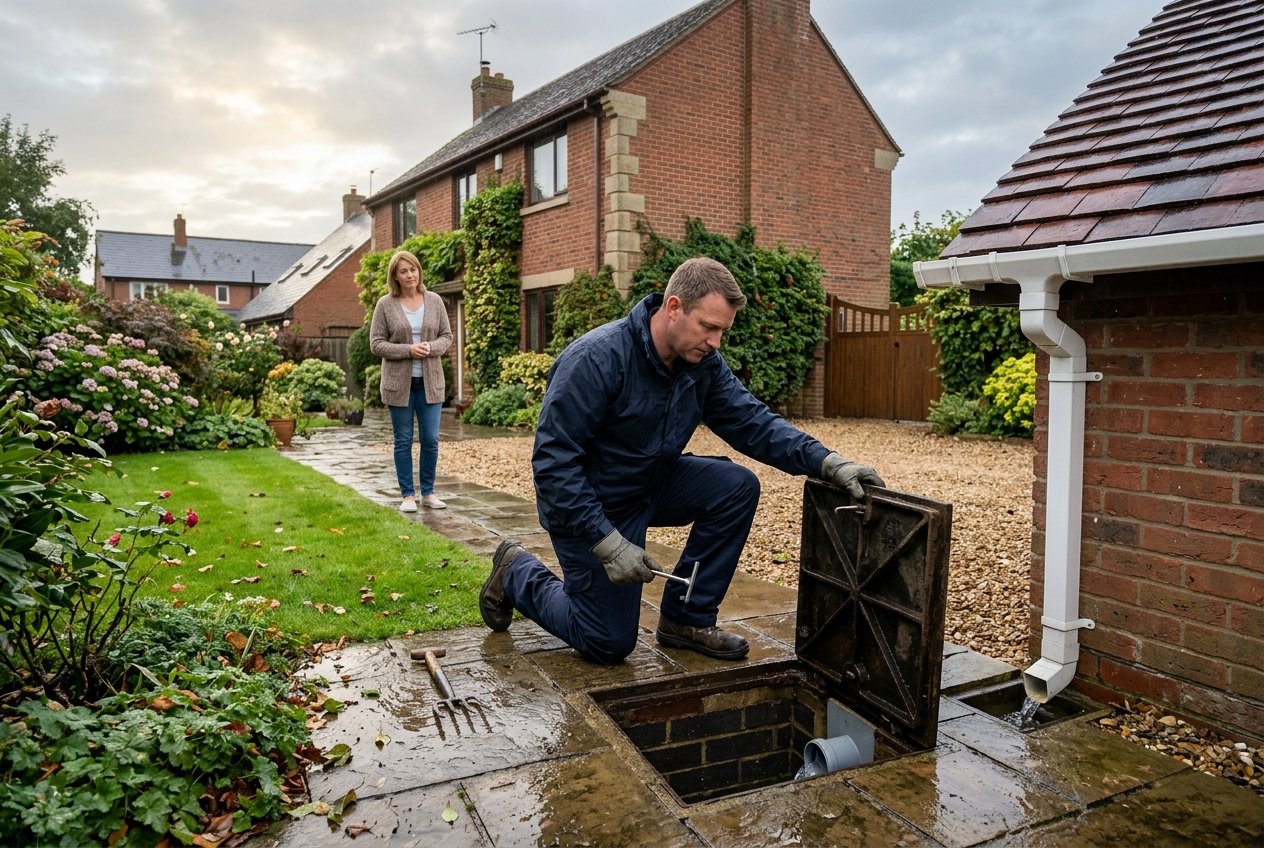
Autumn brings falling leaves, heavier showers and wetter ground, all of which can put extra pressure on your property’s drainage system. A drain that copes well during dry summer weather may begin to overflow, smell or drain slowly once rainwater and debris start to build up.
A few straightforward checks can help you spot early warning signs and reduce the risk of blocked drains, standing water and water entering your home. However, drainage problems are not always visible from the surface. If you notice persistent issues or are unsure whether a drain is safe to inspect, it is best to arrange a professional assessment.
Start with a Walk Around Your Property
Choose a dry day and walk around the outside of your home, paying particular attention to gullies, drain covers, downpipes and areas where rainwater collects. Look for changes that may indicate a developing drainage problem, including:
- Standing water around drain covers or near the foundations of the property
- Slowly draining water after rainfall
- Overflowing gullies or water running away from a drain rather than into it
- Unpleasant smells coming from external drains
- Cracked, sunken or damaged drain covers
- Wet patches or unusually lush vegetation along the route of underground pipes
Some of these signs can have other causes, such as damaged paving or poor surface falls. Even so, they are worth recording and monitoring, particularly if they appear more than once.
Clear Leaves and Debris from Drain Covers
Leaves, twigs and moss can quickly collect on grates and gullies during autumn. If they cover the opening, rainwater may be unable to enter the drainage system and can instead flow towards walls, paths or neighbouring properties.
Remove loose leaves and debris by hand or with a suitable brush. Wear gloves, and avoid pushing the material into the drain. Place it in garden waste or a suitable bin. If the cover is heavily blocked, do not force it open with unsuitable tools, as this could damage the cover or surrounding paving.
Check again after periods of strong wind, especially if your property is close to mature trees. Keeping the immediate area clear is a simple maintenance task, but it cannot resolve a blockage further down the pipe.
Inspect Rainwater Downpipes and Gullies
Downpipes carry water from the roof and gutters to a drain, soakaway or another approved outlet. Look for loose joints, cracks, leaks and sections that have become detached from the wall. Water escaping at a joint can soak the wall or collect beside the property instead of being directed away.
Where a downpipe discharges into an open gully, check that the gully is not filled with leaves, silt or other debris. The grating should sit securely, and there should be no obvious damage around it. Do not remove a heavy or awkward cover without the right equipment, particularly if it is located in a driveway or another area where a fall could cause injury.
It is also worth checking whether downpipes have been altered, capped or redirected. Temporary changes made during building or landscaping work can sometimes cause rainwater to discharge in an unsuitable location.
Check Gutters Before Heavy Rain Arrives
Blocked gutters can contribute to drainage problems by allowing rainwater to spill over walls, windows and paths. From ground level, look for sagging sections, overflowing joints and plants growing from the guttering. If you need to use a ladder, take appropriate precautions and avoid working at height in wet or windy conditions.
For many properties, gutter cleaning is best carried out by a professional, particularly where the roof is high, access is difficult or there are fragile conservatory roofs and extensions below. Clearing the gutters does not replace a drain inspection, but it helps ensure that rainfall is directed into the intended drainage system.
Test Drains Carefully
If an external gully appears safe to access, you can pour a modest amount of clean water into it and observe whether the water drains away at a normal rate. Avoid using boiling water, harsh chemicals or large quantities of water as a test. These can damage some materials, affect seals or create a sudden flow that masks a problem.
Never lift an inspection chamber cover unless you know how to do so safely. Covers can be heavy, unstable or difficult to replace correctly. Drainage chambers may also contain hazardous gases and contaminated water. Children and pets should be kept away from open drains, and no one should enter a drain, inspection chamber or confined space.
If the water drains slowly, rises back up or remains in the gully, stop testing and arrange professional help. A local blockage may be simple to clear, but repeated problems can point to damaged or displaced pipework.
Pay Attention to Indoor Warning Signs
Drainage issues are not always confined to the garden or driveway. Inside the property, watch for sinks, baths, showers or toilets that drain more slowly than usual. Gurgling sounds, unpleasant odours and water backing up when another fixture is used can also indicate a restriction in the waste or drainage system.
Do not rely on chemical drain cleaners as a long-term solution. They may provide temporary relief for a minor blockage, but they will not repair damaged pipes or remove every type of obstruction. They can also be hazardous to handle and may make subsequent work more difficult for a drainage professional.
If wastewater is backing up indoors, stop using affected appliances and fixtures where possible. Keep the area away from children and pets, and contact a qualified professional promptly.
Look for Problems After the First Heavy Rain
A drainage system may appear clear during a dry inspection but reveal problems once rainfall begins. After the first significant autumn showers, check whether water is collecting near entrances, patios, driveways or external walls. Note how long it takes to clear and whether the same location is affected each time.
Take photographs from a safe distance and record when the problem occurred. This information can help a drainage professional understand whether the issue is linked to surface water, a blocked gully, a damaged pipe or inadequate falls around the property.
Properties with basements, lower-ground floors, extensions or steeply sloping gardens may need particular care. Consider arranging an inspection before the wettest part of the season if previous rainfall has caused flooding or water ingress.
When to Book a Drainage Professional
Arrange professional drainage help if a blockage keeps returning, several drains are affected at once, or water is overflowing close to the building. You should also seek advice if you notice subsidence, damaged pipework, a collapsed drain cover or foul water escaping onto the ground.
A drainage professional can investigate beyond the visible surface, clear obstructions using appropriate equipment and identify faults that require repair. Ask what the inspection or clearance includes, whether further work will be quoted separately and what access will be needed before the appointment.
Taking action before autumn rainfall becomes persistent can make it easier to schedule work and may help prevent a minor drainage concern from developing into a more disruptive property problem.
Book Your Pre-Autumn Drainage Check
Prepare your property for wetter weather with help from a trusted drainage professional. Book a drainage service through TaskPigeon to request an appointment and get your drains ready for autumn rainfall.