

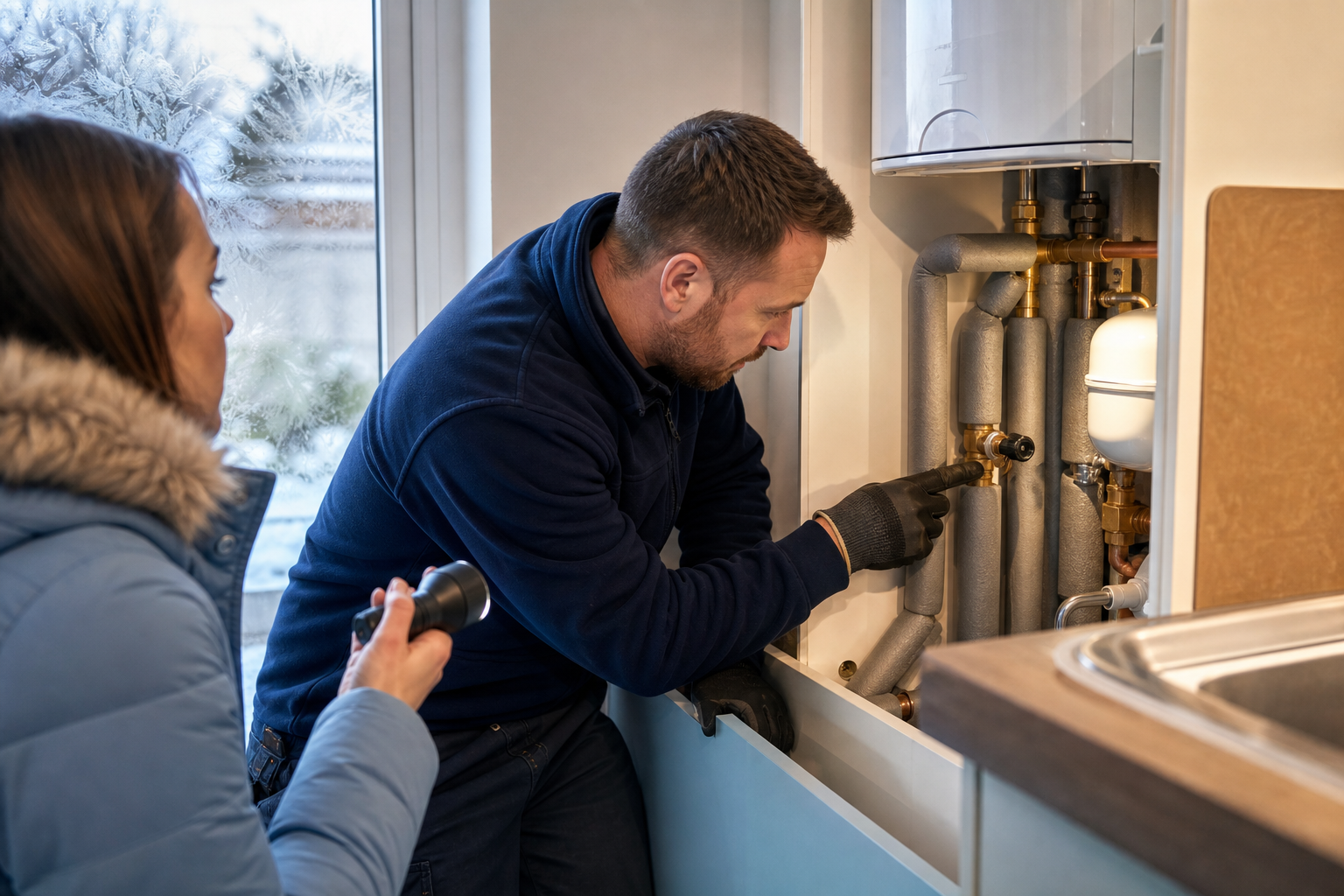
Frozen pipes can cause more than a temporary loss of water. When water freezes, it expands inside the pipe, increasing pressure and potentially splitting joints or cracking the pipe itself. The damage may only become obvious when the ice begins to thaw, allowing water to escape into walls, ceilings, floors and cupboards.
A little preparation before the first winter frost can reduce the risk of disruption and costly water damage. This seasonal guide explains the practical steps homeowners and landlords can take, as well as when to call a qualified plumber.
Find and check your stopcock
Your internal stopcock controls the mains water supply entering your property. Knowing where it is before an emergency occurs can save valuable time. It is commonly found beneath the kitchen sink, near the front door, in a utility room or where the water supply pipe enters the building. Some properties have it in a service cupboard or under the floor.
Turn the handle gently to check that it moves and that you know which direction closes the supply. Do not force a stiff stopcock, as this can cause damage. If it is difficult to operate, arrange for a plumber to inspect or replace it before winter.
It is also worth locating your external stop tap, although this may require a specialist key and could be shared with neighbouring properties. Keep the relevant contact details available so you can act quickly if a serious leak develops.
Protect exposed pipes from cold air
Pay particular attention to pipes in areas that are not heated, such as lofts, garages, sheds, basements, under suspended floors and unheated cupboards. Pipes close to external walls, windows or draughty doors can also be vulnerable.
Use suitable pipe insulation, often called lagging, around exposed water pipes. The insulation should fit closely without leaving gaps, particularly around bends, valves and joints. Follow the manufacturer’s instructions and choose products designed for plumbing use. Insulating a pipe does not create heat, but it slows heat loss and gives the water more protection during cold weather.
Do not cover boilers, flues, ventilation openings, electrical components or safety devices with insulation. If you are unsure which pipes can safely be insulated, ask a qualified plumber to assess them.
Disconnect and protect outdoor taps
Outdoor taps and the pipes supplying them are especially exposed to freezing temperatures. Before the cold weather arrives, disconnect hoses, spray attachments and other fittings. Close the internal isolation valve if one is fitted, then open the outside tap briefly to drain any remaining water from the pipe.
Fit an insulated cover to the external tap if appropriate. Check that water is not trapped in a hose or connected appliance, as frozen water can place pressure back onto the indoor pipework. If an outdoor tap drips or cannot be shut off properly, have it repaired before winter.
Keep your home warm enough
During a cold spell, maintaining a low level of background heat can help protect internal pipework. This is particularly important if you are away from home. Set the heating controls to provide frost protection or a modest temperature, and make sure the boiler and heating system have been serviced where necessary.
Open the doors of cupboards containing water pipes so warm air can circulate. This can help in kitchens, utility rooms and bathrooms, provided there are no safety reasons to keep the doors closed. Keep internal doors open where suitable, especially between heated rooms and areas containing vulnerable plumbing.
If you plan to leave the property empty, ask someone you trust to check it regularly during freezing weather. Make sure they know where the stopcock is and how to contact you or an emergency plumber if they find a problem.
Check the heating system and condensate pipe
Modern condensing boilers often have an external plastic condensate pipe. In very cold weather, this pipe can freeze, causing the boiler to stop working. Check that it is properly insulated with suitable material, particularly where it runs outside or through an exposed area.
If your boiler displays a fault after a freeze, consult the manufacturer’s instructions before attempting a reset. Some systems can be safely thawed using warm, but not boiling, water applied carefully to the affected section. If the boiler does not restart, the pipe is damaged or you are uncertain what to do, contact a qualified heating professional.
Never remove boiler covers or interfere with gas components yourself. Gas appliance work must be carried out by an appropriately registered engineer.
Inspect vulnerable areas before temperatures fall
Walk around your property and look for warning signs such as damp patches, water marks, mould, green staining around copper pipes, corrosion, loose joints or small drips. Pay close attention to pipework beneath sinks, behind washing machines, near water tanks and in the loft.
Check that loft insulation has not been placed directly over water tanks or pipes in a way that prevents warm air reaching them. Tanks and pipes may need to remain on the warm side of the insulation. A plumbing professional can advise on the correct arrangement for your property.
Repair dripping taps, leaking toilet connections and worn isolation valves before winter. Even a minor leak can worsen when temperatures drop, and a damaged fitting may be harder to access once water has frozen.
What to do if a pipe freezes
If a tap produces little or no water during freezing weather, a pipe may be frozen. Turn off the stopcock if you suspect the pipe has split, then open the affected tap to relieve pressure. Inspect accessible pipework for cracks, bulges or leaking joints.
Thaw the pipe gradually using warm towels or a hairdryer on a low setting, keeping the appliance away from water. Work from the tap towards the frozen section so that pressure can escape safely. Never use a naked flame, blowtorch, boiling water or another direct high-heat source. These methods can damage pipes and create a serious fire risk.
If water begins to leak, turn off the stopcock immediately and switch off electrical equipment in the affected area only if it is safe to do so. Do not touch electrical switches or appliances that are wet. Contact a qualified plumber to locate the damage, replace the failed section and check for hidden leaks.
Prepare a simple winter plumbing checklist
- Locate and test the internal stopcock.
- Insulate exposed water pipes in lofts, garages and other cold areas.
- Disconnect hoses and drain external taps.
- Check outdoor taps, valves and vulnerable joints for leaks.
- Protect the external condensate pipe serving your boiler.
- Keep suitable background heating on during freezing weather.
- Leave access to stopcocks, tanks and pipework clear.
- Know who to contact if a pipe freezes or bursts.
Book a plumbing inspection before winter
If you are unsure whether your pipework is protected, arranging a professional inspection before the first frost can provide reassurance and identify problems while they are still straightforward to resolve. A qualified plumber can insulate vulnerable pipes, repair leaks, check isolation valves and advise on outdoor taps, heating-related pipework and unheated areas.
For help preparing your property, book a plumbing service through Task Pigeon and find a trusted professional for the work.