

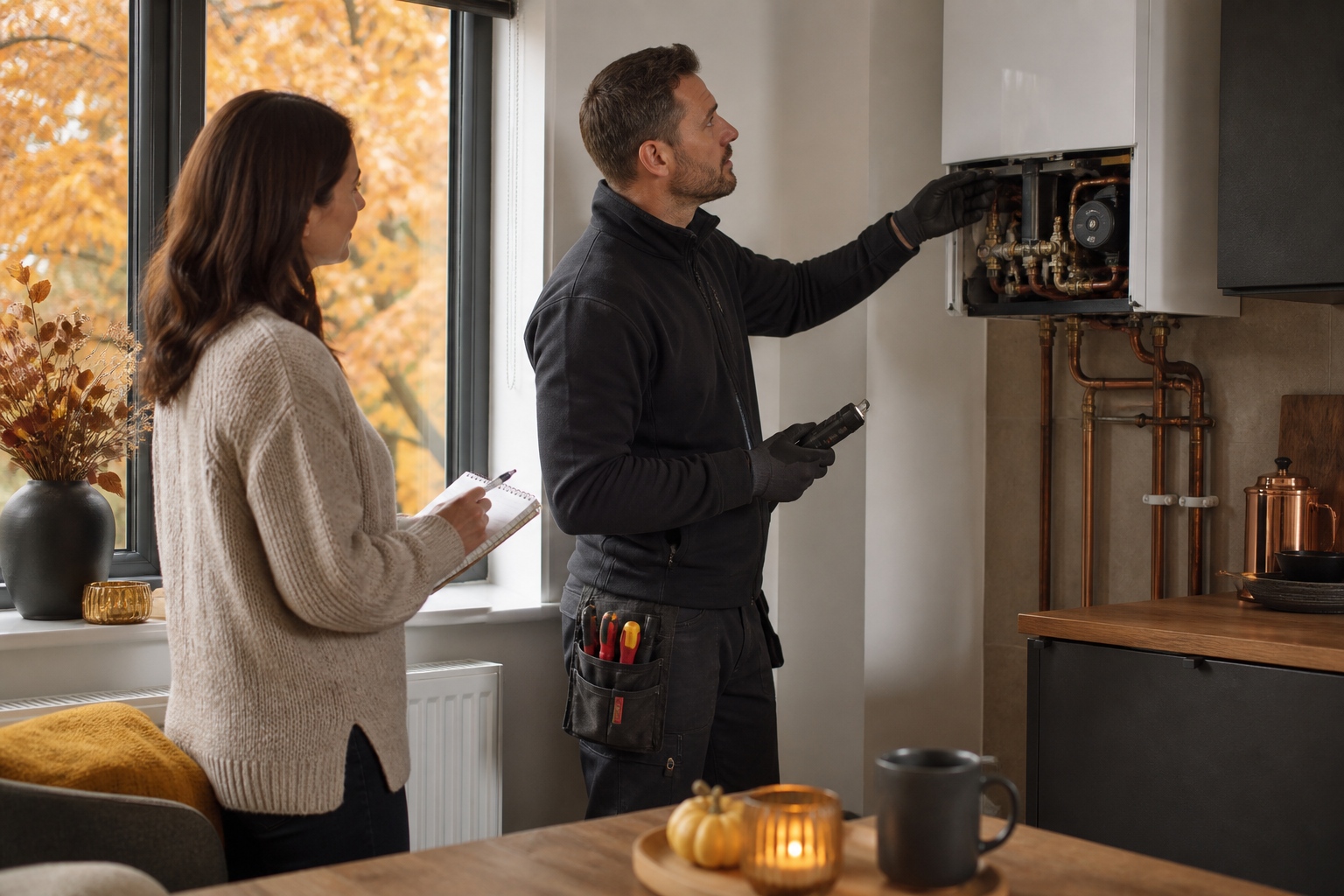
When the first cold week of autumn arrives, a reliable central heating system quickly becomes essential. A system that has been switched off or used lightly over the warmer months may need a little attention before it can heat your home evenly and efficiently. Preparing early gives you time to identify faults, arrange professional help and avoid being left without heating when demand is high.
Start with a simple visual check
Before turning the heating on for the season, look over the accessible parts of your system. Check the boiler, visible pipework, radiators and controls for signs of damage, corrosion, water staining or leaks. Even a small drip can indicate a problem that should be investigated by a qualified heating professional.
Make sure the area around your boiler is clear and well ventilated. Do not use it as storage space, and avoid blocking air vents or flues. If your boiler is housed in a cupboard, keep the manufacturer’s required clearances in place and ensure the appliance can be reached easily for inspection and servicing.
If you have a gas boiler, arrange any necessary work with a Gas Safe registered engineer. Never attempt to dismantle the boiler, repair gas connections or alter the flue yourself. Oil, LPG and solid-fuel systems also require appropriately qualified professionals with experience of the relevant appliance and fuel type.
Turn the heating on before you need it
Rather than waiting for a particularly cold evening, test the central heating on a mild day. Set the thermostat high enough to call for heat and allow the system time to run. Listen for unusual noises, such as persistent banging, clanking, gurgling or humming, and check whether all radiators warm up as expected.
It is normal for a boiler to take a short time to respond, particularly if it supplies hot water as well as heating. However, repeated attempts to ignite, error codes, sudden shutdowns or radiators that remain cold should not be ignored. Consult the boiler instructions for safe, basic checks, then contact a qualified heating professional if the issue continues.
Run the heating for long enough to inspect each room. A radiator may feel warm at the top but cooler at the bottom, or it may only heat in one section. These symptoms can have several causes, including trapped air, sludge, a faulty valve or an issue with system circulation. A professional can diagnose the cause rather than simply treating the symptom.
Check the boiler pressure
Many sealed central heating systems have a pressure gauge or digital pressure display. The correct level varies by boiler and system, so check the manufacturer’s instructions rather than relying on a general figure. If the pressure is consistently too low or too high, the system may not operate properly.
A small pressure adjustment may be possible using the filling loop, but only follow the instructions for your specific boiler. If you are unsure, if the pressure repeatedly drops, or if it rises sharply when the heating is on, arrange an inspection. Repeated pressure loss can point to a leak, a problem with the expansion vessel, a pressure relief valve issue or another fault requiring professional attention.
Do not remove the boiler casing or attempt to repair internal components. If water is escaping from the boiler or nearby pipework, switch off the appliance if it is safe to do so and seek advice from a qualified engineer.
Bleed radiators carefully
Air trapped inside a radiator can prevent it from heating evenly and may cause a cool patch near the top. Bleeding the radiator releases this air, allowing the system to circulate hot water more effectively. You will need a radiator key or suitable tool, a cloth and a small container.
- Switch off the heating and allow the radiators to cool.
- Place the cloth and container beneath the bleed valve.
- Open the valve slowly until you hear air escaping.
- Close the valve as soon as water begins to appear.
- Check the boiler pressure afterwards if you have a sealed system.
Do not force a stuck valve, and take care around hot water. If a radiator needs bleeding frequently, remains cold after bleeding or has a damaged valve, a heating professional should investigate. Radiators may also need balancing so that heat is distributed more evenly throughout the property.
Test thermostats and heating controls
Replace batteries in wireless thermostats, programmers and smart heating controls if they show a low-battery warning or appear unresponsive. Check that the clock and programmed schedule are correct, particularly after the clocks change or if the controls have been unused for several months.
Make sure radiator thermostatic valves have not seized in one position. Turn them gently through their settings and check that they respond. A room thermostat should be positioned away from direct sunlight, draughts, radiators and heat-producing appliances, as these can affect its reading.
If you have recently changed your daily routine, review the heating schedule rather than running the system unnecessarily. Zoning, timed heating and sensible temperature settings can help you stay comfortable while using energy thoughtfully. A professional can also advise on upgrading older controls or improving the system’s operation.
Protect pipes and improve efficiency
Cold weather can put exposed pipework at risk, especially in lofts, garages, outbuildings and other unheated areas. Check that accessible water pipes have suitable insulation and that insulation is secure, dry and undamaged. Pay particular attention to external condensate pipes connected to modern boilers, as these can freeze during severe weather.
Do not cover a condensate pipe with unsuitable materials or apply boiling water if it freezes. Follow the boiler manufacturer’s guidance or contact a qualified engineer for safe advice. If the boiler repeatedly locks out in cold weather, the installation may need a more permanent solution.
Keep radiators clear of large items of furniture, heavy curtains and drying laundry. Obstructions reduce the circulation of warm air and can make rooms feel colder. Cleaning dust from radiator surfaces and around vents can also help maintain good airflow, while draught-proofing doors and windows may improve comfort without placing extra demand on the heating system.
Arrange a professional service
An annual boiler service is an important part of preparing for the heating season, particularly if the appliance is older, has shown warning signs or has not been serviced recently. During a service, a suitably qualified engineer can inspect the appliance, assess its safe operation, check relevant components and identify developing faults.
A service is not the same as an emergency repair. If your boiler is leaking, repeatedly losing pressure, producing unusual smells or displaying a fault code, do not wait for the first very cold week. Arrange professional help promptly. If you smell gas, turn off the gas supply if safe, avoid flames and electrical switches, leave the property if necessary and contact the relevant emergency service. A carbon monoxide alarm should also be installed and tested according to its instructions.
Prepare before temperatures fall
Small checks carried out in early autumn can make a significant difference to comfort and peace of mind. Test the system, inspect the radiators, check the controls and arrange qualified support for anything outside your confidence or experience. Preparing now can reduce the chance of an inconvenient breakdown when heating engineers are in high demand.
Book your heating service
If your central heating needs checking, servicing or repair before the first cold week, book a heating systems service through TaskPigeon. Find a suitable professional, request help and get your home ready for a warmer, more comfortable autumn.