

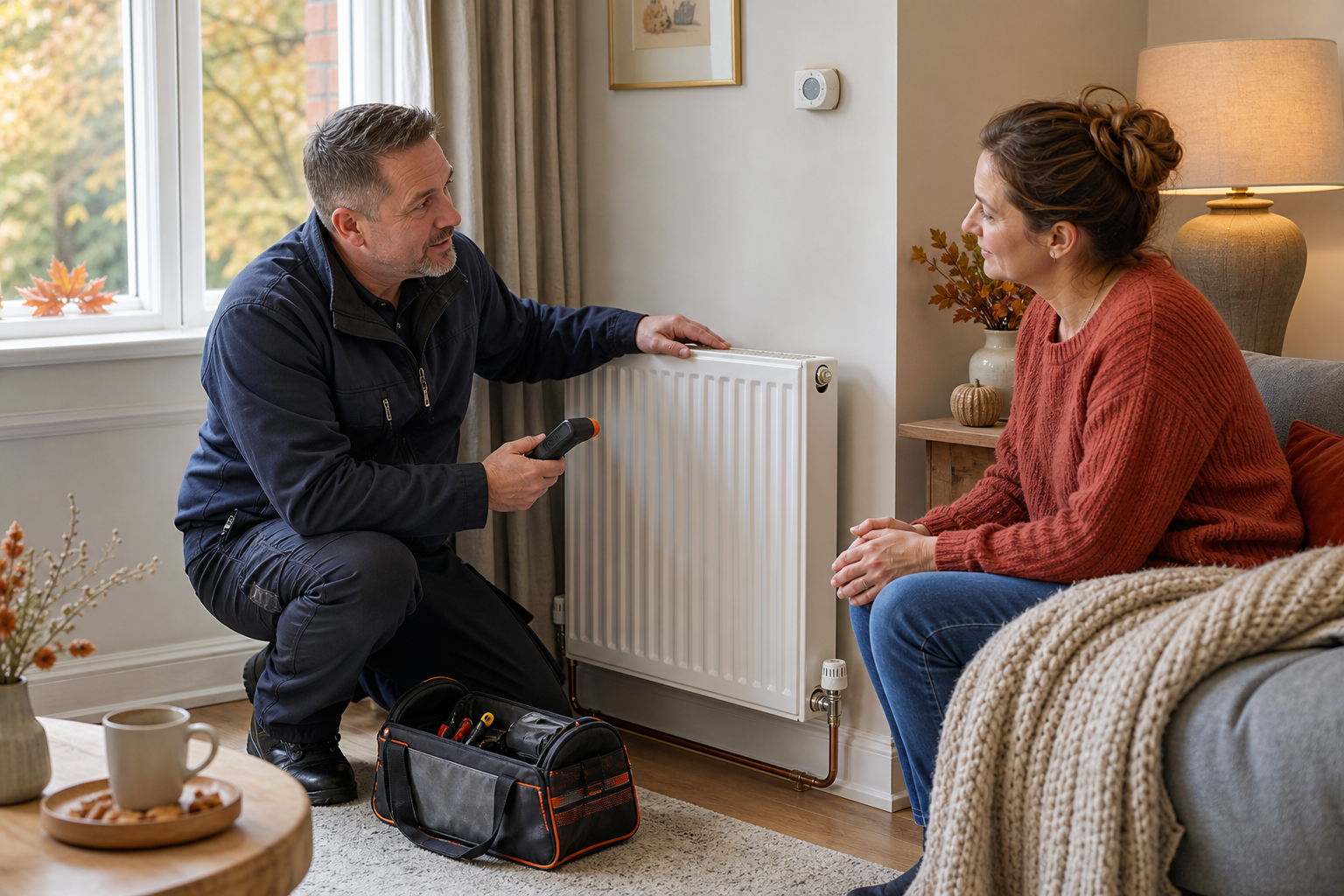
A radiator that stays cold can make a room uncomfortable just as the weather turns chilly. Before turning the thermostat up, check whether the problem is limited to one radiator or affecting the whole heating system. A few simple checks may identify the cause, but stop if you find a leak, smell gas, or are unsure how to proceed.
Start with the simple checks
Make sure the heating is switched on and set to run, and that the room thermostat is calling for heat. If you have a programmer or smart heating controls, check that the correct schedule or zone is active. A radiator will not warm up if its room or heating zone is switched off.
Next, check the radiator valves at each end. One is often a thermostatic radiator valve (TRV), with numbered settings; the other is usually a lockshield valve, often beneath a plain cap. Make sure the TRV is not set to zero or frost protection. If it has a removable temperature head, follow the manufacturer’s instructions rather than forcing it.
If several radiators are cold, check the boiler display for an error code and consult its user manual. You can check the system pressure if your boiler has a gauge, but use the pressure range specified by the manufacturer. Do not remove the boiler casing or attempt internal repairs. If the boiler repeatedly loses pressure, shows a fault, or will not run, arrange for a suitably qualified heating professional to investigate.
What the temperature pattern can tell you
Carefully feel the radiator once the heating has been running for a while. Avoid touching hot pipework or valves. The pattern of warmth can offer a useful clue:
Cold at the top, warmer at the bottom: trapped air is a common cause. Bleeding the radiator may help.
Warm at the top, cold at the bottom: this may indicate a build-up of debris or sludge. Bleeding is unlikely to clear it; a professional may need to assess the system.
Cold all over while others are warm: check that both valves are open and that the heating zone is working. A stuck TRV or a flow problem could also be responsible.
All radiators cold or only slightly warm: check the controls and boiler display. A system-wide issue may need professional attention.
These are clues rather than definite diagnoses. Pipe layouts and heating controls vary, so a professional may need to check the system to find the cause.
How to bleed a radiator safely
Bleeding releases trapped air through a small valve near the top of the radiator. Switch the heating off and allow the radiators to cool before you begin. This reduces the risk of scalding and helps prevent the pump from moving air around the system while you work.
Use a radiator key that fits the bleed valve, and keep a cloth and small container nearby. Turn the key slowly, just enough to open the valve. You may hear air escaping. When water begins to come out steadily, close the valve gently; do not unscrew it fully or overtighten it. Wipe away any water and check for drips.
After bleeding, check the boiler pressure if your system has a pressure gauge. Releasing air and water can lower the pressure in a sealed system. Only top it up if the boiler instructions say this is appropriate and explain how to do it. If you are uncertain, cannot restore the pressure as directed, or notice that it keeps dropping, leave the system alone and contact a heating professional.
Do not bleed electric radiators or unfamiliar heating equipment unless its manufacturer specifically instructs you to. If a bleed valve is seized, damaged or leaking, do not force it.
Check a thermostatic radiator valve carefully
A TRV controls the flow of hot water according to the room temperature. After a period without use, its internal pin can sometimes stick, leaving the radiator cold even when the control is turned up. First, turn the TRV to a higher setting and give the heating time to respond.
If the radiator remains cold, check the valve’s instructions before considering any further action. Some valve heads can be removed for inspection, but designs differ. Do not pull, hammer or force the pin, and do not dismantle the valve body. If the pin does not move freely or you are not sure what type of valve you have, ask a heating professional to check it.
When a professional should investigate
Arrange a professional assessment if bleeding and basic control checks do not help, if a radiator stays cold at the bottom, or if several radiators are affected. Sludge, poor circulation, an incorrectly balanced system, a faulty pump or a control problem may require specialist diagnosis. Repeatedly increasing boiler pressure or adding chemicals without understanding the issue can make matters worse.
Stop using the heating and seek prompt help if you find water leaking from a radiator or pipe, or if a valve appears damaged. If you smell gas, do not operate electrical switches or use naked flames; follow the emergency advice for your area and contact the appropriate gas emergency service. For work on gas appliances, use a Gas Safe registered engineer.
Get your heating ready for colder days
Finding a cold radiator early can help you deal with a small issue before you rely on the heating every day. If the checks above do not identify a straightforward fix, or you would rather have the system assessed safely, book a heating systems professional through TaskPigeon. Book a heating systems service to find help with diagnosing radiator and heating problems.