

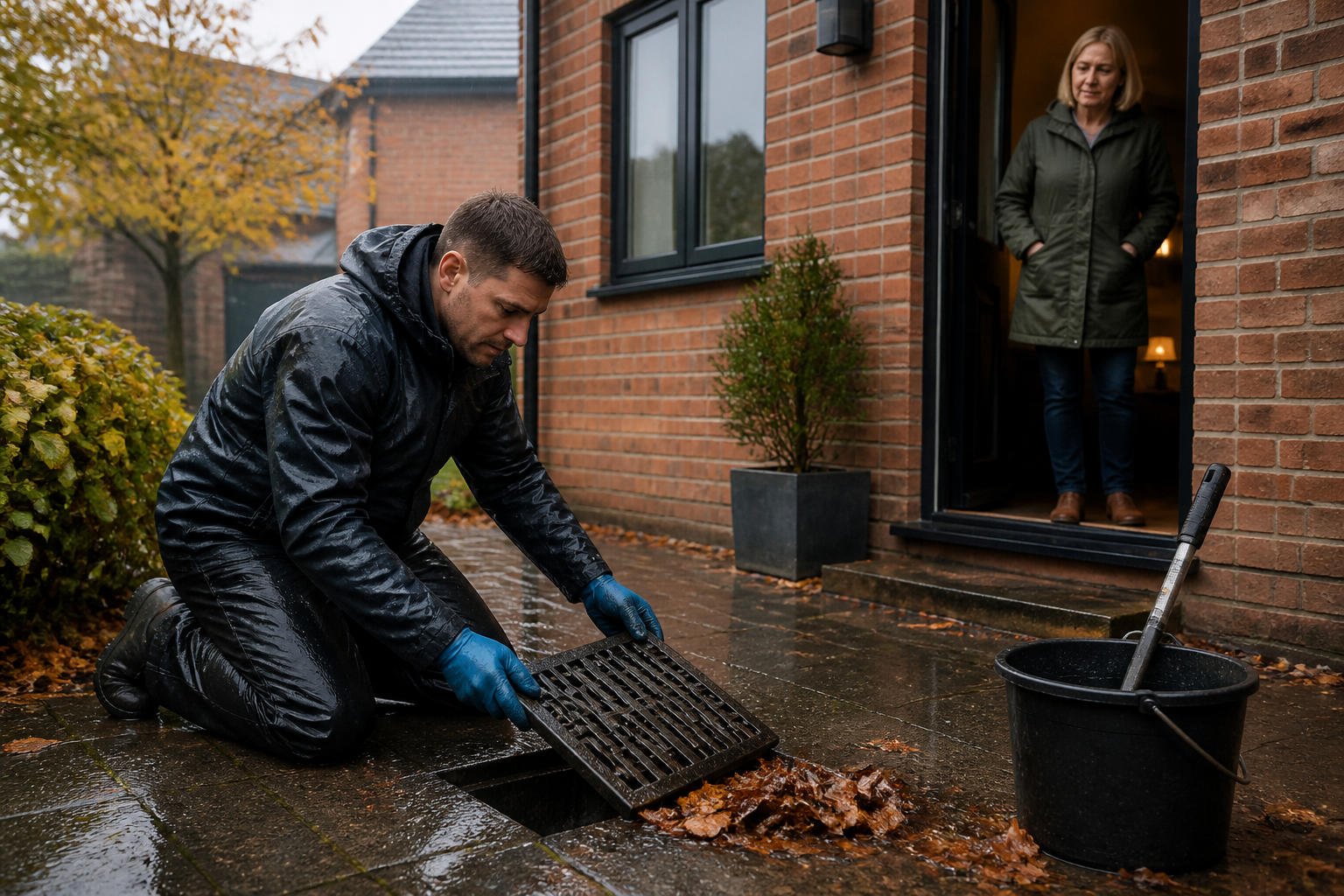
Autumn leaves and heavier rain can turn a slow outdoor drain into a blocked one surprisingly quickly. A little regular attention can help rainwater flow away from your home and make it easier to spot problems before they lead to standing water, unpleasant smells or damp. Here’s what to look for, what you can safely do yourself and when to call a drainage professional.
Why outdoor drains need attention in autumn
Leaves, twigs and other garden debris can collect over drain grates and stop water entering freely. Once wet, this material can compact and trap more debris. Mud, moss and wind-blown litter may add to the problem, while heavy showers can expose a blockage that went unnoticed during drier weather.
Outdoor drains serve different purposes. A gully beside a house may take rainwater from a roof downpipe, while a channel drain might carry water away from a patio or driveway. Other covers provide access to the underground drainage system. If you are not sure which type you have, avoid taking anything apart and seek advice from a drainage professional.
Signs an outdoor drain may be blocked
Check drains during or shortly after rainfall, when poor drainage is easiest to see. Look out for:
- Water pooling around a drain, patio, path or driveway instead of running away.
- Water backing up or spilling over the edge of a gully or channel drain.
- Slow drainage from a downpipe where it meets the ground.
- Gurgling sounds, or a noticeable change in how quickly water drains.
- Unpleasant smells coming from a drain or nearby gully.
- Debris, silt or water that remains around the drain long after the rain has stopped.
A puddle can have other causes, such as an uneven surface or a drainage system that is overwhelmed by intense rain. If a problem keeps returning, do not assume that clearing leaves has fixed it; there could be a blockage further along or damage to the drainage system.
Safe steps you can take yourself
For a visible blockage at the surface, start with simple, low-risk maintenance. Wear gloves and sturdy footwear, and keep children and pets away while you work. Remove loose leaves and litter from the drain grate by hand or with a suitable tool, then dispose of the material in your garden waste or general waste as appropriate. Do not push debris into the drain.
If the grate lifts easily and is designed for routine access, you may be able to clear debris just below it. Do not force a stuck cover, lift a heavy inspection cover or reach deep into the drain. Never enter a drain: confined spaces can contain hazardous gases and present serious risks. If you cannot see or reach the obstruction safely, stop and contact a professional.
When the surface is clear, you can pour a modest amount of water over the surrounding area to see whether it flows towards the drain. Avoid using high-pressure equipment unless you know it is suitable for your drainage system, as incorrect use can cause damage or push a blockage further along. Chemical drain cleaners are not a reliable solution for outdoor blockages and may create risks for people, wildlife or the drainage system.
How to help prevent autumn blockages
Clear leaves from drain grates regularly during leaf fall, rather than waiting until they have formed a thick, wet layer.
Trim back plants and remove twigs, grass cuttings and other garden debris before they wash towards drains.
Check that roof gutters and downpipes are not overflowing or visibly obstructed. If they are difficult to reach, arrange safe access or professional help rather than climbing an unstable ladder.
Keep an eye on patio and driveway channel drains, especially after gardening or pressure washing.
Dispose of leaves and household waste properly. Do not sweep them into road gullies or flush fats, oils, wipes or other unsuitable items into the drainage system.
A quick check after windy weather and heavy rain can help you catch a surface blockage early. Make a note if the same drain repeatedly fills or smells, as that information can help a drainage professional diagnose the issue.
When to call a drainage professional
Arrange professional help if water continues to back up after you have cleared visible debris, if several nearby drains are affected, or if you notice persistent foul smells, repeated flooding or signs of damage around a drain. A professional can investigate deeper blockages and assess whether the issue involves the pipework rather than the grate.
If wastewater is rising, flooding is entering your property or the situation may pose an immediate health or safety risk, keep people away from the affected area and seek urgent assistance. Do not open inspection covers or attempt repairs yourself. For a public road drain or sewer, contact the relevant local authority or water and sewerage company; responsibility depends on the location and type of drain.
Get your outdoor drains ready for the wet months
Regular surface checks and sensible leaf clearance can reduce the chance of autumn debris causing trouble, but not every blockage is visible from above. If a drain is slow, overflowing or repeatedly becoming blocked, booking a drainage professional can help identify the cause and plan the right next step. Book a drainage service through TaskPigeon to find help for your outdoor drain problem.