

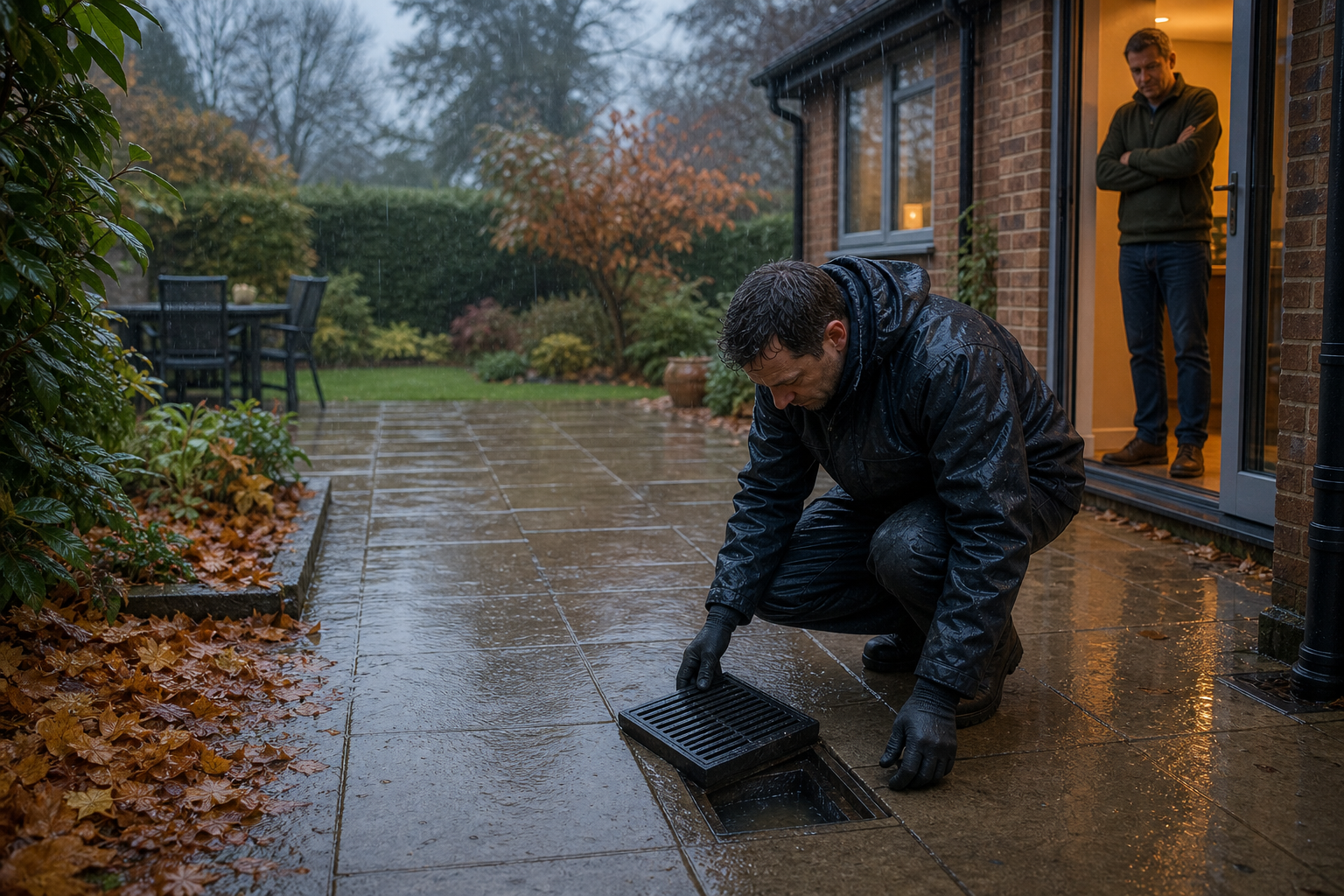
Autumn brings welcome rainfall, but heavy downpours can quickly expose problems in drains, gullies and surface water systems. Fallen leaves, mud and debris may block channels, while saturated ground and overloaded drainage networks increase the risk of standing water, overflowing drains and flooding. A little preparation before the wettest weather arrives can reduce the likelihood of disruption and help you spot developing issues early.
Whether you are responsible for a home, rental property, business premises or a communal area, regular drainage maintenance is one of the most effective ways to protect buildings and outdoor spaces during autumn. The following steps can help you prevent avoidable blockages and know when professional assistance is needed.
Clear leaves and debris before heavy rain
Fallen leaves are a common cause of autumn blockages. They can collect over drain grates, gullies and channel drains, preventing rainwater from flowing away. Once wet, leaves can compact into dense layers, often trapping mud, twigs and other debris with them.
- Remove leaves from drain covers, gullies and grates around your property.
- Check areas beneath trees, along garden paths and beside walls, where debris is likely to gather.
- Inspect driveway channels and patio drains, especially if they sit at the bottom of a slope.
- Dispose of collected leaves responsibly rather than sweeping them into the nearest drain.
During periods of persistent rain, inspect these areas more frequently. A drain that was clear at the start of autumn can become obstructed within days if nearby trees are shedding heavily.
Keep gutters and downpipes flowing
Although gutters are above ground, they play an important role in managing rainwater. If leaves block a gutter or downpipe, water may spill over walls, collect around foundations or run towards entrances and lower ground areas. Overflowing rainwater can also contribute to damp, staining and damage to external surfaces.
Clean gutters before the main autumn storms and check them again after particularly windy weather. Look for sagging sections, loose brackets, cracks and joints that are leaking. Downpipes should discharge water safely into a suitable drainage point, soakaway or other approved system, rather than allowing it to pool beside the building.
If a downpipe appears blocked, avoid forcing large amounts of water through it without first checking where the obstruction may be. A blockage further along the system could cause water to back up or escape inside the building.
Check outdoor drainage points
Gullies and inspection chambers should be checked for visible signs of obstruction or poor drainage. If water remains around a drain after rainfall has stopped, there may be a blockage, damaged pipework or an issue with the surrounding ground.
Keep drain covers accessible and make sure they are not buried under soil, gravel, decking or garden waste. Covers that are cracked, unstable or missing should be dealt with promptly, as they can present a safety risk as well as allowing additional debris into the system.
It is sensible to note where your inspection chambers and external drains are located. This can make it easier to identify a problem quickly and give a drainage professional useful information if an urgent visit is required.
Take care with what enters the drains
Many blockages begin inside the property. Fat, oil and grease can cool and harden in pipework, while wipes, sanitary products, cotton buds and paper towels can collect in drains and contribute to serious obstructions. Even products labelled as flushable should be disposed of carefully, as they may not break down in the same way as toilet tissue.
- Put cooking fat and oil into a container for disposal rather than pouring it down the sink.
- Use sink strainers to catch food scraps, hair and other solid material.
- Flush only toilet tissue and suitable waste down the toilet.
- Do not use outdoor drains as a convenient way to dispose of paint, cement, chemicals or garden waste.
These habits help protect your own pipework and reduce the chance of causing a blockage further along a shared drainage system.
Improve water management in the garden
Hard surfaces such as paving, concrete and tarmac prevent rainwater from soaking naturally into the ground. If they slope towards a property, heavy rain can flow towards doors, garages or basement steps. Check whether water is being directed away from the building and keep permeable areas free from compacted soil and debris.
Where appropriate, rain barrels, planted areas and permeable paving can help manage rainfall around a property. However, any alteration to drainage, soakaways or underground pipework should be planned carefully. A solution that works in one garden may be unsuitable where the ground drains poorly or the property is close to other buildings.
Keep basement steps, light wells and external access points clear. If these areas regularly collect water, consider whether additional drainage, a cover or a pump system may be needed. A qualified professional can assess the site and recommend an appropriate approach.
Recognise early warning signs
Drainage problems often develop gradually before they cause flooding. Slow-flowing sinks, toilets that struggle to clear, gurgling sounds and unpleasant smells may indicate a partial blockage. Outside, watch for pooling water, overflowing gullies, wet patches that do not dry, or areas of unusually lush vegetation above underground pipework.
In some cases, repeated blockages may point to damaged, displaced or tree-root-affected pipes rather than a simple obstruction. If the same drain keeps failing after it has been cleared, arranging a proper inspection can help identify the underlying cause and prevent repeated call-outs.
What to do if flooding starts
If water is entering a building, prioritise safety. Keep away from contaminated floodwater and do not enter areas where electrical sockets, appliances or wiring may be submerged. If it is safe to do so, move belongings to higher ground and use suitable barriers to slow water entering through doors or low openings.
Do not lift a drain cover during heavy flooding unless you are trained and have the right equipment. Covers can be heavy, displaced by water pressure or surrounded by contaminated water. Contact the relevant water or sewerage provider if a public sewer appears to be overflowing, and arrange professional drainage assistance for blockages or problems on your property.
After the immediate issue has been controlled, affected areas may need cleaning, drying and checking for damage. Do not assume that a drain is fully repaired simply because water has receded. Finding and resolving the cause is important to reduce the risk of another incident during the next downpour.
Arrange a professional drainage inspection
Professional drainage help can be useful before autumn weather becomes severe, particularly if your property has a history of flooding, slow drainage or recurring blockages. A drainage specialist may use appropriate equipment to clear obstructions, inspect pipework and assess gullies, channels and other drainage features.
It is best to seek help promptly if you notice repeated problems, sewage smells, overflowing wastewater, subsidence near a drain or water entering the property. Acting early can make the issue easier to diagnose and may help prevent more extensive damage.
Book drainage help for autumn
Prepare your property for wet weather with support from a trusted drainage professional. Book a drainage service through Task Pigeon to request help, compare suitable professionals and arrange the right support for your home or business.