

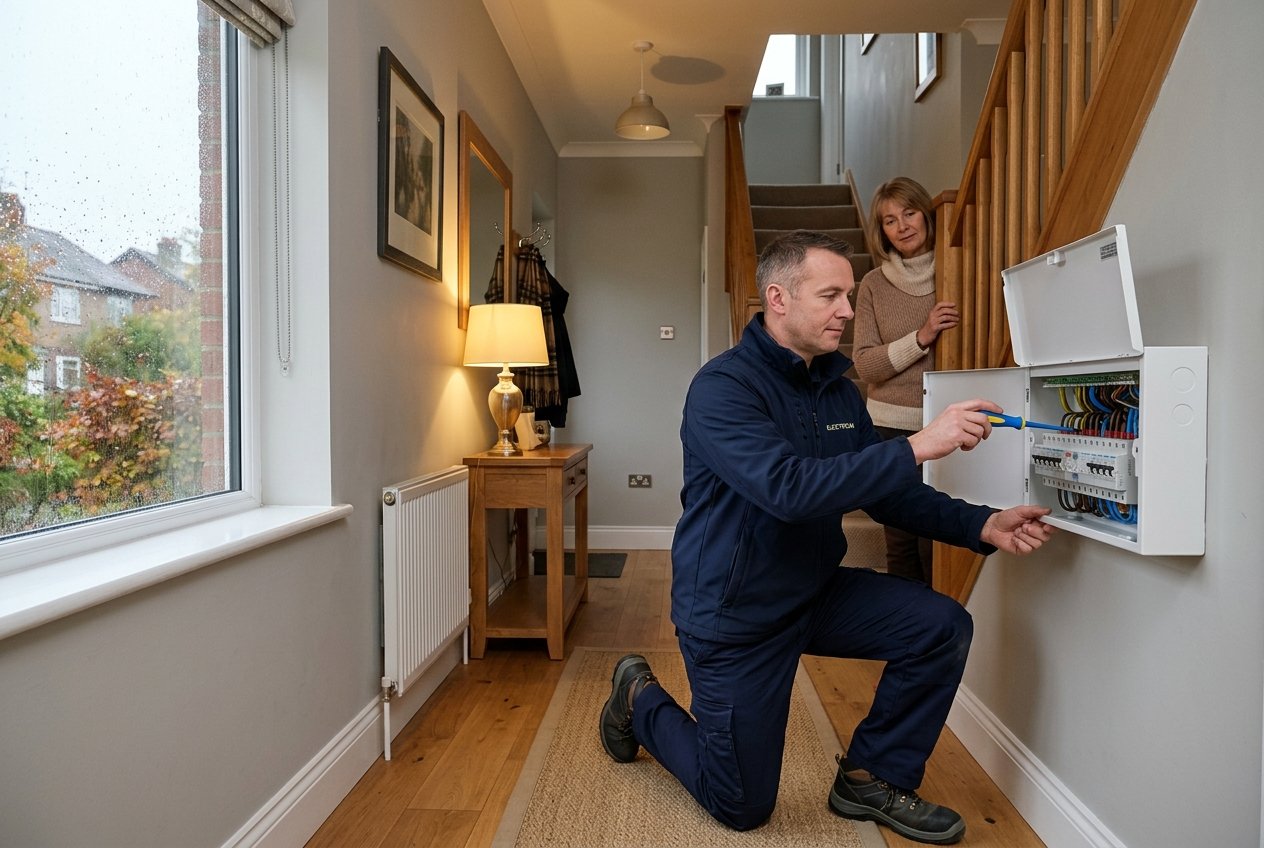
As autumn arrives, homes across the UK rely more heavily on electrical systems. Lights are switched on earlier, heating controls run for longer, and plug-in appliances often work harder as the evenings become colder. This seasonal change is a useful reminder to check that your home’s wiring, sockets, lighting and safety devices are ready for increased use.
Some checks are suitable for a homeowner, while electrical repairs, alterations and testing should be carried out by a qualified electrician. Preparing early can help you spot potential problems before they become inconvenient or unsafe, particularly when poor weather makes urgent repairs more difficult to arrange.
Check lights, switches and fittings
Dark evenings make reliable lighting especially important. Walk through your home and check that lights come on promptly, switches operate normally and bulbs are suitable for their fittings. Flickering, buzzing, intermittent lights or switches that feel unusually warm should not be ignored, as they may indicate a loose connection, a failing fitting or another electrical fault.
Pay particular attention to hallways, staircases, entrances and outdoor paths. These areas need to be well lit to reduce the risk of trips and falls. If a light fitting is damaged, loose or showing signs of overheating, switch it off if it is safe to do so and arrange an inspection.
When replacing bulbs, use the correct type and maximum wattage specified for the fitting. LED bulbs can be an efficient option, but they still need to be compatible with the fitting and any dimmer switch. If a dimmer causes buzzing or flickering after a bulb change, ask an electrician to investigate rather than repeatedly replacing bulbs.
Inspect sockets and extension leads
Colder weather often brings extra electrical equipment into use, including portable heaters, heated blankets, dehumidifiers and additional lamps. Before plugging in seasonal appliances, look at the condition of their plugs, cables and sockets.
- Do not use a plug or cable that is cracked, frayed, scorched or loose.
- Do not overload sockets or connect extension leads to one another.
- Keep cables away from heaters, radiators, doorways and areas where they could be trapped or damaged.
- Use extension leads only when necessary and choose one with a suitable rating for the appliance.
- Never cover an extension lead or cable with rugs, cushions or other materials that could trap heat.
A socket that feels hot, smells of burning, shows discolouration or makes a crackling sound requires prompt attention. Stop using it and arrange for a qualified electrician to check the circuit. Avoid attempting to tighten, replace or repair sockets yourself unless you are competent and the work is legally permitted.
Test your home’s electrical safety devices
Most homes should have residual current devices, commonly known as RCDs, which are designed to reduce the risk of electric shock by disconnecting a circuit when they detect an imbalance. An RCD usually has a test button on the consumer unit. Follow the manufacturer’s instructions and test it at the recommended interval.
Before testing, make sure you understand which circuits may be switched off, as the test can interrupt power to parts of your home. If the RCD does not trip when tested, will not reset, or trips repeatedly during normal use, contact an electrician. Repeated tripping is a warning that a fault may be present; it should not be solved by continually resetting the device.
It is also sensible to check smoke alarms and carbon monoxide alarms as part of your autumn routine. Test them using their test buttons, keep them free from dust and replace batteries or complete units in line with the manufacturer’s guidance. Electrical work involving alarm wiring, new circuits or alterations should be completed by a suitably qualified professional.
Use portable heaters and heated appliances carefully
Portable heaters can provide useful temporary warmth, but they need careful positioning and supervision. Keep them well away from curtains, bedding, furniture, clothing and other combustible materials. Place them on a stable surface where they cannot be knocked over, and do not use them to dry clothes.
Plug heaters directly into a suitable wall socket wherever possible. Avoid using a low-rated extension lead, adaptor or multiway block with a high-powered heater. Switch the appliance off when you leave the room or go to bed, unless it is specifically designed and approved for safe unattended operation.
Before using an electric blanket or heated throw after a period in storage, inspect it for damage and follow the manufacturer’s instructions. Do not use one if it is creased, wet, scorched or has exposed wiring. If you are unsure about its condition, replace it rather than taking a risk.
Prepare outdoor electrics for wet weather
Autumn rain, falling leaves and colder conditions can expose weaknesses in outdoor electrical installations. Check that external lights are securely mounted, covers are intact and cables are not visible, damaged or lying in areas where they could be struck or soaked.
Outdoor sockets and lighting should be suitable for external use and correctly protected. Do not use indoor extension leads outside, even temporarily, and never handle plugs or electrical equipment with wet hands. Garden lighting, electric gates, ponds, sheds and garages may need specialist inspection if water has entered a fitting or if an installation has been altered over time.
If an outdoor light repeatedly trips the circuit, stop using it until the cause has been identified. An electrician can inspect the installation, check protective devices and advise whether fittings need repair or replacement.
Book an electrical inspection if your home needs one
Seasonal checks are not a substitute for professional testing, particularly in an older property or a home that has recently been extended, renovated or rewired. You should consider contacting an electrician if you notice burning smells, scorch marks, buzzing, tingling from an appliance, unexplained power loss, frequent tripping or signs of water damage.
An electrician can assess the consumer unit, wiring, sockets, lighting and earthing arrangements, then explain any recommended work clearly. If you are buying, renting out or preparing to renovate a property, ask about the appropriate inspection or certification for your circumstances.
Never try to investigate live wiring, remove a consumer unit cover or carry out unfamiliar electrical work yourself. A professional can diagnose faults safely and make sure repairs or upgrades comply with relevant UK requirements.
Book a qualified electrician before autumn demand increases
Whether you need a safety check, outdoor lighting repair, additional sockets or help with a recurring electrical fault, you can book an electrician through TaskPigeon. Arrange the service before the darker evenings arrive in full, and enjoy a warmer, better-lit home with greater confidence.