

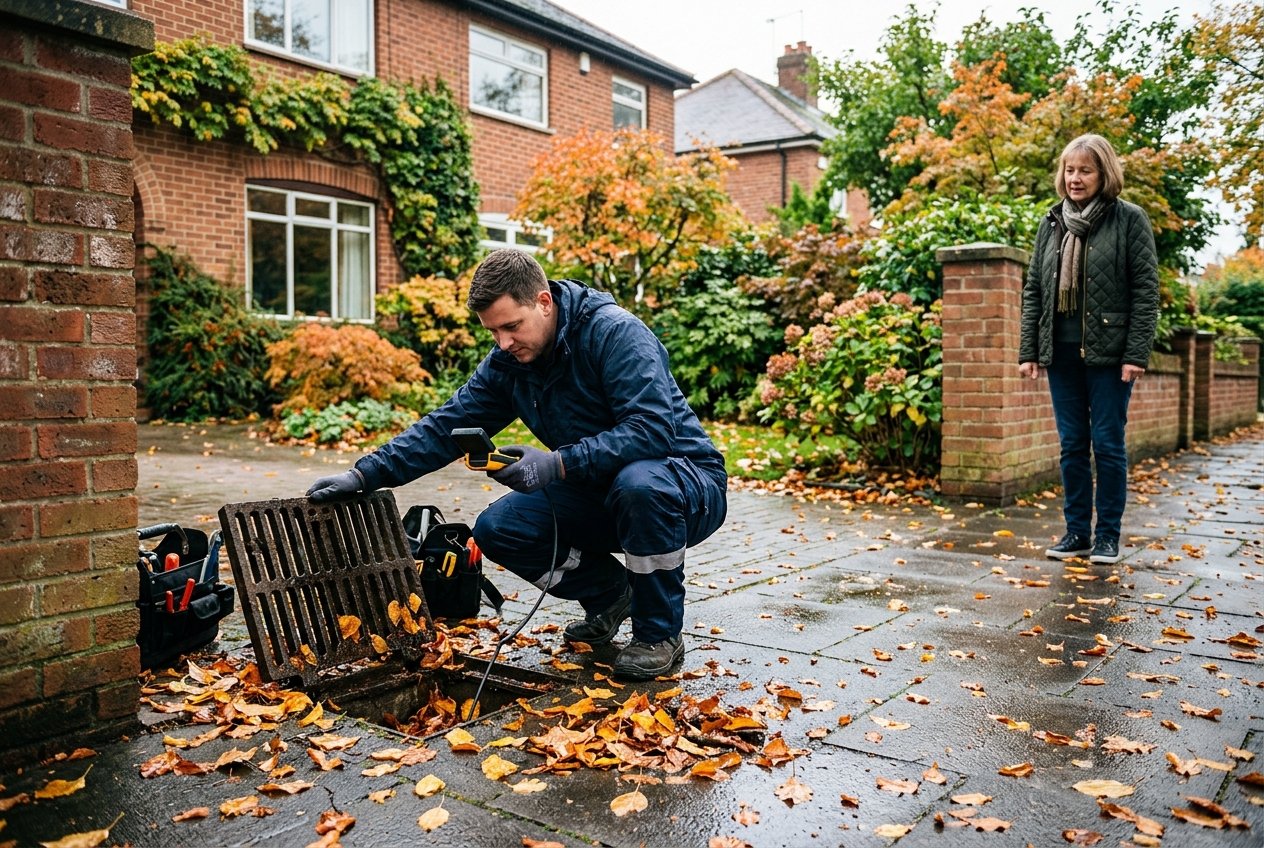
Autumn brings cooler weather, heavier rain and a steady fall of leaves. While the changing colours can be beautiful, leaves, twigs and other garden debris can quickly collect around gullies, grates and outdoor drains. If this material is left in place, it may restrict the flow of rainwater and contribute to standing water, unpleasant smells, overflowing drains and damp around your property.
A little seasonal maintenance can help keep your drainage system working properly through autumn and winter. The following guidance explains how to clear accessible outdoor drains safely, reduce the risk of blockages and recognise when professional drainage services are needed.
Why autumn leaves cause drainage problems
Leaves are most likely to cause trouble when they accumulate over drain covers or are washed into drainage channels by rain. Wet leaves can form a dense layer that prevents water from entering the drain. Once inside the pipework, they may combine with mud, moss, grit and small twigs to create a more stubborn obstruction.
Blocked outdoor drains can affect more than the drain itself. Water may collect against walls, patios, paths and driveways, increasing the risk of slippery surfaces and water entering low-level areas. Where drainage is close to a building, persistent standing water may also contribute to damp or damage to surrounding surfaces.
Properties surrounded by mature trees, homes with flat roofs, and sites with large paved or hardstanding areas may need particularly regular checks during leaf-fall season.
Inspect outdoor drains before the weather worsens
Begin with a visual inspection of the drainage points around your property. Look at gulley grates, channel drains, driveway drains, patio outlets, downpipe connections and any inspection covers that are safe and accessible to check.
- Remove leaves and loose debris from the top of grates before they become saturated.
- Check whether water is pooling around a drain after rainfall.
- Look for slow drainage, overflowing gullies or water escaping from unusual points.
- Inspect downpipes and their connections for visible blockages or damage.
- Check that drain covers are secure and not cracked, displaced or dangerous.
Do not lift heavy covers without suitable equipment or assistance. Some covers are difficult to remove and may conceal deep chambers, contaminated water or other hazards. If an inspection cover is damaged, unstable or stuck, arrange a professional inspection rather than trying to force it open.
How to clear leaves from accessible outdoor drains
For a surface-level build-up, put on waterproof gloves and sturdy footwear. Use a hand brush, rake or small plastic scoop to remove leaves from the drain cover and the area immediately around it. Place the debris in a garden waste container rather than washing it into the drain or down a hose.
Once the surface is clear, pour a small amount of water towards the drain and watch how quickly it disappears. This can help identify an obvious flow problem, but avoid using large quantities of water if the drain is already full or backing up. If water remains in place, rises around the grate or drains very slowly, there may be a blockage below the surface.
Where a drain has a removable basket or debris trap, follow the manufacturer’s instructions for taking it out and cleaning it. Replace it securely afterwards. Avoid poking blindly into pipework with long tools, as this can dislodge a blockage further into the system or damage the drain.
Prevent leaves from entering the drainage system
Regular prevention is usually easier than dealing with a fully blocked drain. During periods of heavy leaf fall, check exposed drains at least weekly and again after strong winds or heavy rain. Properties beneath trees may require more frequent attention.
- Keep the area around drain grates free from leaves, soil and garden cuttings.
- Prune overhanging branches where appropriate, using safe methods and suitable equipment.
- Clear roof gutters and check downpipe outlets so rainwater can flow freely.
- Use suitable leaf guards or drain covers where they are compatible with the existing system.
- Sweep paths, patios and driveways regularly so loose debris is not washed towards gullies.
- Dispose of leaves through your local garden waste arrangements instead of putting them into drains.
Leaf guards can reduce the amount of debris entering some systems, but they still need cleaning. A guard that becomes covered in wet leaves may restrict water just as effectively as a blocked grate. Make sure any replacement cover is appropriate for the location and does not create a trip hazard or prevent normal access for maintenance.
Be careful with drain-cleaning products
Strong chemical drain cleaners are not usually the best solution for outdoor leaf blockages. They may have limited effect on compacted garden debris and can create risks for people, pets, plants and the environment. Chemicals can also damage some pipe materials or make later work more hazardous for a drainage professional.
Do not mix cleaning products, and never use chemicals in a drain that is overflowing or connected to an area where contaminated water could spread. If a blockage does not clear with straightforward surface cleaning, professional equipment and an assessment of the drainage layout are safer and more effective options.
Signs that you need professional drainage help
Some drainage issues are not caused by leaves alone. Contact a qualified drainage professional if you notice any of the following:
- Repeated blockages even after the drain has been cleared.
- Water backing up from a gulley, inspection chamber or outside drain.
- Persistent foul smells, gurgling noises or bubbling water.
- Several drains becoming slow at the same time.
- Wet patches, subsidence or sinking ground near underground pipework.
- Cracked, broken or displaced drain covers.
- Overflow affecting a building, neighbouring property or public area.
A professional can investigate the cause rather than simply removing the visible debris. Depending on the problem, they may use drain rods, high-pressure water jetting or a camera survey to locate an obstruction, damaged pipe or root intrusion. If sewage is present, keep people and pets away from the affected area and arrange urgent assistance.
Plan drainage maintenance before winter
Autumn is a useful time to arrange a broader drainage check, particularly if your property has experienced flooding or slow drains in the past. Clearing leaves is only one part of good maintenance. Gutters, downpipes, surface water channels and underground drains all need to work together to move rainwater away from the building.
Before booking work, describe the symptoms clearly and identify which drains are affected. Photographs of standing water, overflowing points or damaged covers can help a professional understand the issue. You can also ask what the service includes, whether follow-up work may be required and how waste or removed debris will be handled.
Routine attention throughout autumn can help protect paths, driveways and building edges from avoidable water problems. It also makes it easier to spot developing faults before colder, wetter weather places additional pressure on the drainage system.
Book professional drainage maintenance
If your outdoor drains are slow, overflowing or difficult to clear safely, book a drainage service through Task Pigeon. Find a suitable professional to help clear blockages, inspect problem areas and prepare your property for the wetter months.