

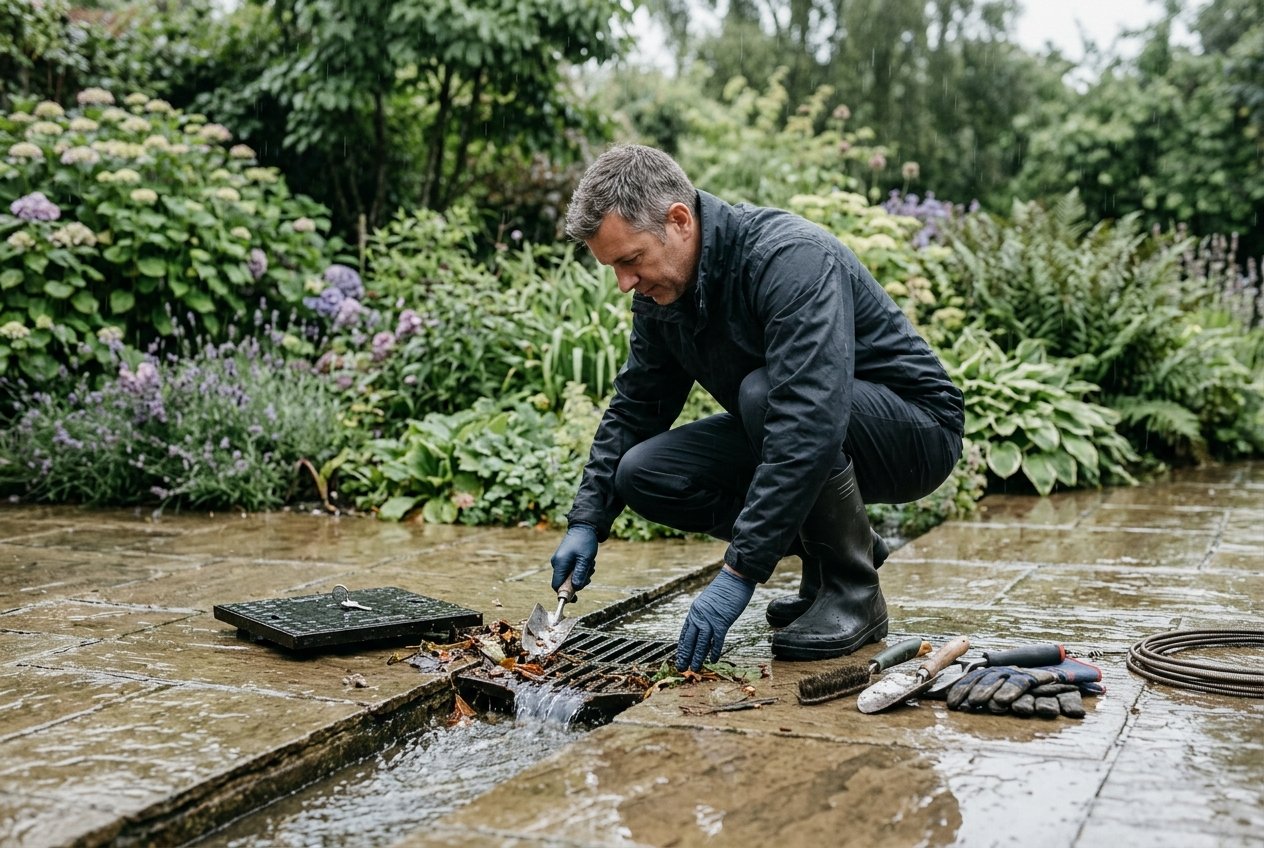
Summer showers can arrive with little warning. After a long dry spell, a sudden downpour may send large volumes of water towards gutters, gullies, drains and surface-water channels in a short space of time. If leaves, soil, moss, litter or other debris are already restricting the system, heavy rain can quickly turn a minor drainage issue into standing water, flooding or an unpleasant blockage.
Fortunately, a little preparation can help keep your drainage system working properly throughout the wetter parts of summer. Regular checks, sensible garden maintenance and prompt professional help can all reduce the risk of blocked drains and water damage around your property.
Why summer rain can cause drainage problems
Blocked drains are not only a winter concern. During the warmer months, trees and plants shed leaves, flowers and small branches, while wind can carry dust, litter and garden debris into open drains. Moss and weeds may also grow around gullies and grates, making it harder for rainwater to flow away.
Dry weather can create another problem. Soil may become compacted or hard at the surface, so rainfall runs off rather than soaking into the ground. If the rain is particularly heavy, water can collect quickly on patios, driveways and paths. It may then flow towards the nearest drain, carrying mud and debris with it.
Properties with older drainage systems, large paved areas or low-lying gardens may be more vulnerable. A drain that is already partially blocked may cope during ordinary showers but overflow when a sudden summer storm puts the system under pressure.
Inspect gutters, downpipes and drain covers
Before the wettest part of summer, walk around your property and inspect the visible drainage points. Look for leaves, mud, weeds and other material covering drain covers, gullies or grates. Remove loose debris carefully and place it in the appropriate waste rather than washing it into another drain.
Check that rainwater is leaving guttering through the downpipes as intended. A blocked or overflowing gutter can discharge water against walls, paving or foundations instead of directing it into the drainage system. Look for:
- Water spilling over the front or back of a gutter during rain
- Plants or moss growing from guttering or downpipes
- Cracks, loose joints or damaged sections
- Standing water around a gully after rainfall
- Drain covers that are broken, displaced or difficult to lift safely
Do not enter a drain, lift heavy covers without suitable equipment or attempt repairs near electrical installations. If a cover is damaged or a blockage is not accessible, a drainage professional can inspect it safely and recommend the right solution.
Keep leaves and garden waste away from drains
Garden maintenance plays an important role in preventing blocked drains. Sweep leaves, grass cuttings and hedge trimmings away from gullies and surface-water channels. When mowing or pruning, avoid allowing clippings to collect beside drain covers, as they can wash into the system during the next downpour.
If you have trees near the property, keep an eye on falling leaves and small twigs throughout the season. This is particularly important after windy weather. A simple grate or leaf guard may help reduce the amount of debris entering some drainage points, but it still needs to be checked and cleared regularly.
Never use drains as a disposal route for soil, compost, paint, cement, oil or garden chemicals. These materials can settle inside pipes, harm the environment or create difficult blockages that require specialist equipment to remove.
Look after patios, driveways and outdoor areas
Hard surfaces can direct a great deal of rainwater towards a small number of drainage points. Keep patio channels, driveway gullies and linear drains clear of sand, weeds and silt. After sweeping, collect the debris rather than hosing it into the nearest drain.
Check whether paving has settled and created low spots where water gathers. Small areas of standing water may indicate that a channel is obstructed, while repeated pooling near a building could point to a problem with the fall of the surface or the connected drainage system.
Where practical, use permeable surfaces or planted areas to allow some rainwater to soak into the ground. Water butts can also help collect rainwater from suitable downpipes, provided they are correctly installed, secure and not allowed to overflow towards the property. These measures may reduce pressure on surface-water drainage, although they will not resolve a blocked or damaged pipe.
Be careful about what goes down indoor drains
Summer entertaining can increase the amount of food waste, grease and other material entering kitchen sinks. Avoid pouring cooking oil, fat or sauces down the drain. Allow them to cool, then place them in a suitable container for disposal. Use a sink strainer to catch food scraps and clean it regularly.
In bathrooms, hair, soap residue and wipes can build up inside waste pipes. Dispose of wipes, cotton buds, sanitary products and other non-flushable items in a bin, even if the packaging suggests they can be flushed. Only toilet paper and human waste should be flushed down a toilet.
These everyday habits are useful all year round, but they are especially important before periods of unsettled weather. A partially restricted internal pipe can contribute to wider drainage problems when outdoor systems are also dealing with heavy rainfall.
Recognise the early signs of a blocked drain
Acting early can prevent a minor obstruction from becoming an emergency. Pay attention to changes in how quickly water drains from sinks, showers and baths, as well as unusual smells or gurgling sounds. Outdoors, watch for water backing up around gullies, slow-flowing channels or repeated pooling after rain.
Other warning signs include:
- Toilets that drain slowly or rise higher than usual when flushed
- Several fixtures becoming slow at the same time
- Dirty water returning through a drain or inspection chamber
- Overflowing gullies during moderate rainfall
- Damp patches, subsidence or unusually lush growth near underground pipe runs
If more than one fixture is affected, the blockage may be in a shared pipe rather than a single sink or trap. Avoid repeatedly flushing toilets or pouring chemical drain cleaner into the system. Chemicals may not clear the obstruction and can damage some pipes or create a hazard for anyone who later works on the drain.
When to call a drainage professional
Professional help is advisable when a blockage keeps returning, cannot be reached safely or is causing wastewater to back up. A drainage specialist can identify whether the problem is caused by a build-up of debris, damaged pipework, tree-root intrusion, poor falls or a collapsed section.
Depending on the issue, the appropriate service may include drain jetting, mechanical cleaning, a CCTV drain survey or repairs to damaged pipework. A qualified professional can also advise on preventative measures for your property, including suitable covers, maintenance routines and improvements to surface-water drainage.
Contact a professional promptly if wastewater is entering the home, flooding is close to electrical equipment, a manhole cover is damaged or overflowing water could affect neighbouring properties. Keep children and pets away from contaminated water, and do not attempt to handle sewage or enter confined drainage spaces yourself.
Book drainage help before the next downpour
Regular checks and good garden habits can reduce the risk of summer blockages, but persistent drainage issues need the right solution. If your drains are slow, overflowing or in need of a professional inspection, book a drainage service through TaskPigeon and arrange reliable help for your property.