

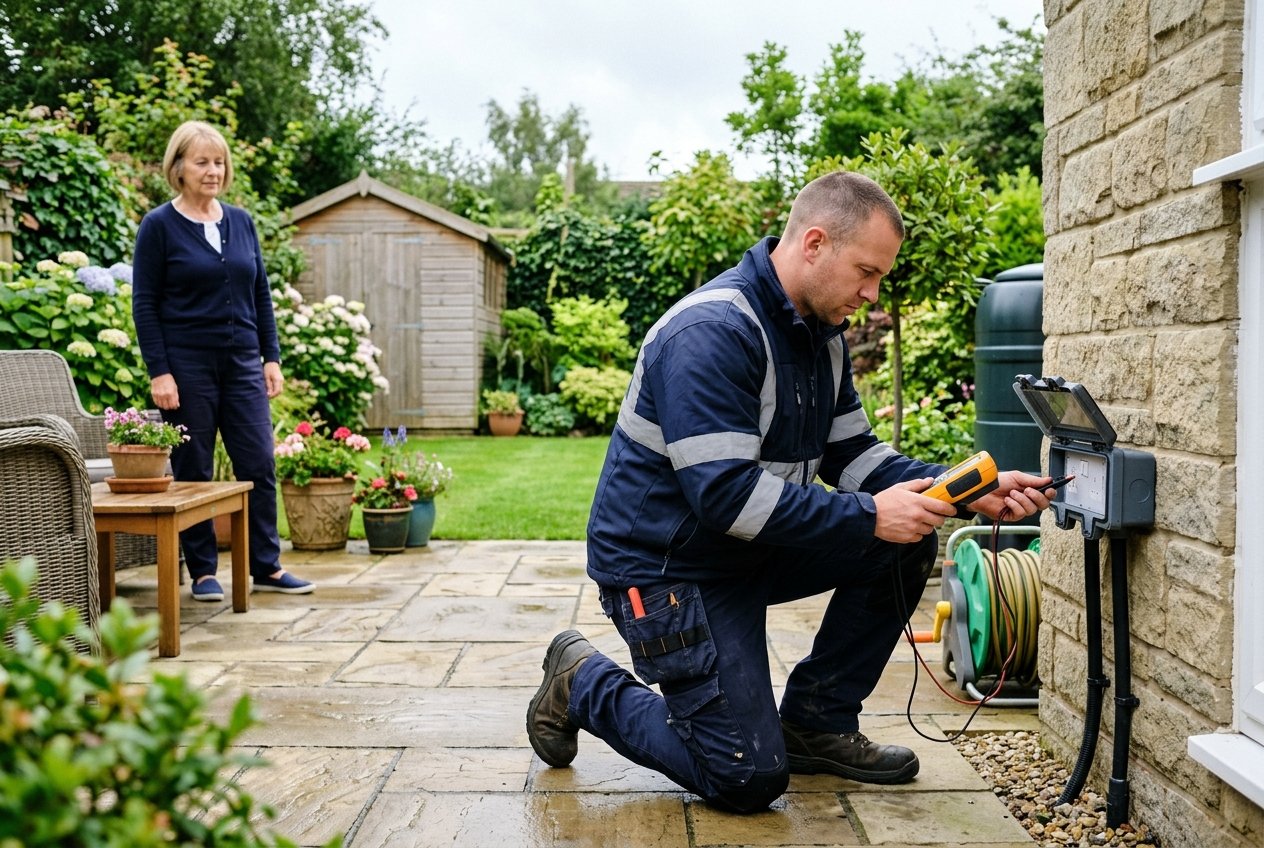
Longer days and warmer weather make it easier to enjoy the garden, from entertaining outdoors to using lawnmowers, pressure washers, lighting and garden tools. However, outdoor electrical equipment is exposed to rain, damp, dirt, sunlight and accidental damage throughout the year. A socket or cable that appeared safe last summer may now need attention.
Before plugging anything in, carry out a careful visual check and make sure your garden electrics are suitable for outdoor use. If you notice damage, signs of overheating or repeated tripping, stop using the equipment and arrange an inspection by a qualified electrician.
Start with a visual check
Switch off and unplug equipment before inspecting it. Never handle plugs, sockets or cables if they are wet, and do not carry out checks during rain or when standing on damp ground. Look closely at the following:
- Outdoor socket covers that are cracked, loose, broken or no longer close properly.
- Discolouration, scorch marks, melting or a burnt smell around the socket or plug.
- Loose faceplates or signs that the socket has moved away from the wall.
- Frayed, crushed or split cables, including damage caused by lawnmowers, strimmers, pets or garden tools.
- Plugs with bent pins, cracked casings or signs of corrosion.
- Water inside a socket enclosure, plug or outdoor lighting fitting.
- Temporary connections that have been left exposed to weather or are resting in puddles.
Do not tape up damaged cables or continue using a socket simply because it still appears to work. Electrical faults can create a risk of electric shock or fire, particularly where moisture is present.
Check that sockets and equipment are suitable for outdoors
Outdoor sockets should be specifically designed for external use and fitted with an appropriate weather-resistant cover. A standard indoor socket, even if positioned under a roof or inside a shed, may not provide suitable protection from condensation, splashes or wind-driven rain.
Check that plugs and equipment are intended for outdoor use by reading the manufacturer’s instructions. Outdoor lighting, pumps, water features and power tools should be installed and operated according to their instructions, including any requirements for positioning, ventilation and protection from water.
Some equipment carries an IP, or Ingress Protection, rating. This indicates the level of protection against solids and moisture, but the correct rating depends on where and how the equipment is installed. An IP rating does not make damaged equipment safe, nor does it mean that a product can be immersed in water unless the manufacturer specifically says so.
Test the RCD protection
Outdoor sockets should have suitable residual current device (RCD) protection. An RCD is designed to disconnect the electricity quickly if it detects current flowing through an unintended path, helping to reduce the risk of serious electric shock. RCD protection may be provided at the consumer unit, within the socket or through a portable RCD.
If your RCD has a test button, follow the manufacturer’s instructions and check it before using outdoor equipment. Pressing the test button should cause the power to disconnect. You will then normally need to reset the device. If it does not trip, does not reset, or trips repeatedly during normal use, stop using the outdoor circuit and contact an electrician.
An RCD is an important safety measure, but it is not a replacement for sound wiring, suitable equipment or careful use. Never bypass, remove or hold down the test or reset controls to keep equipment running.
Use extension leads safely
Where possible, use a properly installed outdoor socket rather than running a cable from inside the house. If an extension lead is necessary, select one rated for the equipment and suitable for outdoor use. Keep connections away from rain, sprinklers, puddles and areas where water can collect.
- Fully unwind cable reels before use to prevent heat building up.
- Keep cables visible and away from paths, doors, blades and cutting tools.
- Use cable covers or other suitable protection where a lead must cross a walkway.
- Do not connect multiple extension leads together unless the manufacturer specifically permits it.
- Do not overload a lead or socket with several high-powered appliances.
- Store extension leads indoors, dry and loosely coiled, when they are not being used.
Never run an extension lead through a window or door that can crush the cable. This can damage the insulation and may also prevent the door or window from closing securely.
Take care with garden lighting and water features
Check garden lighting for cracked fittings, exposed wires, loose connections and water ingress. Solar lights still need inspection for damaged panels, batteries and cables, while mains-powered lighting requires particular care around moisture. Do not move, alter or repair fixed electrical lighting unless you are competent and authorised to do so.
Water features, pond pumps and outdoor appliances require careful positioning. Keep plugs, transformers and connections outside splash zones and follow the manufacturer’s instructions about distance from water. If a fitting has been submerged, switch off the supply without touching the wet equipment and arrange professional advice.
Know when to stop and call an electrician
Some warning signs should always be treated seriously. Arrange an inspection if a socket feels warm, makes a buzzing or crackling noise, gives off a burning smell, shows scorch marks or causes an RCD or circuit breaker to trip. You should also seek professional help if the installation is old, has been altered over time, or lacks clearly identifiable RCD protection.
Do not remove socket covers, test wiring, replace components or investigate a fault while the circuit is live. Electrical installation work in a garden may involve buried cables, earthing, bonding and weather protection requirements that are not obvious from the outside. A qualified electrician can test the circuit, identify faults and recommend safe improvements.
Prepare before summer jobs begin
Make outdoor electrical checks part of your seasonal garden preparation. Inspect equipment before the first use, keep the area clear and dry, and make sure everyone using power tools understands where cables are located. Children and pets should be kept away from live equipment and temporary connections.
If you are planning new garden lighting, an outdoor socket, a hot tub, a workshop supply or a larger landscaping project, obtain professional advice before work starts. An electrician can assess the existing installation and ensure the new work is designed and installed appropriately for its intended use.
Book an electrician for a professional safety check
If you are unsure whether your outdoor sockets or garden electrics are safe, do not take chances. Book an electrician to inspect the installation, investigate faults or discuss suitable improvements before summer use.