

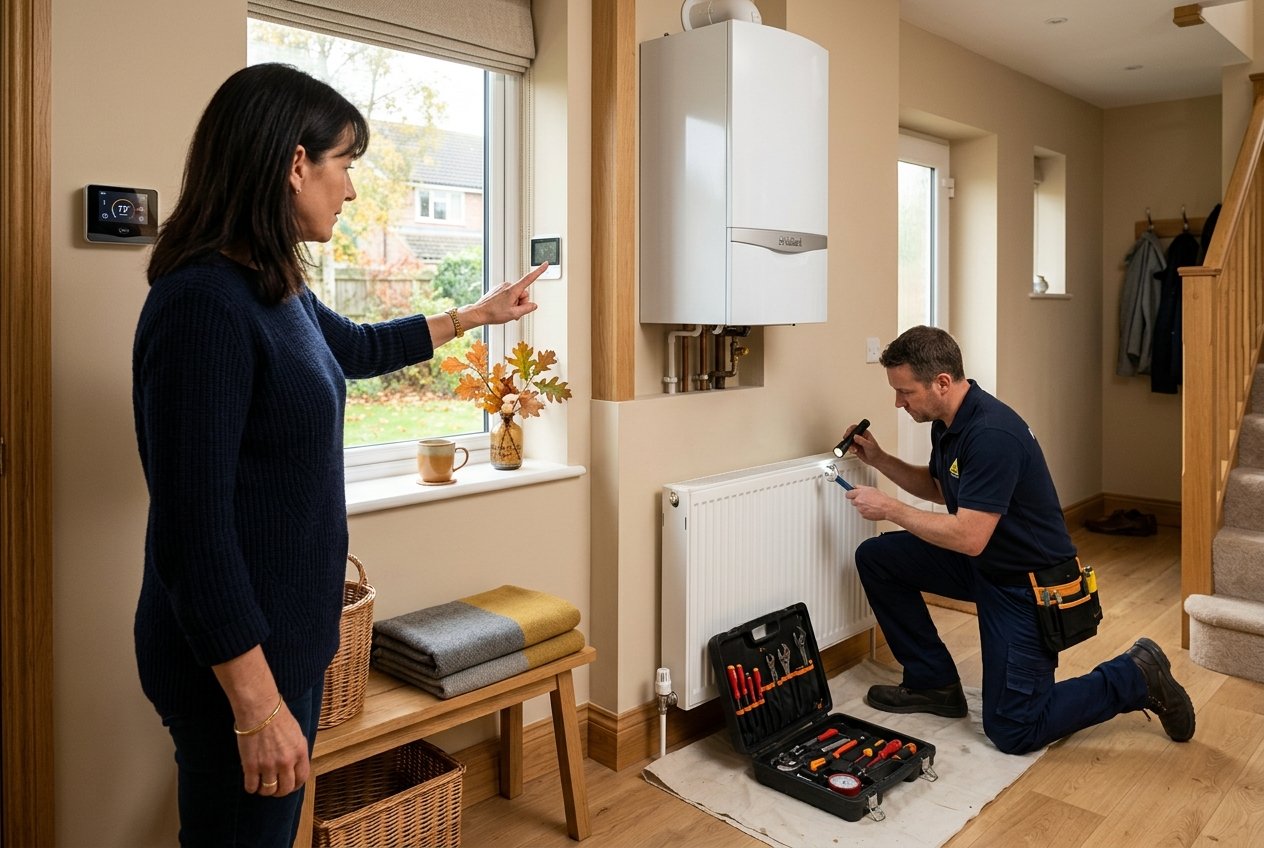
As cooler weather arrives, turning on the heating is often one of the first signs that the seasons are changing. If your system has been unused for several months, taking a few minutes to check it before relying on it can help you spot minor problems early, improve comfort and reduce the risk of an unexpected breakdown.
These checks apply to many common UK heating systems, including gas and oil boilers, electric heating, heat pumps and systems with radiators or underfloor heating. However, anything involving gas, oil, electrical components or sealed heating systems should be handled carefully. If you are unsure, arrange an inspection by a suitably qualified heating professional rather than attempting a repair yourself.
Start with a visual inspection
Before switching the heating on, look over the boiler, heat pump, cylinder, radiators and visible pipework. Check for signs of damage, corrosion, damp patches or leaking water. Pay particular attention to joints, valves and the area beneath the boiler or hot water cylinder.
- Make sure vents and grilles are not blocked by furniture, boxes, curtains or stored items.
- Check that radiators are not covered by heavy furniture or long curtains, as this can restrict heat distribution.
- Look for staining, rust or moisture around pipes and radiators.
- Ensure the boiler or heating appliance is accessible for safe operation and servicing.
- Keep outdoor units, air-source heat pump grilles and external flues clear of leaves, snow and other obstructions.
Do not remove the boiler casing or attempt to inspect internal components. A boiler casing is not simply a cover; removing it may expose you to electrical parts, hot surfaces or combustion-related risks.
Check the boiler pressure
If you have a sealed central heating system, the pressure gauge should usually sit within the operating range marked on the boiler or its instructions. Many systems operate at around one to two bar when cold, but the correct level varies between appliances, so use the manufacturer’s guidance rather than relying on a general figure.
A pressure reading that is significantly below the recommended range may prevent the heating from working properly. A reading that is unusually high, or pressure that repeatedly drops after topping up, could indicate a fault or leak. Do not keep adding water without investigating the cause.
If your system needs repressurising, follow the boiler manufacturer’s instructions only if you are confident doing so. Otherwise, contact a heating engineer. Never interfere with an open-vented system or other components unless you understand how the system works and are qualified to carry out the task.
Inspect radiators and bleed them only when necessary
Radiators can develop cold spots while the heating has been off. Once the system has been running safely, check whether they warm evenly from top to bottom. A radiator that is cold at the top but warmer at the bottom may contain trapped air and could need bleeding.
Bleeding a radiator releases air from the system, but it also lowers the pressure in some sealed systems. Allow the radiator to cool before using a suitable radiator key, protect the wall and floor from drips, and stop as soon as water begins to escape. Afterward, check the boiler pressure and top it up only in line with the manufacturer’s instructions.
If a radiator remains cold, leaks, makes persistent noises or heats unevenly after bleeding, the problem may involve a valve, sludge or circulation fault. A professional can diagnose this without risking damage to the system.
Test your heating controls
Heating controls can be easy to overlook after a summer of using hot water only. Check the thermostat, programmer, timers and radiator valves before you need the system every day.
- Confirm that the thermostat has power and displays the correct time and temperature.
- Replace batteries in wireless thermostats or programmers if the display is weak or intermittent.
- Check that the heating schedule has not been reset or changed.
- Turn the thermostat above the current room temperature to request heat.
- Make sure thermostatic radiator valves are not set to their lowest setting throughout the property.
- Check that smart heating controls remain connected to the app or home network if you use them.
Test the system for a short period rather than immediately setting it to run all day. This gives you an opportunity to identify unusual sounds, error codes or areas that remain cold before the weather becomes more severe.
Look after safety devices
Every home with a fuel-burning appliance should have a working carbon monoxide alarm in the appropriate location. Test the alarm according to the manufacturer’s instructions and replace its batteries if required. Check the expiry or replacement date, as alarms do not last indefinitely.
Never ignore a carbon monoxide alarm, a strange smell, soot around an appliance, unusual discolouration or symptoms such as headaches, dizziness or nausea that improve when you leave the property. Turn off the appliance if it is safe to do so, leave the building and seek urgent professional advice. If you suspect a gas leak, contact the relevant emergency gas service and do not use naked flames or operate electrical switches.
Gas appliances should be inspected and serviced by a Gas Safe registered engineer. Oil-fired appliances require an appropriately qualified oil heating technician, while electrical heating systems and heat pumps should be assessed by a competent professional familiar with that equipment.
Check the flue, condensate pipe and outdoor equipment
If your boiler has a visible external flue, check from ground level that it is not obstructed or damaged. Do not climb onto a roof or dismantle any part of the flue. A blocked flue can create a serious safety risk and should be inspected by a qualified engineer.
Condensing boilers have a condensate pipe, often running from the boiler to an external drain. In freezing weather, this pipe can become blocked by ice, causing the boiler to shut down. If you suspect a frozen condensate pipe, follow the boiler manufacturer’s guidance or contact a professional. Do not use boiling water, as sudden heat can damage the pipe.
For air-source heat pumps, keep the outdoor unit free from leaves, garden waste and other debris, while allowing the clearance specified by the manufacturer. Do not cover the unit during winter unless the manufacturer specifically recommends it.
Know when to book a professional service
Some checks are suitable for homeowners, but an annual service or pre-winter inspection is the safest way to assess the condition of the full heating system. Arrange professional help if the boiler fails to start, displays an error code, repeatedly loses pressure, makes banging or screeching sounds, or produces water from an unexpected location.
You should also book an inspection if the property has changed hands, the heating has been unreliable, the system has not been serviced for a long time, or you are unsure whether it is operating efficiently. A professional can inspect the appliance, controls, pipework and safety functions, identify developing faults and explain any recommended repairs.
Get ready for a warmer, more reliable home
Checking your heating system before the first cold spell can help you avoid discomfort and last-minute disruption. If you need a boiler check, radiator inspection, heating repair or help preparing a wider system for winter, book a heating systems service through Task Pigeon and find a suitable professional for the job.