

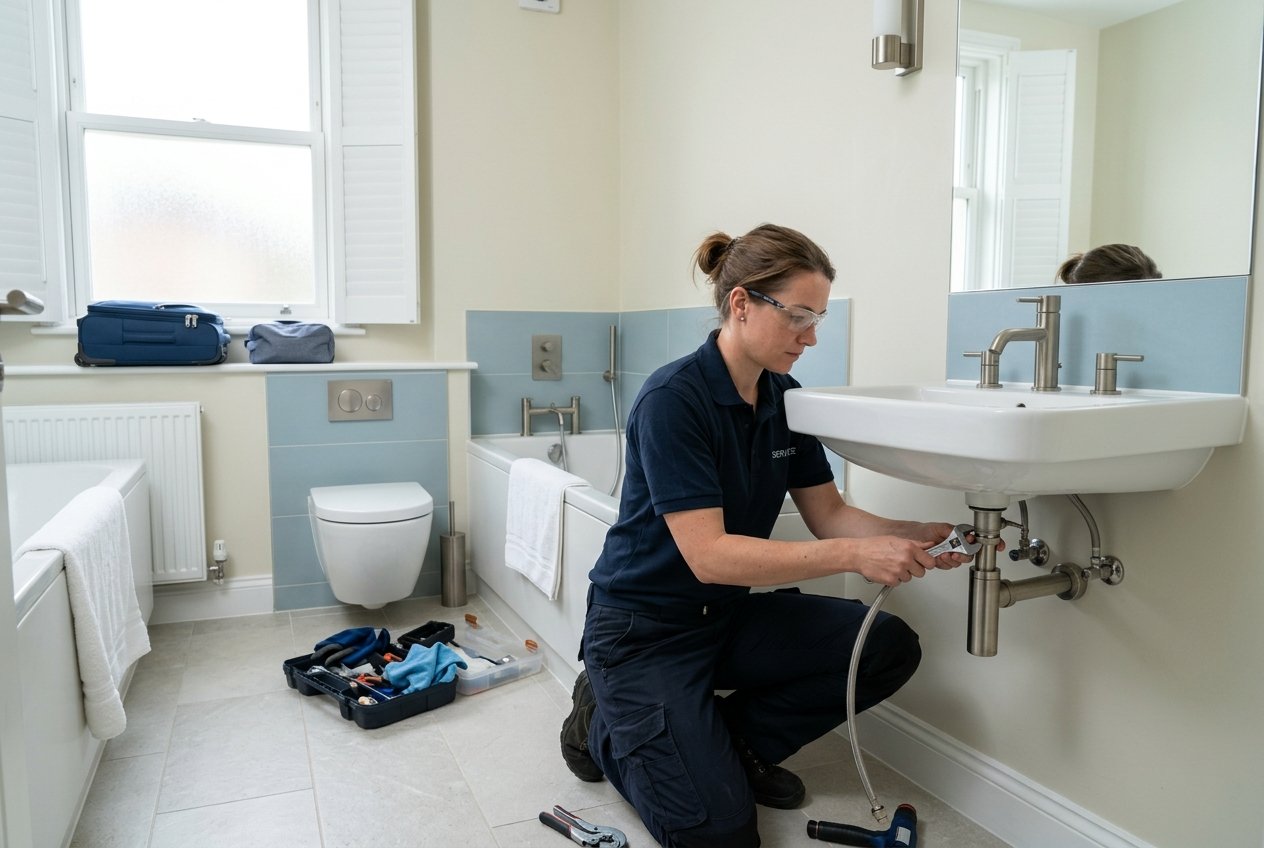
Leaving home for a holiday should be exciting, not worrying. Yet a small plumbing fault can become a serious problem when nobody is there to spot it. A dripping tap may damage a cupboard or worktop, while a failed toilet valve or flexible hose can release a large amount of water into your home.
Before you travel, take a few practical steps to reduce the risk of leaks and make sure you know how to respond if something goes wrong. The following checks focus on taps, toilets, washing machines, dishwashers and other common household plumbing connections.
Find and test your internal stop tap
Your internal stop tap, also called a stopcock, controls the incoming mains water supply to your home. It is commonly found beneath the kitchen sink, although it may be in a utility room, hallway cupboard, garage or under the stairs. In some properties, particularly flats, the location may be less obvious.
- Locate the stop tap before your holiday, rather than trying to find it during an emergency.
- Turn it gently clockwise to check that it moves and shuts off the water.
- Do not force it if it is stiff, as excessive pressure can damage the valve.
- Open a cold tap briefly after closing it to release pressure and check whether the flow stops.
- Turn the stop tap anticlockwise again when the test is complete, unless you are intentionally shutting off the supply while away.
If the valve will not move, leaks around its spindle or does not stop the water, arrange for a plumber to inspect it. A stop tap that cannot be operated promptly may make a future leak harder to control.
Decide whether to turn off the water
For many homes, shutting off the internal water supply while away is one of the simplest ways to limit the damage caused by a burst pipe or failed connection. This is particularly worth considering if your property will be empty for several days or longer.
Before doing so, check whether any appliances or systems require a continuous water supply. If you have a combination boiler, unvented hot water cylinder, water softener, automatic watering system or other specialist equipment, follow the manufacturer’s instructions or ask a qualified plumber for advice. Turning off the mains water does not automatically drain every pipe or prevent all possible leaks, so it should form part of a wider check.
If you leave the water on, make sure the people looking after your home know where the stop tap is. Give them clear instructions and ask them to check the property periodically, especially during cold weather.
Check taps, valves and pipe joints
Inspect every tap for signs of a developing leak. Look beneath kitchen and bathroom sinks, around tap bases and at the joints connecting pipework to the tap. A small amount of moisture, green or white residue, staining, swollen cupboards or a musty smell can indicate a problem.
- Dry the area thoroughly with a cloth, then check again after using the tap.
- Look at isolation valves and compression fittings beneath sinks and basins.
- Make sure bottles, cleaning products and stored items are not pressing against pipework.
- Do not rely on tightening a fitting repeatedly; overtightening can damage seals or threads.
- Replace worn washers, cartridges or valves where necessary rather than ignoring persistent drips.
A dripping tap may seem minor, but it can worsen while you are away and may point to a worn internal component or a loose connection. A plumber can identify the cause and complete repairs before you travel.
Inspect toilets and cisterns
Toilets can leak without producing an obvious puddle. A faulty inlet valve may allow water to run continuously into the cistern, while a worn flush valve or seal can let water pass slowly into the toilet bowl. These faults waste water and may become more serious if a valve fails completely.
Listen for a toilet that continues to hiss or refill after flushing. You can also add a few drops of food colouring to the cistern and wait without flushing. If coloured water appears in the bowl, the flush valve or another internal seal may be leaking. Clean the cistern afterwards and avoid using strong cleaning chemicals that could damage rubber components.
Check the flexible supply connection, isolation valve and floor around the toilet. Any dampness, corrosion, staining or movement should be investigated. Do not place heavy items against the pipe or use the toilet if the pan, cistern or connection is unstable. If the toilet is supplied by a visible isolation valve, it may be possible to shut off that individual supply while you arrange a repair.
Examine flexible hoses carefully
Flexible hoses are widely used beneath sinks, behind toilets and to connect washing machines and dishwashers. They are convenient, but the outer braid or fittings can deteriorate with age, movement, vibration, heat or accidental damage.
- Look for bulges, kinks, rust, fraying, discolouration or dampness.
- Check both ends of each hose, including areas that are difficult to see behind appliances.
- Make sure the hose is not stretched tightly or bent sharply.
- Do not move a washing machine or dishwasher without checking that its hoses are not being pulled or crushed.
- Replace a suspect hose rather than attempting a temporary repair with tape.
When replacing a hose, use a suitable product of the correct length and connection size. Turn off the water supply before removal, protect the floor and check carefully for leaks after fitting. If the connection is inaccessible or corroded, professional assistance is safer than forcing it.
Prepare washing machines and dishwashers
Turn off the appliance water supply using the isolation valve if one is fitted and accessible. Some manufacturers recommend turning off the supply when the appliance is not in use, particularly if the machine is connected to an older or vulnerable hose. Check the appliance instructions before making changes.
Inspect the waste hose as well as the inlet hose. Make sure it is secure, not kinked and not pushed so far into the waste pipe that it can become displaced. Clean accessible filters and remove standing water where the manufacturer’s instructions allow. Leave appliance doors slightly open if appropriate to reduce stale smells, but ensure this does not create a trip hazard.
Protect your home before you leave
Check for signs of frozen pipes if you are travelling during cold weather. Keep the heating at a safe background temperature where appropriate, insulate exposed water pipes and do not leave vulnerable rooms completely unheated without considering the risks. If you have a loft or garage containing pipework, make sure it is properly insulated and that stored items are not pressing against pipes.
Ask a trusted neighbour, friend or professional property manager to visit if possible. Give them the location of the stop tap, details of any alarm system and your contact information. Leave instructions for switching off the water and contacting a plumber if they find a leak. You should also check your home insurance requirements, as some policies include conditions for unoccupied properties.
What to do if you discover a leak
If water is escaping, turn off the internal stop tap if it is safe to do so. Switch off electricity at the consumer unit only if you can reach it without standing in water; otherwise, leave it alone and contact an emergency professional. Move belongings away from the affected area where possible, contain small amounts of water with towels or a container and photograph the damage for your records.
Do not remove flooring, ceilings or fitted units if doing so could expose electrical wiring or make the situation less safe. A qualified plumber can isolate the fault, identify the failed component and carry out a reliable repair.
Book a plumbing check before your holiday
A short inspection can provide reassurance and help prevent a minor fault from becoming expensive water damage. If you need help checking taps, toilets, flexible hoses or other plumbing connections, book a plumbing service through TaskPigeon and find a trusted professional for the job.